
The Debt Avalanche and Debt Snowball, Explained
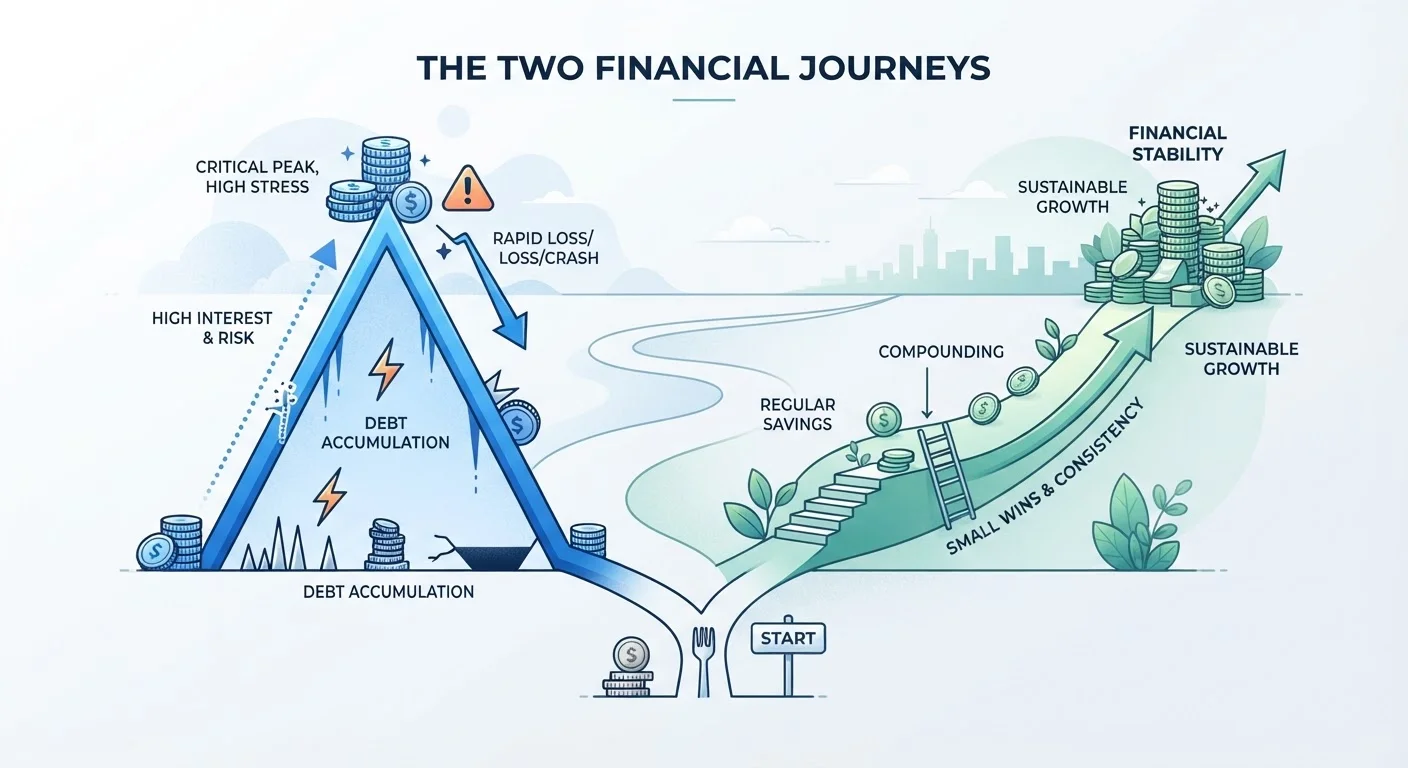
Photo credit: ResultsPoint.net | Find The Required Information
Understand two popular debt repayment strategies—avalanche and snowball—and how each works so you can decide which fits your situation.
Key Takeaways
- The debt avalanche targets your highest-interest debt first, reducing total interest paid over time.
- The debt snowball targets your smallest balance first, building momentum through quick wins.
- Neither method requires extra income — both work by redirecting freed-up minimum payments to the next debt.
- Consistency matters more than which method you choose; the best one is the one you'll stick with.
- Both strategies work best alongside a stable budget and a small emergency fund already in place.
How Each Strategy Works
Both the debt avalanche and debt snowball are structured repayment approaches. The mechanics are nearly identical — you make minimum payments on all your debts, then put any extra money toward one specific debt. The difference is which debt you target first.
Debt Avalanche: You rank your debts by interest rate, highest to lowest. Every extra dollar goes toward the highest-rate balance. Once that's paid off, you roll what you were paying into the next-highest-rate debt — and so on. This method reduces how much interest accrues across the life of your repayment.
Debt Snowball: You rank your debts by balance, smallest to largest. Every extra dollar attacks the smallest balance first. Once it's cleared, you roll that payment into the next-smallest debt. The idea is that eliminating individual accounts quickly creates a sense of progress.
See our deeper breakdown of each approach for more on the psychology and math behind both methods.
| Criterion | Debt Avalanche | Debt Snowball |
|---|---|---|
| Prioritizes | Highest interest rate first | Smallest balance first |
| Total interest paid | Generally lower | Potentially higher |
| Time to first payoff | Can take longer | Usually faster |
| Motivational approach | Mathematical discipline | Quick wins and momentum |
| Best when rates differ widely | Strong advantage | Less relevant |
| Best when balances vary widely | Less relevant | Strong advantage |
| Requires tracking | Interest rates across accounts | Balances across accounts |
The Real-World Tradeoffs
On paper, the avalanche wins on cost. Because high-interest debt grows faster, neutralizing it first means less total interest accumulates. Over months or years, the difference can be meaningful — though the exact amount varies by balance size, interest rate, and how much extra you can put toward repayment.
But personal finance isn't purely mathematical. Research into behavioral economics has consistently shown that people are more likely to maintain habits when they see results. The snowball method exploits this: clearing a small balance completely — even if it's not the most expensive debt — delivers a concrete win that can reinforce the habit of repayment.
These Methods Aren't Mutually Exclusive
Some people start with the snowball to build confidence, then switch to the avalanche once they've cleared a few small debts. Others apply a hybrid approach — targeting a particularly high-rate debt first even if it isn't the smallest. What matters is having a deliberate plan and revisiting it regularly. If you're new to managing debt repayment, the starter's overview of saving and debt repayment is a good place to begin.
If your debts carry similar interest rates, the avalanche's mathematical advantage shrinks considerably. In those cases, the snowball's motivational benefit may matter more than any interest savings.
Before committing to either strategy, it's worth reviewing the financial readiness checklist to make sure your budget and emergency fund are in place first.
Choosing What Fits Your Situation
Neither method is universally superior. The most important factor is whether you'll actually follow through. A less mathematically optimal strategy you stick with for two years outperforms a theoretically perfect strategy you abandon in three months.
Ask yourself: Do I need to see a debt disappear soon to stay motivated? If yes, the snowball may suit you better. Can I stay disciplined through a long stretch without a visible payoff? Then the avalanche's interest savings may be worth the slower start.
It's also worth considering whether debt consolidation might play a role in simplifying your payments — though as our article on debt consolidation tradeoffs explains, it addresses structure, not spending habits. And if you're weighing whether to aggressively pay down debt or save at the same time, the tradeoffs of paying off debt early versus saving is worth reading before you decide.
This article is for general informational purposes only and does not constitute personalized financial advice. Consider consulting a licensed financial professional about your specific situation.

Author
Finance Editorial Team
Finance Editorial Team is the collective byline for our editorial team and contributor network. Articles published under this byline or an editorial pen name are researched, written, and reviewed according to our editorial standards for clarity, consistency, and independence before publication.
View all articles →