
Saturated Fat, Unsaturated Fat, and Trans Fat: A Straightforward Comparison
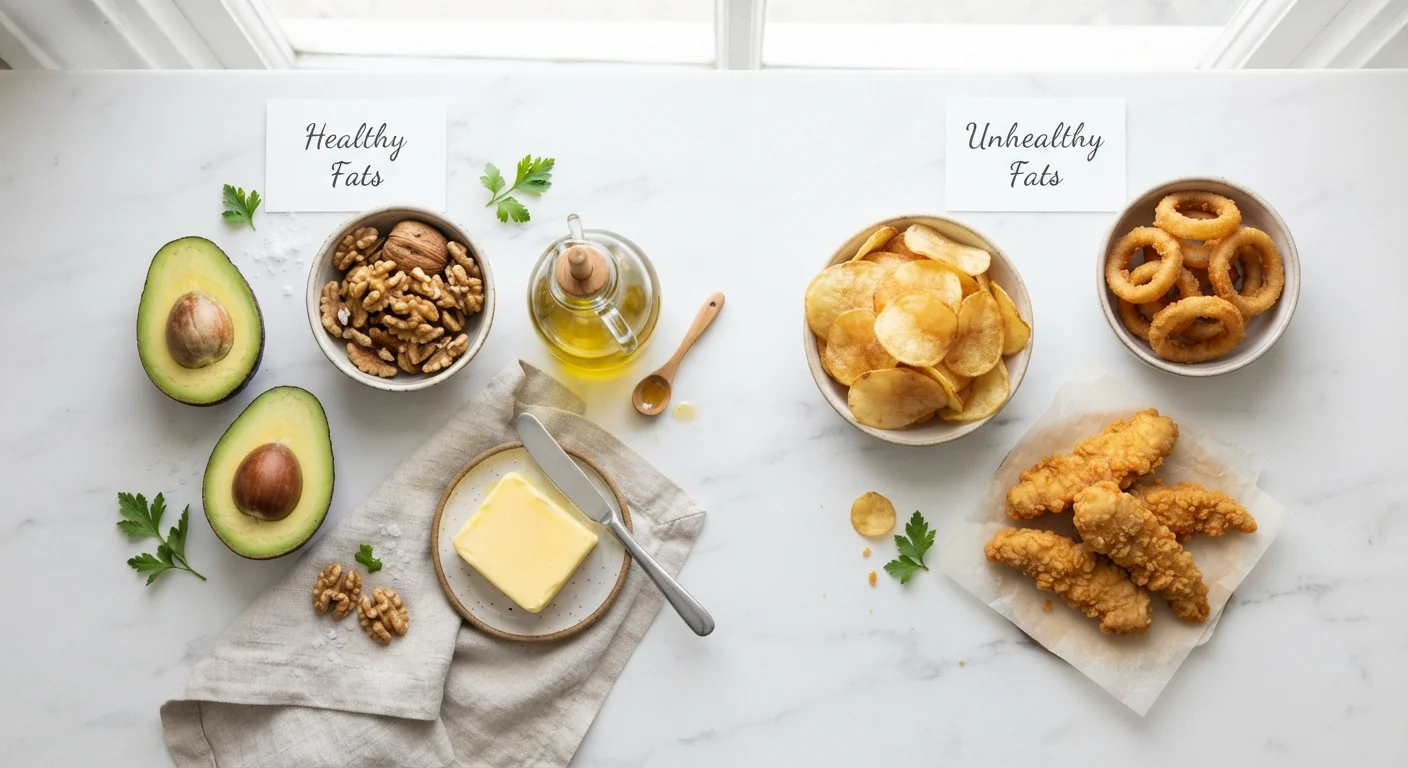
Photo credit: ResultsPoint.net | Find The Required Information
In this article
Not all dietary fat is created equal. Here's how the three main types differ, where they show up in food, and what current guidance says about each.
Key Takeaways
- Dietary fat is not a single thing — saturated, unsaturated, and trans fats behave differently in the body.
- Unsaturated fats are broadly supported by research as heart-healthy when they replace less favorable fats.
- Artificial trans fats have been largely removed from the U.S. food supply following FDA action.
- Saturated fat guidance is nuanced — total diet context matters more than any single food.
- Consulting a registered dietitian is the most reliable way to tailor fat intake to your personal health situation.
Why Fat Type Matters More Than Fat Amount
For decades, dietary fat was treated as a single villain. Low-fat products flooded grocery shelves, and the nuance got lost. What the research actually shows is that the type of fat you consume plays a more important role than total fat intake alone. Fat is essential — it supports cell function, helps absorb fat-soluble vitamins (A, D, E, and K), and provides a concentrated source of energy. The question isn't whether to eat fat; it's which kinds to favor.
The three main categories — saturated, unsaturated, and trans fat — differ in their chemical structure, where they come from, and how they interact with cholesterol levels and cardiovascular risk. Understanding the distinctions gives you a far more useful lens for reading food labels and making everyday choices.
Comparing the Three Types Side by Side
The table below breaks down each fat type across the criteria that matter most for everyday decision-making.
| Saturated Fat | Unsaturated Fat | Artificial Trans Fat | |
|---|---|---|---|
| Common sources | Red meat, butter, full-fat dairy, coconut oil | Olive oil, avocados, nuts, fatty fish, seeds | Partially hydrogenated oils, older fried/packaged foods |
| State at room temp | Solid | Liquid | Solid or semi-solid |
| Effect on LDL cholesterol | Raises LDL | Lowers or neutral effect on LDL | Raises LDL significantly |
| Effect on HDL cholesterol | May raise HDL slightly | May raise HDL | Lowers HDL |
| Current dietary guidance | Limit; replace with unsaturated where possible | Favor as primary fat source | Avoid; largely removed from U.S. food supply |
| Regulatory status (U.S.) | No restriction; moderation advised | No restriction; encouraged | FDA banned partially hydrogenated oils |
It's worth noting that most foods contain a mix of fat types — olive oil is predominantly unsaturated but contains some saturated fat; beef contains both saturated and small amounts of unsaturated fat. Labeling one food as purely good or bad oversimplifies what's on your plate.
Saturated Fat: Moderation, Not Elimination
Saturated fat is found mainly in animal products — red meat, butter, full-fat dairy — and in tropical oils like coconut and palm oil. At room temperature, it's typically solid. Research has consistently linked high saturated fat intake to elevated LDL (low-density lipoprotein) cholesterol, a recognized risk factor for cardiovascular disease. The American Heart Association generally recommends keeping saturated fat to around 5–6% of daily calories for people managing cholesterol, though broader guidance suggests limiting it compared to unsaturated alternatives.
That said, the picture is becoming more nuanced. Some studies suggest the food matrix matters — meaning full-fat yogurt may not carry the same risk profile as processed red meat, even if both contain saturated fat. Current scientific consensus still supports limiting saturated fat for most people, but the focus is shifting toward overall dietary patterns rather than single nutrients.
Swap, Don't Just Cut
Research suggests that what you replace saturated fat with matters as much as reducing it. Swapping butter for olive oil or replacing fatty processed meats with legumes or fish tends to show better cardiovascular outcomes than simply eating less fat overall. Small, consistent substitutions add up over time without requiring a dietary overhaul.
Unsaturated Fat: The Broadly Supported Option
Unsaturated fats come in two main forms: monounsaturated (found in olive oil, avocados, and most nuts) and polyunsaturated (found in fatty fish, walnuts, flaxseed, and many vegetable oils). Both are liquid at room temperature. Omega-3 and omega-6 fatty acids — which you may have seen on supplement labels — are types of polyunsaturated fats.
A robust body of evidence links replacing saturated fat with unsaturated fat to improved LDL cholesterol levels and reduced cardiovascular risk. The Mediterranean dietary pattern, which is high in monounsaturated fats from olive oil and nuts, is one of the most studied and consistently supported eating patterns in nutrition research. Unsaturated fats are calorie-dense like all fats, so portion awareness still applies — but in terms of fat quality, they have the clearest evidence in their favor.
~17%
Cardiovascular disease risk reduction
A landmark analysis in the BMJ found replacing 5% of saturated fat calories with polyunsaturated fats was associated with roughly a 17% lower risk of coronary heart disease events.
2x
Mediterranean diet heart-disease studies
The widely cited PREDIMED study found a Mediterranean diet supplemented with olive oil or nuts was associated with significantly reduced major cardiovascular events compared to a low-fat control diet.
Trans Fat: Largely Gone, Still Worth Knowing
Trans fats exist in two forms. Small amounts occur naturally in some animal products (like beef and dairy) and appear to have a neutral or different effect compared to artificial trans fats. The larger concern has always been industrially produced trans fats — created by partially hydrogenating vegetable oils to extend shelf life and improve texture in processed foods like margarine, crackers, and fried fast food.
Artificial trans fats raise LDL cholesterol and lower HDL (high-density lipoprotein, often called "good" cholesterol) — a double effect that made them especially concerning for heart health. The FDA determined that partially hydrogenated oils were no longer "generally recognized as safe," and food manufacturers were required to phase them out of the U.S. food supply by 2020. As a result, artificial trans fats have largely disappeared from American packaged foods, though trace amounts can legally appear when a serving contains less than 0.5 grams — so checking ingredient lists for "partially hydrogenated oil" remains a useful habit.
"0g Trans Fat" Doesn't Always Mean Zero
FDA labeling rules allow a product to display "0g trans fat" if a single serving contains less than 0.5 grams of trans fat. If you eat multiple servings — or if portion sizes on the label are unusually small — trace amounts can accumulate. Scanning the ingredient list for "partially hydrogenated oil" is a more reliable check than the nutrition facts panel alone.
This article is for general informational and educational purposes only and does not constitute medical or dietary advice. Speak with a registered dietitian or qualified healthcare provider before making significant changes to your diet, especially if you have existing health conditions.

Author
Health Editorial Team
Health Editorial Team is the collective byline for our editorial team and contributor network. Articles published under this byline or an editorial pen name are researched, written, and reviewed according to our editorial standards for clarity, consistency, and independence before publication.
View all articles →