
Whole Grains vs. Refined Grains: What Changes When Wheat Gets Processed
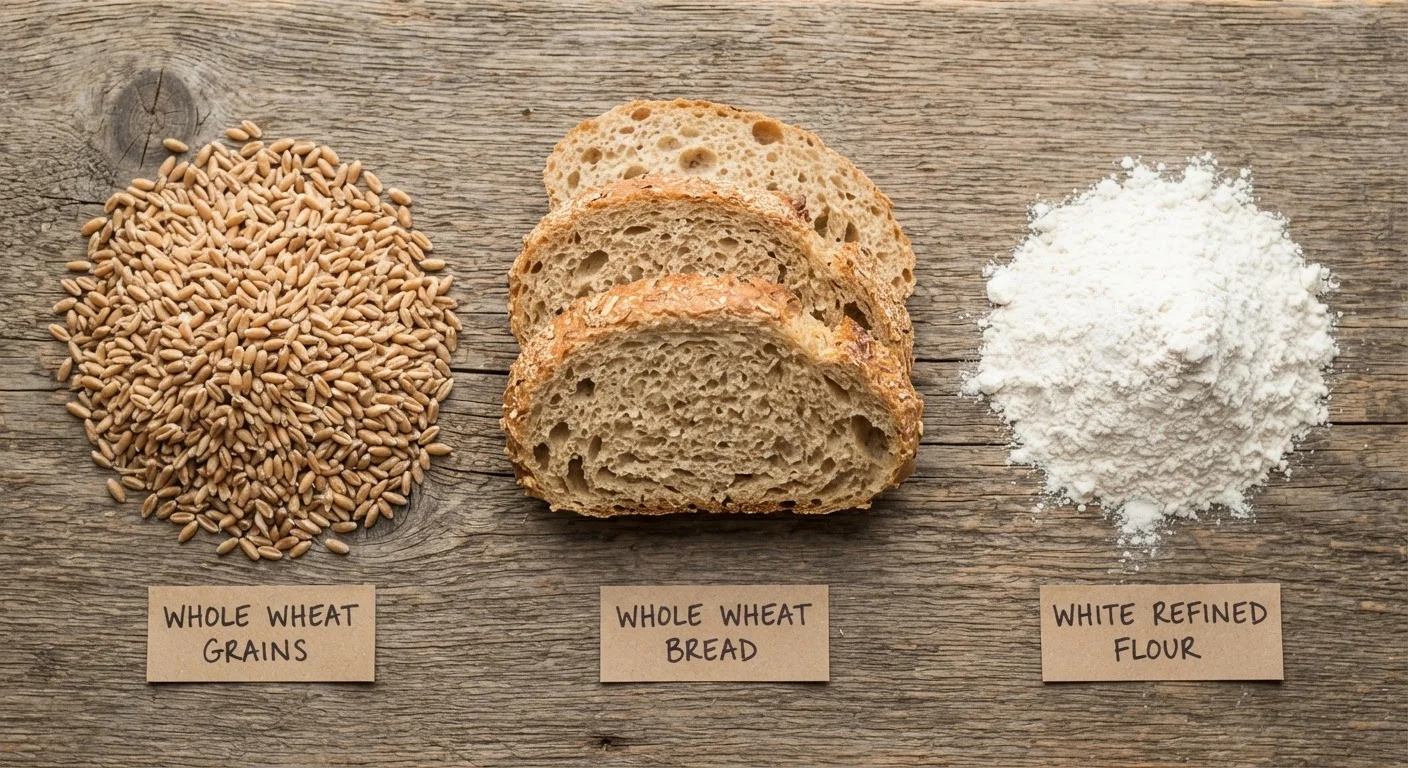
Photo credit: ResultsPoint.net | Find The Required Information
In this article
White bread or whole wheat? Learn what actually gets removed during grain processing and why it matters for everyday eating.
Key Takeaways
- Refining strips wheat of its bran and germ, removing most fiber, B vitamins, and minerals.
- Whole grains retain all three kernel layers — bran, germ, and endosperm — keeping nutrients intact.
- Most refined grain products in the U.S. are enriched, but enrichment restores only select nutrients.
- Fiber from whole grains supports digestive health and helps regulate blood sugar response.
- Swapping some refined grains for whole grains is one of the most well-supported general dietary shifts.
What Happens Inside a Grain of Wheat
A wheat kernel has three distinct layers, each with a nutritional role. The bran is the tough outer shell, packed with fiber, B vitamins, and minerals like iron and magnesium. The germ is the seed's embryo — rich in healthy fats, vitamin E, and additional B vitamins. The endosperm, the largest layer, is mostly starch with small amounts of protein.
When wheat is milled into white flour, rollers strip away the bran and germ, leaving only the starchy endosperm. The result is a finer, softer flour — but also one that's lost the majority of its original fiber and micronutrients. By contrast, whole grain flour uses the entire kernel, keeping those nutrient layers intact.
What Gets Lost — and What Gets Added Back
The nutritional gap between whole and refined grains is substantial. A slice of whole wheat bread typically contains roughly three to four grams of dietary fiber; a comparable slice of white bread may contain less than one gram. Similar differences appear for magnesium, zinc, and several B vitamins including folate and thiamin.
~75%
Fiber lost during wheat refining
According to nutritional analyses of whole versus refined wheat flour, refining removes roughly three-quarters of the original dietary fiber.
~50%
U.S. adults meeting whole grain targets
National dietary survey data consistently show that roughly half or fewer of American adults consume the recommended minimum of whole grain servings daily.
5 of 20+
Nutrients restored by enrichment
Mandatory enrichment in the U.S. adds back iron and four B vitamins, leaving the majority of removed micronutrients and all fiber unrestored.
To offset these losses, U.S. regulations require that most refined grain products be enriched — meaning select B vitamins (thiamin, riboflavin, niacin, folic acid) and iron are added back after milling. Enrichment is genuinely meaningful and has contributed to the near-elimination of deficiency diseases like pellagra in the U.S. However, enrichment doesn't restore fiber, vitamin E, magnesium, potassium, or the many phytochemicals found in the original bran and germ. Think of it like removing twenty items from a basket and putting five back — the basket is better than empty, but it's not what it was.
Understanding these distinctions is similar in spirit to how we think about other food processing questions — like the difference explored in our article on added versus natural sugar: what the food started as matters as much as what's been done to it since.
Side-by-Side: How They Actually Compare
Looking at the two grain types across practical dimensions makes the trade-offs concrete.
| Criterion | Whole Grains | Refined Grains |
|---|---|---|
| Kernel layers retained | All three (bran, germ, endosperm) | Endosperm only |
| Dietary fiber (per serving) | Significantly higher | Significantly lower |
| B vitamins | Naturally present | Partially restored via enrichment |
| Vitamin E | Present (from germ) | Largely removed, not restored |
| Minerals (magnesium, zinc) | Good natural source | Reduced; not fully restored |
| Shelf stability | Shorter (oils in germ go rancid) | Longer |
| Texture / palatability | Denser, earthier | Lighter, more neutral |
| Blood sugar response | Generally more gradual | Generally faster |
Neither grain type is nutritionally worthless. Refined grains remain a practical source of carbohydrates and calories, and enrichment ensures several key micronutrients are present. But the overall nutrient density — the amount of nutrition per calorie — is higher in whole grain products across nearly every measure.
Why Fiber Is the Central Story
Most of the health research connecting whole grains to better outcomes points to fiber as the primary driver. Dietary fiber — particularly the insoluble type abundant in grain bran — supports regular digestion, feeds beneficial gut bacteria, and slows the speed at which carbohydrates break down into glucose. That slower breakdown generally results in a more gradual rise in blood sugar compared with eating an equivalent amount of refined starch.
Reading Labels: Spotting True Whole Grains
The word "wheat" on a bread label doesn't mean the product is whole grain — it may simply mean the flour came from wheat, which includes white flour. Look for "whole wheat" or "whole grain" as the first ingredient. A product labeled "multigrain" may contain several refined grains. The Whole Grain Stamp from the Whole Grains Council, while voluntary, can help identify products with a meaningful whole grain content.
The U.S. Dietary Guidelines for Americans recommend that adults aim for at least half of all grains consumed to be whole grains. Most Americans currently fall short of that target, with surveys suggesting average whole grain intake is well below recommended levels. That gap represents a straightforward opportunity for many people to improve dietary quality without overhauling an entire eating pattern.
This article is for general informational purposes only and is not a substitute for personalized medical or dietary advice. If you have specific health conditions or concerns, speak with a qualified healthcare professional.

Author
Health Editorial Team
Health Editorial Team is the collective byline for our editorial team and contributor network. Articles published under this byline or an editorial pen name are researched, written, and reviewed according to our editorial standards for clarity, consistency, and independence before publication.
View all articles →