
Stress, Anxiety, and Burnout: Understanding the Differences
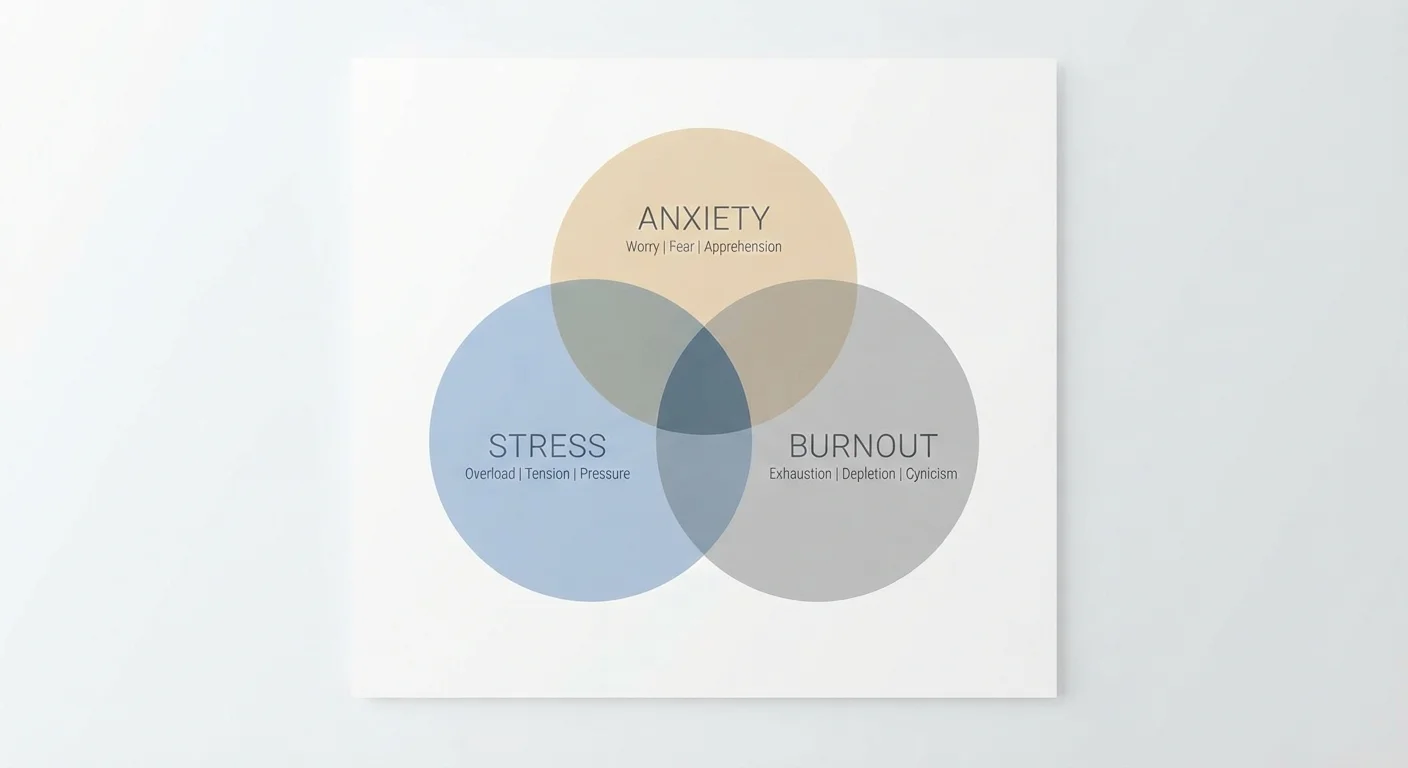
Photo credit: ResultsPoint.net | Find The Required Information
In this article
Stress, anxiety, and burnout share symptoms but aren't interchangeable. Learn what sets them apart and why accurate recognition shapes better coping strategies.
Key Takeaways
- Stress is typically tied to a specific external trigger and tends to ease when that trigger resolves.
- Anxiety persists even without a clear cause, often outlasting the situation that sparked it.
- Burnout develops gradually from prolonged, unrelenting stress — especially in high-demand environments.
- Misidentifying which state you're in can lead to coping strategies that don't actually help.
- All three conditions can overlap, but each calls for a somewhat different response.
- Persistent or severe symptoms from any of these states warrant a conversation with a healthcare professional.
Why the Labels Actually Matter
Most people use stress, anxiety, and burnout interchangeably, and it's easy to see why — all three can leave you feeling overwhelmed, irritable, and drained. But lumping them together can steer you toward coping strategies that simply don't fit the problem. Trying to 'push through' burnout with motivational self-talk, for instance, often makes it worse. Understanding what mental wellness actually means starts with being precise about the states that affect it.
This isn't about clinical diagnosis — that's a job for licensed professionals. It's about building enough self-awareness to respond more wisely to your own experience.
Name It to Tame It
Research in affective neuroscience suggests that labeling an emotional state — stress, anxiety, or burnout — can reduce its intensity by engaging the brain's regulatory centers. Before reaching for a coping tool, take a moment to honestly identify which state fits your experience. The distinction shapes everything from what you do next to how much grace you extend yourself.
Stress: A Response With a Source
Stress is the body and mind's reaction to a specific external demand — a looming deadline, a difficult conversation, a financial squeeze. It's essentially your nervous system signaling that something requires your attention. In the short term, stress is functional: it sharpens focus and mobilizes energy.
The defining feature of stress is that it has an identifiable cause, and when that cause resolves, the stress typically does too. After the presentation is done or the conflict is addressed, you can decompress. Problems arise when stressors pile up faster than they're resolved, creating a near-constant state of activation that wears the body down over time.
Common experiences include muscle tension, difficulty concentrating, disrupted sleep, and irritability — all of which tend to respond well to rest, physical activity, problem-solving, and social support once the trigger is addressed.
Anxiety: When the Alarm Keeps Ringing
Anxiety shares many of stress's physical symptoms — racing heart, tight chest, poor sleep — but operates differently at its core. While stress has an external source, anxiety often doesn't need one. It's characterized by persistent worry or fear that continues even when no immediate threat exists, or that is disproportionate to the actual situation.
You might finish a stressful project and feel relief. With anxiety, the worry often shifts targets: What if something else goes wrong? What if I'm not good enough? The concern becomes the driver, not the circumstance. This is why rest alone rarely quiets anxiety — the underlying pattern of thinking keeps generating the distress.
Strategies that help with anxiety tend to involve working with thought patterns directly. Understanding cognitive distortions — the habitual thinking traps that amplify distress — is one evidence-informed place to start. For persistent or severe anxiety, professional support is often part of a meaningful recovery.
Don't Normalize What Needs Attention
It's common to dismiss persistent anxiety or deep burnout as 'just stress' and push through without support. If symptoms are significantly interfering with daily functioning, sleep, or relationships — or if you're feeling hopeless rather than merely exhausted — please speak with a qualified healthcare provider. These states exist on a spectrum, and some presentations require professional assessment rather than self-help alone.
Burnout: Depletion Built Over Time
Burnout is what happens when stress becomes chronic and the recovery never quite catches up. Coined in occupational research and formally recognized by the World Health Organization as an occupational phenomenon, burnout is characterized by three core dimensions: emotional exhaustion, cynicism or detachment, and a reduced sense of personal effectiveness.
Where stress feels urgent and anxiety feels fearful, burnout often feels flat. People describe it as running on empty — going through the motions without any sense of meaning or investment. Small tasks feel monumental. Enthusiasm that once came easily is gone. Rest helps briefly but doesn't restore the baseline.
| Stress | Anxiety | Burnout | |
|---|---|---|---|
| Primary cause | External trigger or demand | Internal worry, often without clear cause | Chronic, unrelenting overextension |
| Duration | Short-term; resolves with trigger | Ongoing; can persist independently | Long-term; builds over months |
| Emotional tone | Urgency, frustration, tension | Fear, dread, unease | Detachment, numbness, cynicism |
| Energy level | Often still energized or reactive | Restless or on edge | Deeply depleted and flat |
| Responds to rest? | Usually yes | Partially — worry may persist | Only with sustained recovery |
| Common context | Deadline, conflict, life change | Generalized worry, health concerns | Workplace, caregiving, chronic overwork |
Recovery from burnout generally requires more than a vacation. It typically involves examining and changing the conditions that caused it — workload, boundaries, role clarity, or the environment itself. If navigating burnout touches your workplace, it may be worth reading about bringing up mental health at work before deciding on next steps.
83%
U.S. workers reporting work-related stress
The American Institute of Stress has consistently reported high rates of workplace stress among American workers across multiple surveys.
31%
Adults experiencing anxiety disorder at some point
According to the National Institute of Mental Health, anxiety disorders are among the most common mental health conditions in the United States.
Choosing the Right Response
Correctly identifying your state isn't just academic — it changes what you do next. Stress often responds to practical problem-solving, physical outlets, and short-term boundary-setting. Anxiety tends to call for structured approaches to unhelpful thought patterns, mindfulness practices, and, when persistent, professional guidance. Burnout asks for systemic change: not just self-care, but a genuine reassessment of demands, values, and sustainability.
All three can coexist, and all three exist on a spectrum. A helpful starting point is asking yourself: Is this tied to something specific? Does my worry persist even when nothing is actively wrong? Do I feel numb and detached rather than just tired? The answers won't replace professional evaluation, but they can point you in a useful direction.
If you're considering whether professional support or structured self-help tools make more sense for your situation, therapy vs. self-help offers a practical breakdown worth exploring.
This article is for general informational and educational purposes only. It is not a substitute for professional medical or mental health advice, diagnosis, or treatment. If you are experiencing persistent or severe symptoms, please consult a qualified healthcare professional.

Author
Health Editorial Team
Health Editorial Team is the collective byline for our editorial team and contributor network. Articles published under this byline or an editorial pen name are researched, written, and reviewed according to our editorial standards for clarity, consistency, and independence before publication.
View all articles →