
Caulk vs. Weatherstripping: Sealing Drafts the Right Way
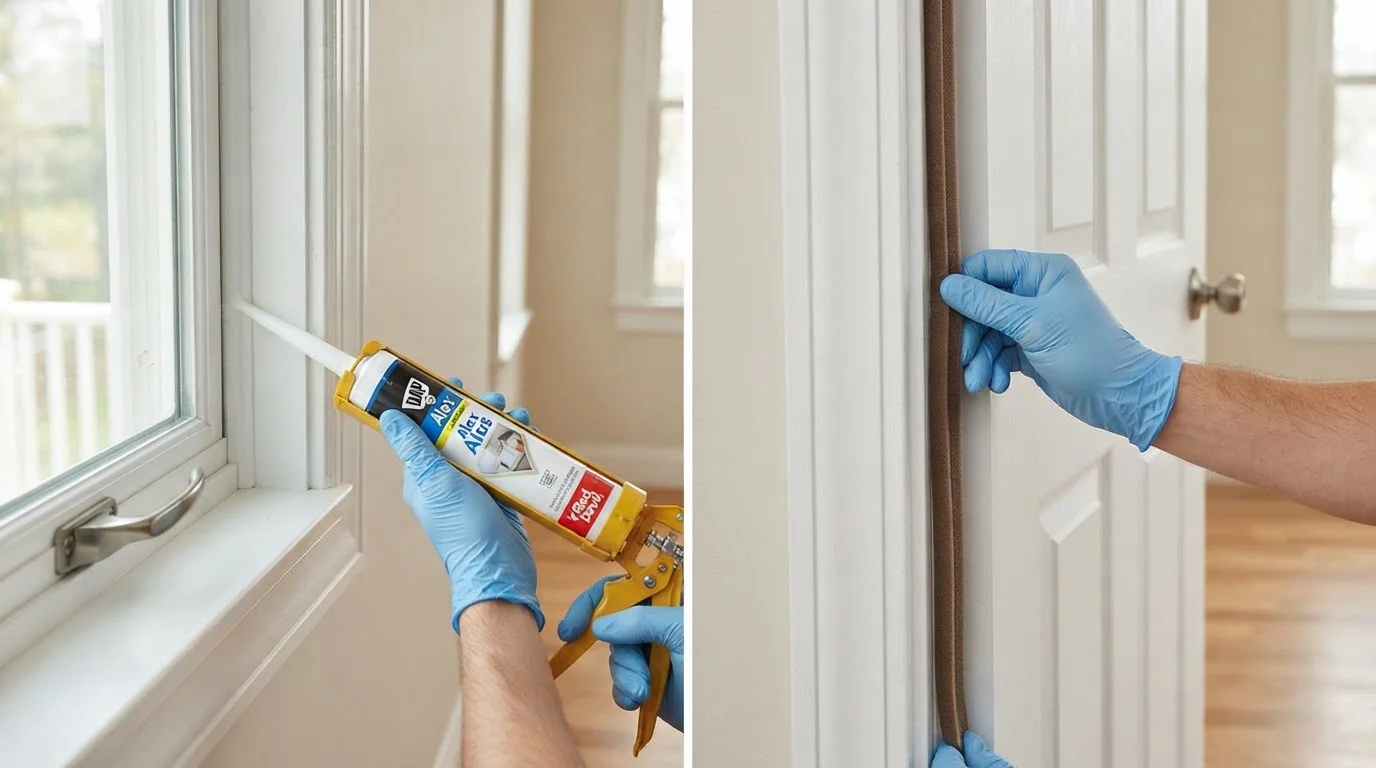
Photo credit: ResultsPoint.net | Find The Required Information
In this article
Both materials stop air leaks, but they're not interchangeable. Learn which one belongs around windows, doors, and frames — and when to use both.
Key Takeaways
- Caulk is designed for stationary, non-moving gaps and joints where surfaces don't shift.
- Weatherstripping handles the dynamic contact zones of doors and operable windows.
- Using caulk on a moving door edge will cause it to crack and fail quickly.
- Many installations benefit from both materials working together in different spots.
- Choosing the wrong product wastes time and money and leaves drafts unaddressed.
Why the Distinction Matters
A drafty window or door isn't just uncomfortable — it raises energy bills and strains your heating and cooling system. The fix sounds simple: seal the gap. But reaching for the wrong material is one of the most common DIY sealing mistakes homeowners make. Caulk applied to a door's moving edge will crack within a season. Weatherstripping stuffed into a fixed wall crack won't bond to anything and will fall out.
Both products stop air infiltration, but they're engineered for fundamentally different situations. The deciding factor is straightforward: does the surface move? If yes, you need weatherstripping. If no, you need caulk. For more on how foam sealant fits into the picture as a third option, see our guide to choosing between caulk, weatherstripping, and foam sealant.
| Criterion | Caulk | Weatherstripping |
|---|---|---|
| Best suited for | Stationary gaps and joints | Moving door and window edges |
| Flexibility after curing | Firm, bonds to surfaces | Compressible, springs back |
| Common locations | Window frames, door frames, trim-to-wall joints | Door stops, thresholds, operable sashes |
| Lifespan (typical) | 5–10 years depending on type | 1–5 years depending on traffic |
| Failure if misapplied | Cracks on moving parts quickly | Won't bond; falls out of fixed gaps |
| DIY skill level | Beginner-friendly with practice | Beginner-friendly; peel-and-stick options available |
Where Each Material Belongs
Caulk is a flexible sealant that cures into a firm, adhesive bead. It's designed to bridge fixed gaps — think the joint where a window frame meets the interior drywall, where exterior trim meets siding, or where a door frame contacts a wall. These surfaces don't shift relative to each other during normal use, so caulk can bond permanently and hold its shape. Silicone-based caulks work well in wet or high-temperature areas; latex-based (also called acrylic latex) caulks are easier to apply and paint over for interior use.
Weatherstripping, by contrast, is installed along surfaces that contact each other when a door or window closes — the door stop, the bottom edge (via a door sweep), and the side jambs. It works by compressing slightly when the door shuts, creating a seal, then springing back when the door opens. Common forms include foam tape, V-strip (tension seal), and door sweeps. The right type depends on the gap size and the amount of friction the material will experience.
25–30%
Home heating/cooling energy lost through air leaks
The U.S. Department of Energy estimates that air infiltration through gaps, cracks, and openings accounts for roughly a quarter to a third of home heating and cooling energy loss.
$0.50–$3
Cost per linear foot for weatherstripping materials
General hardware store pricing for common foam tape and V-strip weatherstripping reflects a low-cost, high-impact DIY upgrade for most homeowners.
How to Identify Which Gap Needs What
A simple inspection on a windy day is often enough. Hold your hand around the perimeter of a closed door or window. Feel for air:
- Along the frame where it meets the wall or trim: This is a stationary joint — caulk is the right fix. Look for visible cracks or gaps in the existing caulk bead, or places where paint bridges are broken.
- Around the door slab's edges or at the threshold: Air here means the door isn't seating properly against its stop — weatherstripping is your answer. Check whether the existing strip is compressed flat, torn, or missing entirely.
- Around an operable window sash: The sash (the moving part that holds the glass) needs weatherstripping on its contact edges, while the surrounding frame-to-wall joint needs caulk.
When both sources are present, address each with its correct material. Layering one over the other won't compensate for the wrong product in the wrong place.
Don't Caulk a Door Shut
It's tempting to run a bead of caulk along the bottom of an interior door to stop a draft, but this will seal the door to the floor or threshold and may damage both surfaces when the door is forced open. Always use a door sweep or threshold seal for the bottom edge of any door that operates. Reserve caulk strictly for non-moving frame-to-wall joints.

Author
Home Editorial Team
Home Editorial Team is the collective byline for our editorial team and contributor network. Articles published under this byline or an editorial pen name are researched, written, and reviewed according to our editorial standards for clarity, consistency, and independence before publication.
View all articles →