
Myths About Insulation That Lead Homeowners to Spend More Than They Need To
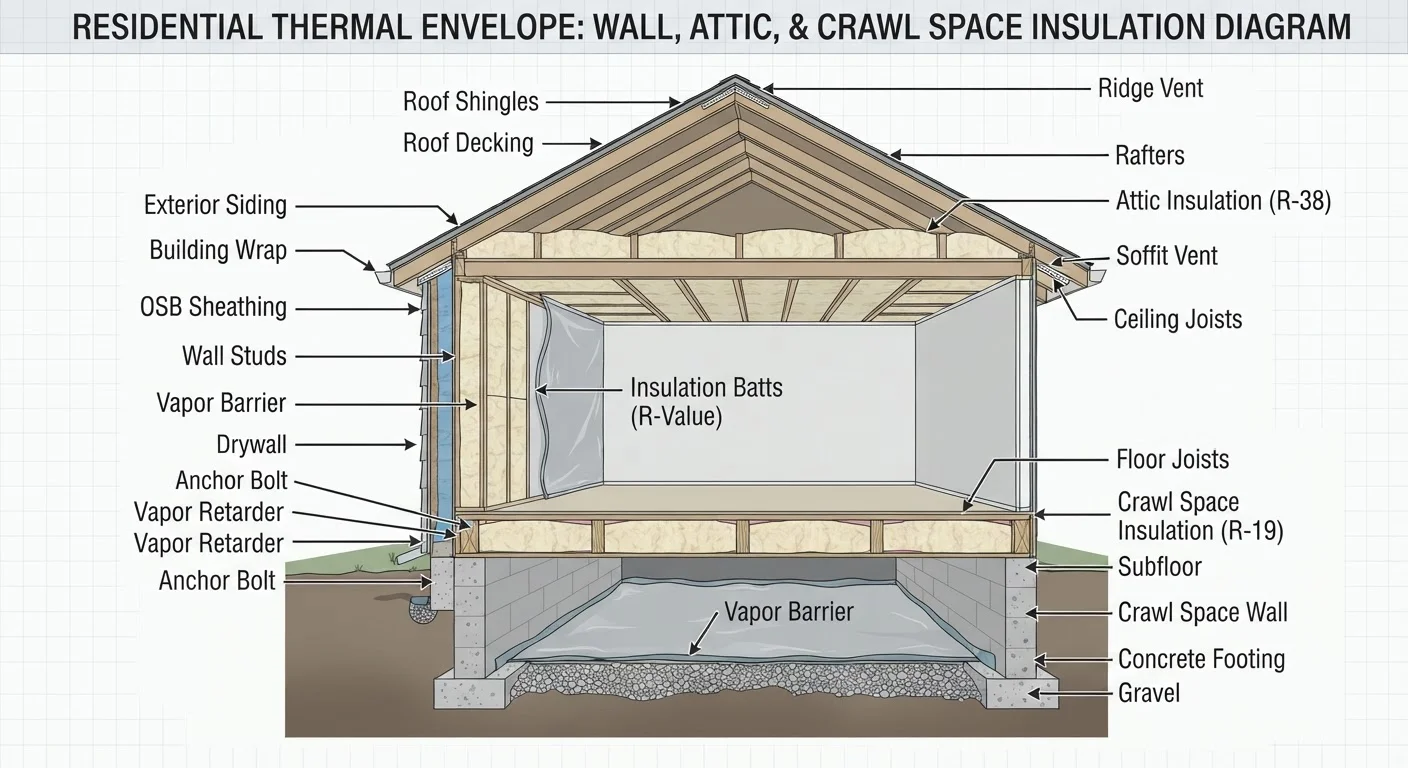
Photo credit: ResultsPoint.net | Find The Required Information
In this article
More insulation isn't always better, and attic insulation isn't the only place it counts. Separate insulation fact from widespread fiction.
Key Takeaways
- More insulation is not always better — every home has an optimal R-value range beyond which returns diminish.
- Attic insulation matters, but walls, floors, and crawl spaces are equally important heat-loss zones.
- Insulation alone cannot fix air leaks; sealing gaps is a separate and essential step.
- Vapor barriers and insulation serve different functions and are not interchangeable.
- DIY insulation can be appropriate for some areas, but certain jobs require a licensed professional.
Why Insulation Myths Cost Homeowners Real Money
Insulation is one of the most cost-effective ways to improve a home's comfort and energy efficiency — but it's also one of the most misunderstood. Widespread myths lead homeowners to over-buy materials they don't need, skip critical areas they haven't thought about, or assume a single upgrade will solve every draft and high energy bill they've ever had.
The result is wasted spending and continued frustration. Understanding what insulation actually does — and what it doesn't — lets you make smarter decisions before calling a contractor or loading up a cart at the hardware store. For a broader look at home improvement misconceptions, see our Home Maintenance Myths That Cost Homeowners Money.
Myth
The more insulation you add, the better — there's no such thing as too much.
Fact
Every climate zone has a recommended R-value range; beyond that threshold, additional insulation provides negligible benefit and wastes money.
R-value measures a material's resistance to heat flow. The U.S. Department of Energy publishes recommended R-value ranges by climate zone for attics, walls, and floors. Once you've hit the upper end of that range, each additional inch of insulation returns less and less energy savings — a concept engineers call diminishing returns. Adding R-60 worth of insulation to a home in a mild climate that only calls for R-38 won't halve your heating bill; it may save almost nothing while adding unnecessary cost and weight.
Myth
Attic insulation is all that really matters — walls and floors are secondary.
Fact
Heat escapes through every envelope surface. Walls and floors — especially over unheated crawl spaces — can account for a significant share of total heat loss.
The building envelope includes every surface separating conditioned indoor air from the outdoors: the roof/attic, exterior walls, windows, doors, and the floor above any unheated space. Energy modeling research consistently shows that under-insulated walls and uninsulated crawl spaces can together rival or exceed attic losses in many home types. Focusing only on the attic and ignoring these zones means paying for a partial solution.
Myth
Insulation seals your home — you don't need to worry about air leaks separately.
Fact
Insulation slows heat conduction but does not stop air movement. Air sealing is a distinct task that must be addressed on its own.
Fiberglass batts, mineral wool, and even most spray foam installations leave gaps around penetrations, electrical boxes, and framing irregularities. Air infiltration — drafts — transfers heat far faster than conduction through a solid wall. The two problems require two solutions: insulation addresses conduction, while caulk, weatherstripping, and foam sealant address infiltration. Skipping air sealing and piling on more insulation is a common and costly mistake.
Myth
A vapor barrier and insulation do the same job, so you only need one.
Fact
Vapor barriers control moisture diffusion; insulation controls heat transfer. In many climates, both are needed and they work together, not interchangeably.
Moisture that diffuses through walls can condense inside insulation, reducing its effectiveness and promoting mold growth. A vapor retarder (the technically more accurate term for most products) is installed to limit that diffusion. Whether you need one, where it goes, and which type depends heavily on your climate zone and wall assembly. Installing the wrong vapor control layer — or omitting insulation thinking the barrier covers it — can actually worsen moisture problems. Consult local building codes or a building science professional when in doubt.
Myth
New insulation means you'll recoup the cost almost immediately through energy savings.
Fact
Payback periods vary widely depending on existing insulation levels, local energy prices, climate, and where you insulate. Realistic timelines range from a few years to over a decade.
Payback is fastest when you're upgrading a home with little or no existing insulation in a cold climate with high energy costs. It's much slower when you're adding modest amounts to an already reasonably insulated home in a mild climate. Getting an energy audit first helps you target the upgrades with the shortest realistic payback, rather than making wholesale changes based on an assumed return that may not materialize.
The Insulation Decisions That Actually Move the Needle
Once you've separated fact from fiction, the path forward becomes much clearer. Start with an energy audit — many utility companies offer them free or at low cost — to identify exactly where your home is losing conditioned air. This eliminates guesswork and prevents you from insulating the wrong areas first.
Up to 30%
Of home heating and cooling energy lost through air leaks
The U.S. Department of Energy estimates that air infiltration can account for up to 30% of heating and cooling energy use in a typical home.
15%
Of a home's heat lost through the floor
According to building science estimates, floors above unheated spaces such as garages and crawl spaces can account for roughly 15% of total heat loss in under-insulated homes.
Pay particular attention to air sealing before you add or replace insulation. Caulk and weatherstrip around windows, doors, and any penetrations (pipes, wires, recessed lights) before laying down new batts or blowing in loose fill. Insulation that sits over an unsealed gap is doing only part of the job.
Don't Skip Permits for Spray Foam or Major Insulation Work
In many jurisdictions, significant insulation upgrades — particularly spray polyurethane foam applied to large areas — may require a building permit or inspection. Unpermitted work can create problems when you sell your home and may not meet current fire safety codes. Always check with your local building department before starting a major insulation project, and verify whether a licensed contractor is required in your area.
If your home was built before 1980, have an inspector check for asbestos in existing insulation materials before disturbing them. Attic insulation in older homes can sometimes contain vermiculite or other materials that require professional remediation rather than a weekend DIY project. Your best investment is accurate information first, materials second.

Author
Home Editorial Team
Home Editorial Team is the collective byline for our editorial team and contributor network. Articles published under this byline or an editorial pen name are researched, written, and reviewed according to our editorial standards for clarity, consistency, and independence before publication.
View all articles →