
Month-to-Month vs. Fixed-Term Lease: Which Arrangement Fits Your Situation?
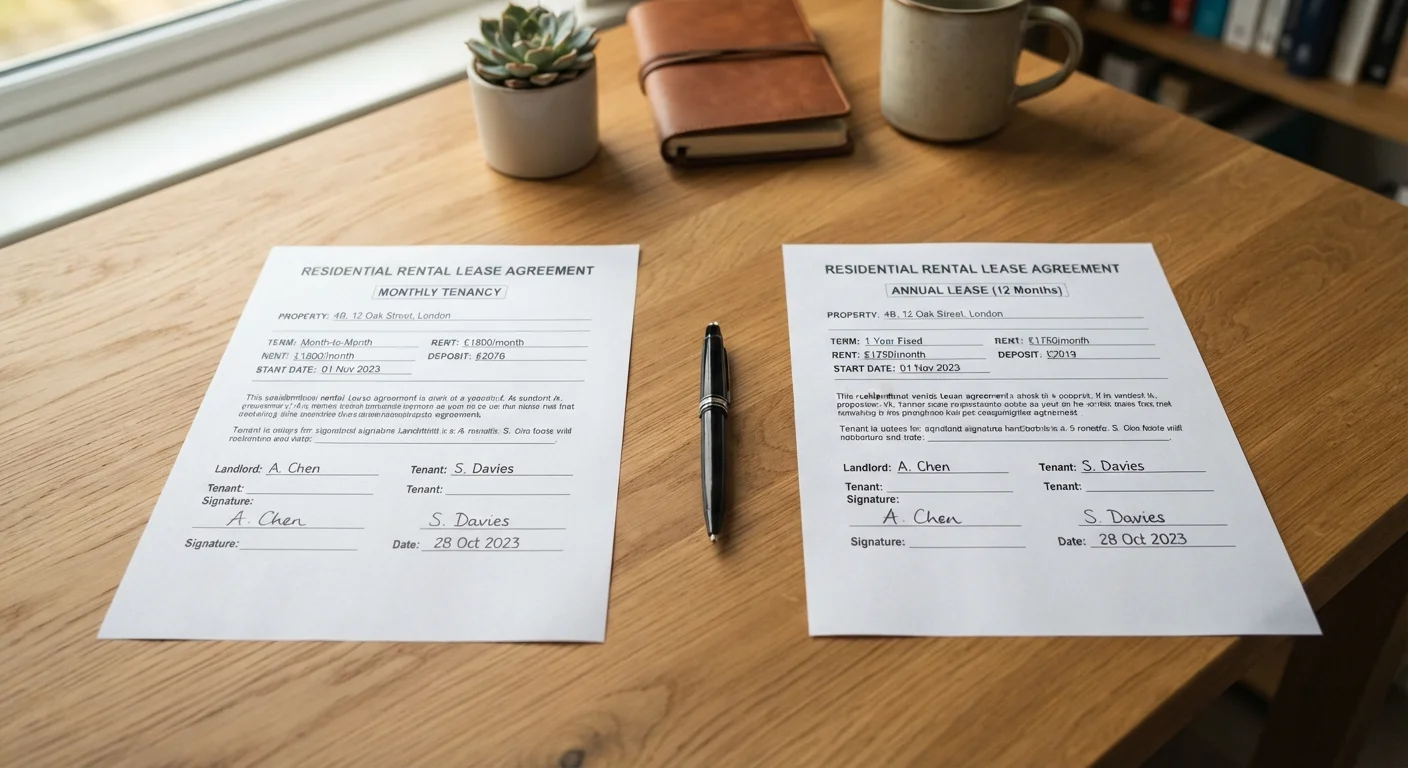
Photo credit: ResultsPoint.net | Find The Required Information
In this article
Month-to-month offers flexibility; fixed-term offers stability. Understand the real trade-offs before you commit to either.
Key Takeaways
- Month-to-month leases offer flexibility but typically come with higher rent and shorter notice protections.
- Fixed-term leases lock in your rent and provide housing stability for a defined period, usually 12 months.
- Breaking a fixed-term lease early can carry significant financial penalties — understand these before signing.
- Landlords can raise rent or end a month-to-month arrangement with relatively short notice in most states.
- Your life circumstances — job stability, family situation, local market — should guide which lease type you choose.
What Each Lease Type Actually Means
A month-to-month lease (sometimes called a periodic tenancy) automatically renews each month unless either the landlord or tenant gives notice to end it. There is no fixed end date. A fixed-term lease, by contrast, runs for a defined period — most commonly 12 months — with a set start and end date agreed upon by both parties at signing.
Both are legally binding contracts. The difference is duration and what happens when either party wants to change course. Understanding that distinction is the starting point for deciding which arrangement fits your situation. For a broader look at the renting decision itself, see how renting and buying compare financially and practically.
| Criterion | Month-to-Month Lease | Fixed-Term Lease |
|---|---|---|
| Commitment length | Renews monthly, no end date | Set term, typically 12 months |
| Rent stability | Can change with proper notice | Locked in for the full term |
| Exit flexibility | Leave with ~30 days' notice | Penalties may apply if leaving early |
| Typical rent level | Often higher than fixed-term | Usually lower, reflects commitment |
| Landlord can end tenancy | Yes, with notice (often 30 days) | Not until term ends (with exceptions) |
| Best for housing stability | Lower — terms can shift quickly | Higher — terms protected during term |
| Common availability | Less common; varies by market | Standard offering in most markets |
The Real Trade-Offs: Flexibility vs. Stability
The core appeal of a month-to-month lease is mobility. If your circumstances change — a new job in another city, a change in household size, or the opportunity to buy a home — you can typically exit with 30 days' notice (though some states require more; always read your lease and check local law). That said, this flexibility has a cost. Landlords often charge a premium rent for month-to-month arrangements, sometimes 10–20% above what a comparable unit would rent for on a fixed term, because they carry more vacancy risk.
Month-to-month tenants also face a different kind of insecurity: landlords can end the arrangement or raise rent with the same short notice required of tenants. In most states, that means 30 days, though some jurisdictions with stronger tenant protections require longer notice periods or limit rent increases. If stable housing is a priority, this unpredictability is a meaningful downside.
Fixed-term leases eliminate most of that uncertainty during the lease period. Your rent is set, your tenancy is protected until the end date, and neither party can unilaterally alter core terms. The trade-off is commitment: if you need to leave before the term ends, you may owe early termination fees, remain liable for rent until a new tenant is found, or both. Some leases include an early termination clause with defined penalties; others do not. Review this section carefully before signing.
~30 days
Typical notice to end a month-to-month tenancy
Most US states require at least 30 days' written notice from either party, though some jurisdictions mandate longer periods after extended tenancies.
12 months
Most common fixed-term lease length in the US
Annual leases are the standard offering in most US rental markets, though shorter fixed terms (six months) are available in some regions.
1–2 months
Common early termination fee range
When fixed-term leases include an early termination clause, the penalty is often one to two months' rent, though lease terms vary widely.
How Notice Requirements and Rent Changes Work
Notice rules vary by state and sometimes by city, so the following is general guidance — always verify the specific rules that apply where you live.
- Month-to-month termination: Either party typically gives 30 days' written notice, though some states require 60 days from landlords, especially after longer tenancies.
- Fixed-term termination: The lease ends on the agreed date. Many leases require the tenant to give notice of intent to vacate (commonly 30–60 days before the end date) even though the term is fixed — failing to do so can trigger automatic renewal or penalties.
- Rent increases on month-to-month: Landlords can generally raise rent with proper notice (often 30 days), subject to any local rent control laws.
- Rent increases on fixed-term: The landlord cannot raise rent during the term. Any increase takes effect only upon renewal or when a new lease is signed.
When your fixed-term lease nears its end, you typically have several options beyond simply signing again. Learn what to know about renewals, rent increases, and negotiating before that moment arrives.
Local Laws Can Change the Picture Significantly
Rent control ordinances, just-cause eviction requirements, and extended notice mandates exist in a number of US cities and states — and they can significantly strengthen tenant protections beyond the default rules described here. Before signing any lease, it's worth researching the specific tenant-protection laws in your city and state, or speaking with a local tenant advocacy organization. What's standard in one jurisdiction may not apply in another.
Which Arrangement Makes Sense for You
Neither lease type is objectively better — the right choice depends on your life situation, financial priorities, and local rental market. A few practical questions can help clarify your thinking:
- How confident are you about staying in the area for at least a year? If the answer is uncertain, the flexibility of month-to-month may be worth the higher rent.
- How tight is the local rental market? In highly competitive markets, landlords rarely offer month-to-month leases or reserve them for higher-priced units. You may not have a meaningful choice.
- What are the early termination terms? If a fixed-term lease includes a reasonable exit clause — say, two months' rent — it may offer more flexibility than it appears.
- Are you approaching a potential home purchase? If buying is on your horizon, consider that a fixed-term lease could delay your ability to act on a purchase. For more on thinking through that decision, see how to weigh renting versus buying.
Also consider reviewing related lease topics — like subletting, co-signers, and lease transfers — to understand the full range of arrangements your lease may allow or restrict.
This article is for general informational and educational purposes only and does not constitute legal or financial advice. Lease laws and tenant rights vary significantly by state and locality. Consult a qualified attorney or tenant advocacy organization for guidance specific to your situation.

Author
Real Estate Basics Editorial Team
Real Estate Basics Editorial Team is the collective byline for our editorial team and contributor network. Articles published under this byline or an editorial pen name are researched, written, and reviewed according to our editorial standards for clarity, consistency, and independence before publication.
View all articles →