
The Fluids Under Your Hood and Why Each One Matters
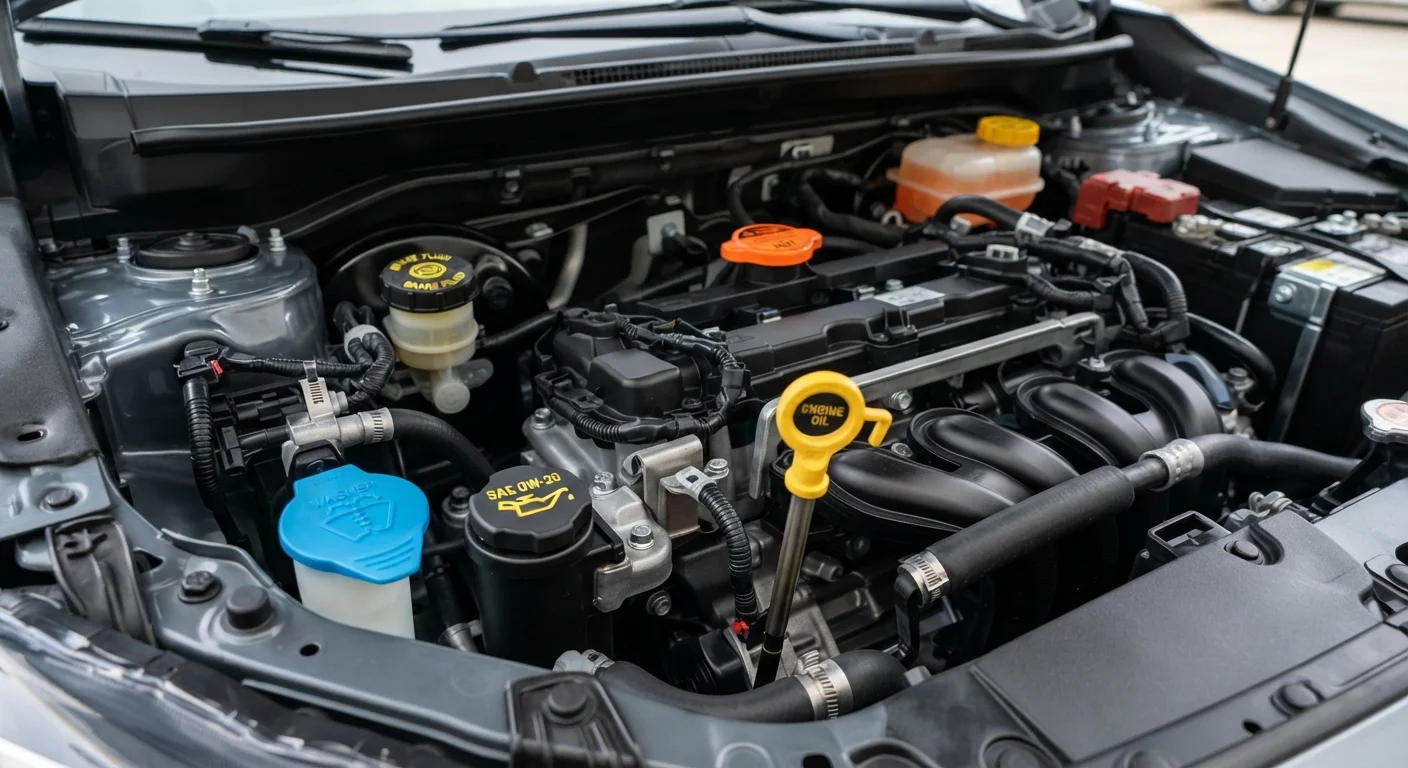
Photo credit: ResultsPoint.net | Find The Required Information
In this article
Engine oil, coolant, brake fluid, transmission fluid, and more — a clear guide to what each fluid does and how to spot when levels are off.
Why Fluids Are the Lifeblood of Your Vehicle
Your car relies on at least six distinct fluids to keep its systems running safely and efficiently. Each one does a specific job — lubrication, cooling, hydraulic pressure, cleaning — and when any one of them runs low or degrades, the consequences range from reduced performance to serious mechanical damage. The good news: checking most of these fluids takes less than five minutes and costs nothing.
This guide is part of the broader complete owner's maintenance roadmap — a useful companion if you want to see how fluid care fits into your vehicle's overall upkeep schedule.
| Engine Oil Change Interval (Synthetic) | 7,500–10,000 miles (typical) (Varies by manufacturer and driving conditions) |
| Coolant Mixture Ratio | 50% antifreeze, 50% distilled water (General industry standard; verify with your owner's manual) |
| Brake Fluid Replacement | Every 2 years or ~30,000 miles (Common manufacturer recommendation) |
| Number of Key Fluids to Monitor | 6 (Engine oil, coolant, brake, transmission, power steering, washer fluid) |
| Most Expensive Fluid-Related Failure | Engine overheating (coolant loss) (Engine replacement can run $3,000–$10,000+) |
The Six Fluids Every Driver Should Know
Engine Oil is the most critical fluid in your car. It lubricates moving metal parts inside the engine, reduces heat from friction, and helps carry away contaminants. Oil degrades over time — it gets dirty and loses viscosity. Most modern vehicles call for an oil change every 5,000–7,500 miles with conventional oil, or every 7,500–10,000 miles with full synthetic, though your owner's manual has the definitive interval for your engine.
Coolant (Antifreeze) circulates between your engine and radiator to regulate temperature, preventing both overheating in summer and freezing in winter. It's typically a 50/50 mix of ethylene glycol and distilled water. A low coolant level or degraded mixture raises the risk of engine overheating — one of the most expensive failures a driver can face.
Brake Fluid is a hydraulic fluid that transmits the force from your brake pedal to the calipers or drums at each wheel. It absorbs moisture over time, which lowers its boiling point and can cause spongy brake feel or, in extreme cases, brake fade. Most manufacturers recommend replacing it every two years or 30,000 miles.
Transmission Fluid lubricates gears, clutch packs, and valve bodies inside your transmission. Automatic and manual transmissions use different fluid types — never substitute one for the other. Dark, burnt-smelling fluid is a reliable sign it's time for a change.
Power Steering Fluid provides hydraulic assist to your steering rack. Many newer vehicles use electric power steering and don't have this reservoir at all, but if yours does, low or dirty fluid can make steering feel heavy or produce a whining noise when turning.
Windshield Washer Fluid is the simplest but most commonly neglected. It's not a mechanical necessity, but running out at the wrong moment — behind a salt truck in winter, for example — is a real safety issue. Use a fluid rated for freezing temperatures in cold climates; plain water will freeze in the lines.
Viscosity
A measure of how thick or thin a fluid is and how easily it flows. Engine oil viscosity ratings (like 5W-30) describe performance at cold start and operating temperature.
ATF (Automatic Transmission Fluid)
Specialized fluid used in automatic transmissions to lubricate gears and enable hydraulic gear shifting. It differs significantly from manual transmission fluid.
Coolant / Antifreeze
A glycol-based fluid mixed with water that circulates through the engine and radiator to regulate temperature in both hot and freezing conditions.
Hydraulic Fluid
Any fluid used to transmit mechanical force through a pressurized system. Brake fluid and power steering fluid are both hydraulic fluids in your vehicle.
Boiling Point (Brake Fluid)
The temperature at which brake fluid begins to vaporize. Moisture contamination lowers this threshold, increasing the risk of brake fade under heavy use.
How to Spot a Problem Before It Gets Expensive
Many fluid problems announce themselves through color, smell, or texture before they trigger a dashboard warning. Here's a quick reference:
- Engine oil — Healthy oil is amber to light brown. Black, gritty oil is overdue for a change. A milky, frothy appearance can indicate coolant contamination — see a mechanic promptly.
- Coolant — Should be bright green, orange, or pink depending on the type. Rusty or murky coolant has lost its corrosion inhibitors.
- Brake fluid — New fluid is nearly clear to pale yellow. Dark brown fluid has absorbed too much moisture. Never top off brake fluid without investigating why the level dropped — it may signal a leak or worn brake pads.
- Transmission fluid — Healthy ATF (automatic transmission fluid) is red and slightly translucent. Dark red or brown fluid with a burnt odor needs attention.
If a warning light appears alongside a fluid issue, the dashboard warning light guide can help you interpret what your car is trying to tell you. For a full picture of service intervals — including when each fluid is typically changed — see your car's maintenance schedule, explained.
Check Your Owner's Manual First
Fluid type and change intervals vary widely by make, model, and model year. The intervals listed in this article are general guidelines, not universal rules. Your owner's manual specifies the exact fluid grades and schedules your vehicle requires — using the wrong fluid can void your warranty or damage components.
This article is for general informational purposes only. Always consult your vehicle's owner's manual and a qualified mechanic before performing or delaying any maintenance.

Author
Autos Editorial Team
Autos Editorial Team is the collective byline for our editorial team and contributor network. Articles published under this byline or an editorial pen name are researched, written, and reviewed according to our editorial standards for clarity, consistency, and independence before publication.
View all articles →