
Popular Budgeting Methods Compared: Envelope, 50/30/20, Pay Yourself First, and More
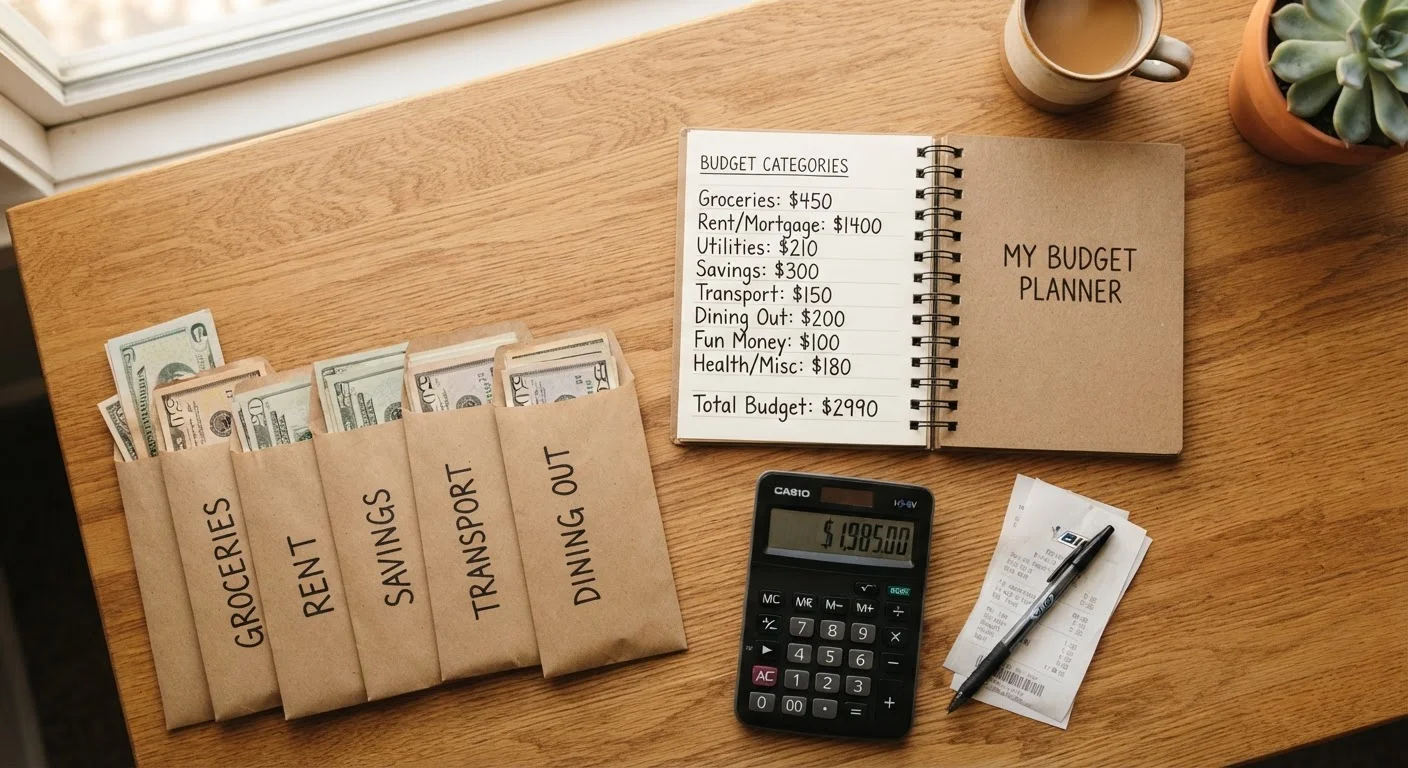
Photo credit: ResultsPoint.net | Find The Required Information
In this article
A side-by-side look at five common budgeting frameworks — what each one prioritizes, who it suits best, and where it tends to fall short.
Key Takeaways
- No single budgeting method works for everyone — the right fit depends on your income type, habits, and goals.
- The 50/30/20 rule offers simplicity, while zero-based budgeting gives the most granular control.
- The envelope method works especially well for people who overspend on variable categories like food and entertainment.
- Pay Yourself First prioritizes saving automatically, making it useful for those who struggle to save what's left over.
- You can combine elements from multiple methods to build a system that fits your actual life.
Why Budgeting Methods Differ — and Why That Matters
Budgeting is not one-size-fits-all. The same income, the same expenses, and two different methods can produce very different results — not because the math changes, but because the behavior each method encourages is different. Some frameworks are built around simplicity; others demand precision. Some assume a steady paycheck; others are adaptable to variable income.
Understanding what each approach is actually designed to do helps you choose one that works with your habits rather than against them. For a deeper foundation before diving into comparisons, see The Complete Guide to Personal Budgeting.
The five methods covered here — 50/30/20, envelope budgeting, Pay Yourself First, zero-based budgeting, and the values-based approach — represent a range of philosophies. Each has genuine strengths and real limitations.
The Five Methods at a Glance
Here is how the five most widely used budgeting frameworks compare across the criteria that tend to matter most to everyday budgeters.
| 50/30/20 Rule | Envelope Method | Pay Yourself First | Zero-Based Budgeting | Values-Based Budget | |
|---|---|---|---|---|---|
| Core principle | Split income into 3 fixed buckets | Spend only pre-loaded cash per category | Save first, spend the rest | Assign every dollar a job | Align spending with personal priorities |
| Effort level | Low | Medium | Low to medium | High | Medium |
| Best income type | Steady/salaried | Steady or variable | Steady/salaried | Steady or variable | Stable, with some surplus |
| Savings emphasis | Built-in 20% target | Depends on setup | Core mechanic | Explicitly assigned | Flexible, user-defined |
| Spending visibility | Low — category-level only | High — physical limits | Low — focus is on saving | Very high — line by line | Medium — self-directed |
| Main limitation | Percentages may not fit all incomes | Inconvenient without cash use | Doesn't address overspending | Time-consuming to maintain | Requires strong self-awareness |
The table above captures the broad strokes. The sections below explain what each method actually involves and who it tends to serve well.
50/30/20, Envelope, and Pay Yourself First: The Core Three
The 50/30/20 Rule divides after-tax income into three buckets: 50% toward needs (rent, utilities, groceries), 30% toward wants (dining out, subscriptions, hobbies), and 20% toward savings and debt repayment. Its appeal is its simplicity — you don't need to track individual purchases, just monitor whether your spending in each category is roughly on target. The tradeoff is that the percentages don't fit every household. Someone in a high-cost city may find 50% barely covers housing alone. What the 50/30/20 Rule Actually Means for Your Money explores this tension in more detail.
The Envelope Method uses physical cash (or a digital equivalent) divided into labeled envelopes for each spending category. When an envelope is empty, spending in that category stops for the month. This method is highly effective for people who find it easier to understand limits when money is tangible. It can feel cumbersome for those who rarely use cash, though several apps now replicate the envelope concept digitally. For a side-by-side look at cash versus digital tools, see Envelope Budgeting vs. Digital Tracking Apps.
Pay Yourself First flips the usual budgeting order. Instead of saving whatever remains after spending, you move a set amount to savings the moment income arrives — and live on what's left. This approach automates the hardest part of saving and removes the temptation to spend first. It is particularly well suited to people with stable income who simply find that savings never materializes at month's end. The method offers less visibility into day-to-day spending, which can be a drawback if overspending on discretionary items is the core problem.
Automate to Make Pay Yourself First Work
The simplest way to execute a Pay Yourself First strategy is to set up an automatic transfer to your savings account on the same day your paycheck arrives. Even a modest fixed amount moved consistently tends to accumulate faster than saving whatever happens to remain at month's end. Check whether your employer allows direct deposit splits — many do, which removes the manual step entirely.
Zero-Based Budgeting and the Values-Based Approach
Zero-Based Budgeting (ZBB) requires assigning every dollar of income to a specific category — expenses, savings, or debt — until the remaining balance reaches zero. The goal is intentionality: no dollar goes unplanned. This method gives the most detailed picture of where money goes, but it demands consistent effort. It tends to suit people who enjoy structure or who are working through a specific financial challenge, such as paying off significant debt. The 50/30/20 Rule vs. Zero-Based Budgeting offers a focused head-to-head if you are deciding between these two.
The Values-Based Budget is less a rigid system and more a philosophy: spend freely on what you genuinely prioritize, cut aggressively on what you don't, and ensure savings goals are funded. It works well for people who find traditional category limits demotivating, but it requires honest self-reflection and some financial stability to execute well. It pairs naturally with Pay Yourself First mechanics.
If your income fluctuates month to month — as it does for freelancers and gig workers — some of these frameworks need significant adaptation. Budgeting on an Irregular Income covers approaches designed for that reality.
This article is for general informational purposes only and does not constitute personalized financial advice. Consider consulting a qualified financial professional regarding decisions specific to your situation.

Author
Finance Editorial Team
Finance Editorial Team is the collective byline for our editorial team and contributor network. Articles published under this byline or an editorial pen name are researched, written, and reviewed according to our editorial standards for clarity, consistency, and independence before publication.
View all articles →