
Envelope Budgeting vs. Digital Tracking Apps: Two Approaches to Spending Control
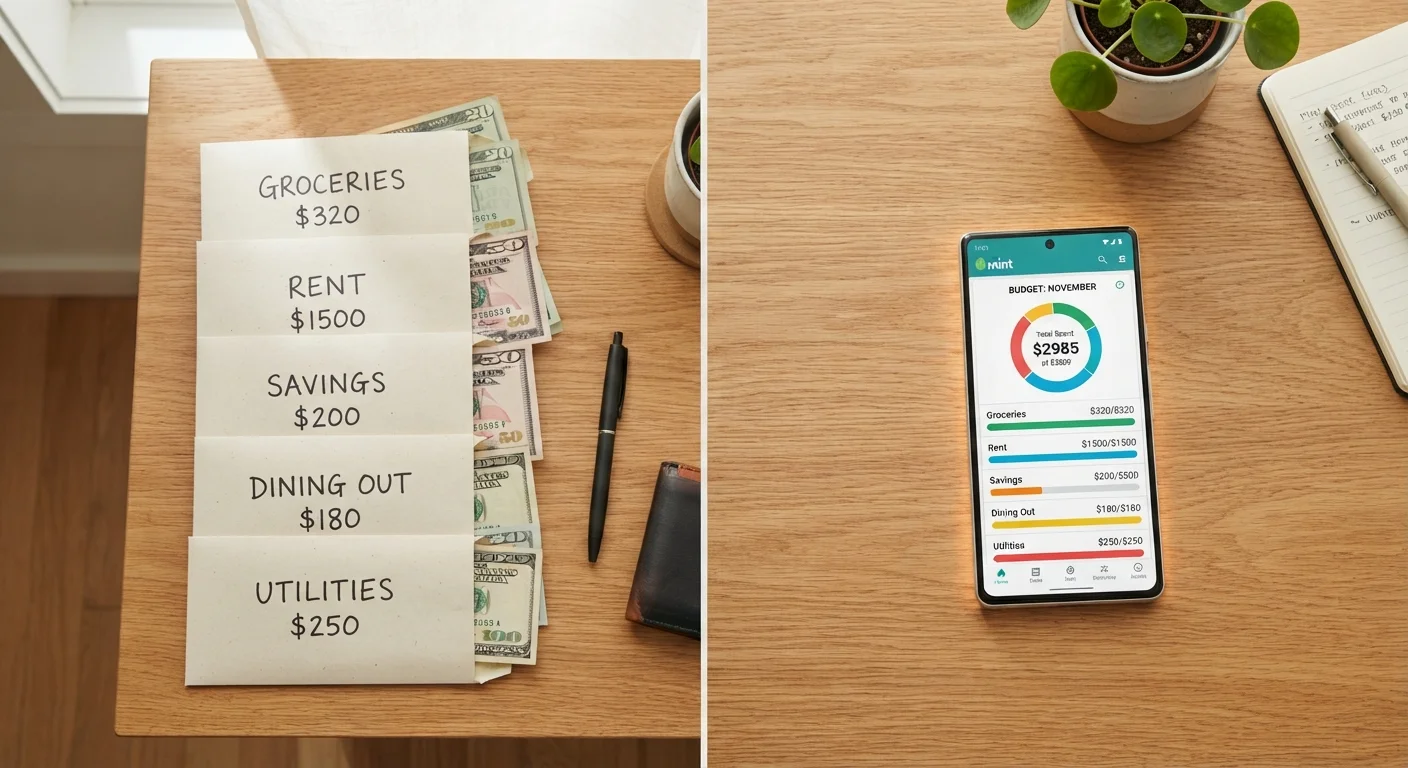
Photo credit: ResultsPoint.net | Find The Required Information
In this article
Cash envelopes and digital tools both help you stick to a budget — but they work very differently. Here's an honest look at the trade-offs of each.
Key Takeaways
- Envelope budgeting uses physical cash divided into labeled categories to enforce hard spending limits.
- Digital tracking apps connect to accounts automatically, giving you a live picture of where your money goes.
- The envelope method makes overspending physically impossible within a category; apps rely on self-discipline after the fact.
- Apps handle digital transactions naturally; envelopes struggle when most spending happens on cards or online.
- Neither method is universally superior — the one you'll actually stick with is the one that works for you.
- Both approaches can be combined: use envelopes for problem categories and an app for the bigger picture.
How Each Method Actually Works
Envelope budgeting is about as straightforward as it sounds. At the start of each pay period, you withdraw your budgeted cash and divide it into labeled envelopes — one for groceries, one for gas, one for dining out, and so on. When an envelope is empty, spending in that category stops until the next refill. No negotiation, no borrowing from tomorrow.
Digital tracking apps work differently. You link your bank accounts, credit cards, and other financial accounts to the app. From there, transactions flow in automatically and get sorted into spending categories. Instead of a hard physical limit, you get a live dashboard showing how much you've spent versus what you planned.
Both approaches are grounded in the same principle: assign every dollar a job before you spend it. If you're new to that concept, our beginner's budgeting guide walks through the foundational steps from scratch. And for a broader look at how these methods fit alongside frameworks like 50/30/20 or zero-based budgeting, see our comparison of popular budgeting methods.
| Criterion | Envelope Budgeting | Digital Tracking Apps |
|---|---|---|
| How it works | Physical cash sorted into labeled envelopes | Accounts linked; transactions auto-categorized |
| Spending enforcement | Hard stop — empty envelope means no more spending | Soft limit — relies on self-discipline after alerts |
| Works with digital payments | Poorly — requires manual workarounds | Seamlessly — captures all card and online transactions |
| Setup effort | Moderate — requires regular cash withdrawals | Low after initial account linking |
| Spending insights over time | Limited without manual record-keeping | Strong — charts and trends generated automatically |
| Security considerations | Risk of lost or stolen cash | Data privacy and account access permissions to manage |
| Best for shared budgets | Difficult to coordinate between multiple people | Easy with shared dashboards or multi-user features |
Where Each One Shines — and Where It Struggles
The envelope method's biggest strength is its built-in accountability. Paying in cash activates a psychological response that tapping a card does not — studies in consumer behavior consistently suggest people spend more carefully when handing over physical bills. The limit is concrete and immediate.
But that same physicality becomes a weakness in a digital-first economy. Buying online, paying bills automatically, or splitting costs via payment apps doesn't map cleanly onto cash envelopes. Workarounds exist — like maintaining a manual ledger alongside your envelopes — but they add friction.
Digital apps remove that friction entirely. Once your accounts are linked, every swipe, tap, and auto-payment is recorded. You can see a full month's spending on fixed and variable expenses broken out in seconds. The downside: apps show you what happened. They don't stop you from overspending the way an empty envelope does. Self-awareness has to do the heavy lifting.
~30%
More spent when paying by card vs. cash
Behavioral economics research has consistently found that the abstract nature of card payments reduces the psychological 'pain of paying' compared with handing over cash.
1 in 3
Americans who say they don't follow a budget
Survey data from the National Foundation for Credit Counseling has repeatedly found that a significant share of U.S. adults have no formal spending plan.
Security is worth noting too. Carrying large amounts of cash carries physical risk. Digital apps require vigilance about account permissions and data privacy — always review what access an app requests before connecting accounts.
Choosing the Right Fit — or Mixing Both
The honest answer is that the best budgeting method is the one you'll actually use consistently. If the idea of sorting cash into envelopes feels tedious or impractical given your lifestyle, you're unlikely to maintain it. Conversely, if seeing numbers on a screen doesn't create a real sense of limit for you, an app alone may not change your habits.
Many people find a hybrid works well: use a digital app to track the overall budget and recurring bills, but apply the envelope approach to the two or three categories where overspending is a recurring problem. That targeted friction can be enough to shift behavior without requiring a full cash-only lifestyle.
The Hybrid Approach Worth Considering
You don't have to choose one method exclusively. A common strategy is to use a digital app for fixed bills, savings contributions, and overall tracking, while reserving physical envelopes for the two or three categories — often groceries, dining, or entertainment — where you tend to overspend. This limits the inconvenience of cash while still applying a hard limit where it's most needed.
Whatever you choose, the method fits within a larger financial picture. The complete guide to personal budgeting covers how to build habits that outlast any single tool. And if budgeting is part of a larger goal — like paying down debt or building savings — see the strategies in Saving & Debt for context on how spending control connects to the bigger picture.
This article is for general informational and educational purposes only. It does not constitute personalized financial advice. Please consult a qualified financial professional for guidance specific to your circumstances.

Author
Finance Editorial Team
Finance Editorial Team is the collective byline for our editorial team and contributor network. Articles published under this byline or an editorial pen name are researched, written, and reviewed according to our editorial standards for clarity, consistency, and independence before publication.
View all articles →