
Fixed vs. Variable Expenses: A Framework for Understanding Your Cash Flow
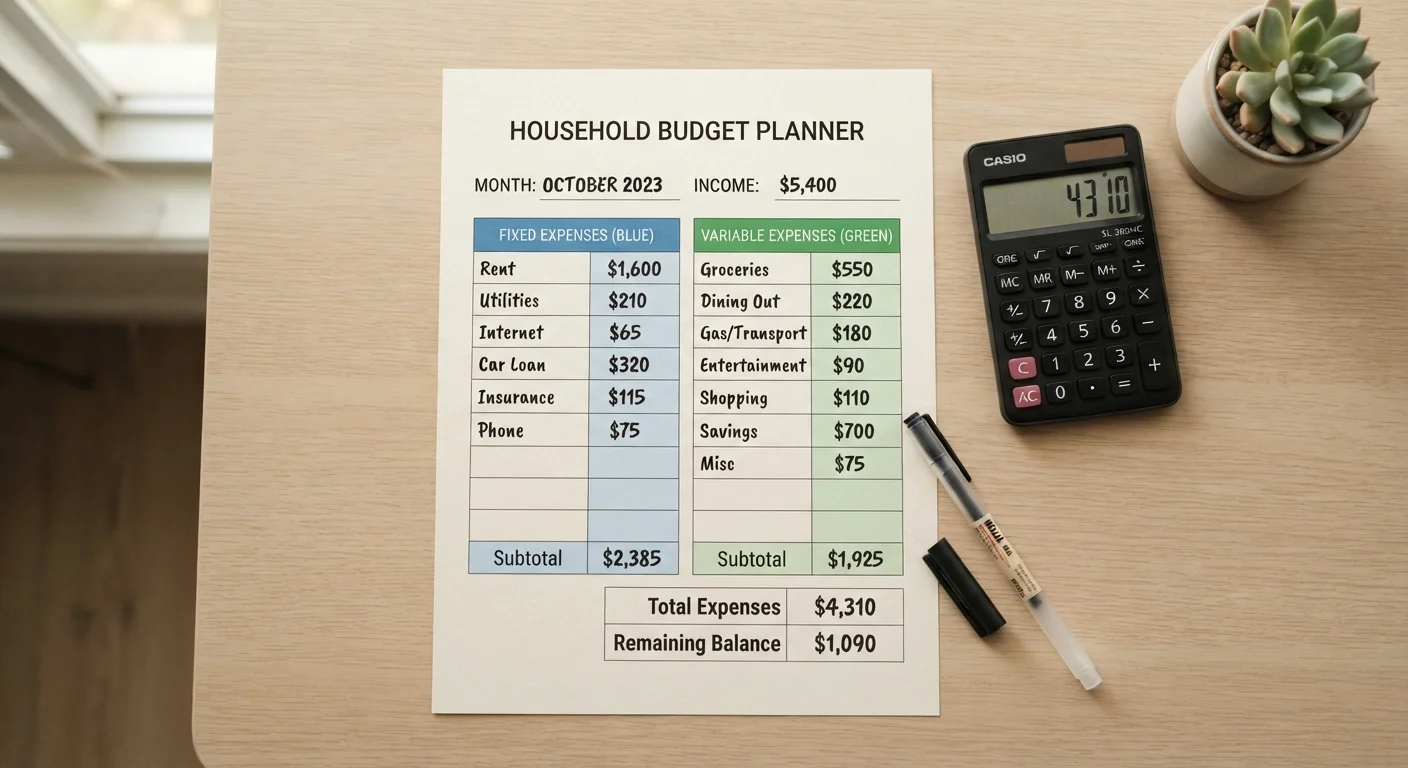
Photo credit: ResultsPoint.net | Find The Required Information
In this article
Understanding how your expenses behave is a core financial planning skill. See how fixed and variable costs differ and why it matters.
Key Takeaways
- Fixed expenses stay the same amount each billing cycle, making them easy to plan around.
- Variable expenses change month to month and offer the most immediate opportunity for spending adjustments.
- Understanding which category each cost falls into helps you build a more realistic budget.
- Neither type is inherently better — both play a role in healthy financial planning.
- Identifying your fixed-to-variable ratio reveals how much flexibility you actually have in your budget.
What Makes an Expense Fixed or Variable?
Every dollar leaving your account is doing one of two things: following a predictable schedule or responding to your behavior. That distinction — between fixed and variable expenses — is one of the most useful lenses you can apply to your finances.
Fixed expenses are costs that stay the same amount each period, regardless of how much you use a service or how your month unfolds. Rent or mortgage payments, car loan installments, insurance premiums, and many subscription services all fit this description. You can open your bank statement and know, almost to the dollar, what these will be next month.
Variable expenses, on the other hand, fluctuate based on usage, decisions, or circumstances. Grocery bills, gas, utility usage, dining out, and clothing all vary month to month. You have meaningful control over most of them, which is precisely what makes them both the trickiest part of a budget — and the most flexible.
For a deeper look at how a third category — discretionary spending — fits into this picture, see Fixed, Variable, and Discretionary Expenses: A Plain-English Reference.
| Criterion | Fixed Expenses | Variable Expenses |
|---|---|---|
| Amount each month | Stays the same | Changes based on usage or behavior |
| Predictability | High — easy to forecast | Low to moderate — depends on choices |
| Control in the short term | Limited — usually contractual | High — adjustable day to day |
| Common examples | Rent, loan payments, insurance | Groceries, gas, dining, utilities |
| Role in budgeting | Sets the spending floor | Provides room for adjustment |
| Risk when income drops | Higher — obligation remains | Lower — can reduce spending |
Why the Distinction Matters for Your Budget
Knowing which bucket each expense falls into changes how you approach planning. Fixed costs set your floor — the minimum your finances must cover every month no matter what. If your fixed obligations consume 60% of your take-home pay, that leaves only 40% to cover everything else, including groceries, gas, savings, and emergencies.
Variable expenses are where most people find room to maneuver. Cutting a streaming service, cooking at home more often, or consolidating errands to reduce fuel costs are all variable adjustments. These changes don't require renegotiating a lease or refinancing a loan — they respond to decisions you can make today.
~67%
Of U.S. households live paycheck to paycheck
According to surveys cited by the Federal Reserve and various financial research organizations, a majority of American households have limited financial buffer between income and obligations.
30–50%
Typical share of take-home pay consumed by housing alone
The U.S. Department of Housing and Urban Development traditionally defines housing as a cost burden when it exceeds 30% of gross income, yet many households exceed this threshold.
This matters especially when income is irregular. Freelancers, seasonal workers, and anyone navigating a job transition often find that their fixed obligations feel like a vice grip during slow months — precisely because those costs don't shrink when income does. Understanding your fixed-to-variable ratio in advance lets you see how much cushion you actually have.
If you use a budgeting method like the 50/30/20 rule or envelope budgeting, knowing your fixed versus variable split helps you apply those frameworks more accurately. Explore how different systems handle this in Popular Budgeting Methods Compared. You might also consider tools covered in Envelope Budgeting vs. Digital Tracking Apps for tracking both expense types.
Some Expenses Can Shift Categories Over Time
A cost that feels variable today can become effectively fixed once it's part of your routine — think of a gym membership you rarely skip or a meal delivery service that's replaced regular grocery shopping. Periodically reviewing which expenses you truly treat as non-negotiable helps you keep your budget categories accurate. This is especially useful during major life changes like a new job, a move, or a growing family.
Applying This Framework Beyond Household Budgets
The fixed-versus-variable lens extends well beyond monthly household bills. When planning a trip, for instance, flights and hotel bookings often function like fixed costs once booked — they're set amounts you've committed to. Meals, activities, and incidental spending behave like variable costs that you can manage in real time. Travel Budget Basics: Where Your Money Actually Goes on a Trip applies this thinking directly to travel planning.
Similarly, when evaluating a mortgage, the choice between a fixed-rate and adjustable-rate loan is essentially a decision about which expense structure you prefer at the macro level. Fixed-Rate vs. Adjustable-Rate Mortgages Explained walks through how that choice plays out over time.
At its core, classifying your expenses is not about restricting your spending — it's about seeing clearly. Once you know what's locked in and what's flexible, you can make decisions with far more confidence.
This article is for general informational purposes only and does not constitute personalized financial advice. Consider consulting a qualified financial professional for guidance specific to your situation.

Author
Finance Editorial Team
Finance Editorial Team is the collective byline for our editorial team and contributor network. Articles published under this byline or an editorial pen name are researched, written, and reviewed according to our editorial standards for clarity, consistency, and independence before publication.
View all articles →