
Fixed-Rate vs. Adjustable-Rate Mortgages Explained
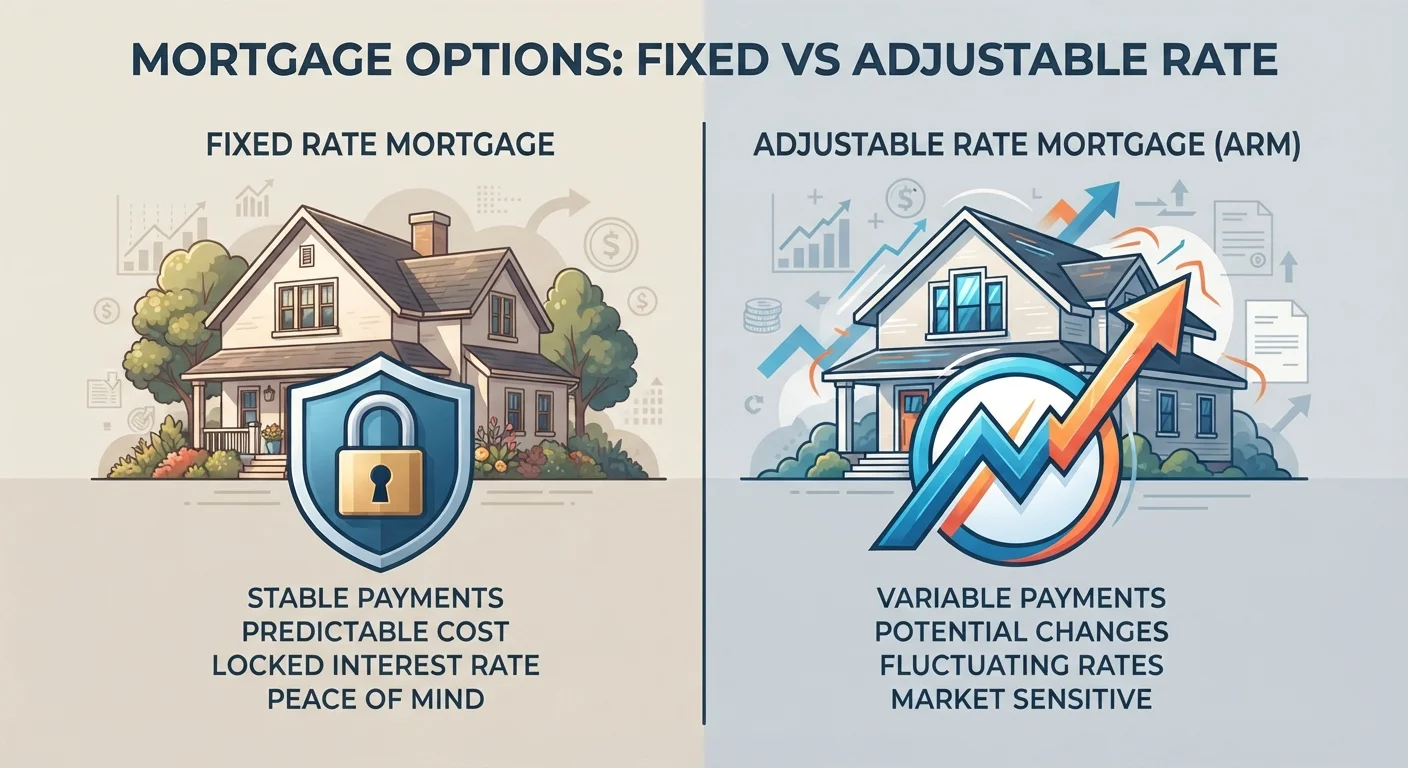
Photo credit: ResultsPoint.net | Find The Required Information
In this article
A side-by-side look at how fixed and adjustable mortgage rates work, and the circumstances where each tends to make sense.
Key Takeaways
- Fixed-rate mortgages lock in your interest rate for the entire loan term, keeping monthly payments stable.
- Adjustable-rate mortgages start with a fixed introductory period, then reset periodically based on a market index.
- ARMs typically offer lower initial rates but carry the risk of higher payments when rates adjust upward.
- Your intended time in the home is one of the most important factors when choosing between the two.
- Both loan types are subject to lender qualification standards, including credit score and debt-to-income ratio.
How Each Mortgage Type Works
A fixed-rate mortgage does exactly what its name implies — it locks your interest rate in place for the life of the loan. Whether your term is 15 or 30 years, the rate you agree to at closing stays the same. Your principal and interest payment never changes, regardless of what happens in financial markets.
An adjustable-rate mortgage (ARM) works differently. It begins with a fixed-rate introductory period — commonly 5, 7, or 10 years — during which your rate and payment are stable. After that period ends, the rate adjusts at regular intervals (typically once a year) based on a benchmark market index, plus a lender margin. ARMs are often described using shorthand like "5/1 ARM," meaning a 5-year fixed period followed by annual adjustments.
Understanding how your mortgage payment fits into your broader budget is closely related to how you think about fixed vs. variable expenses in your overall financial life.
| Criterion | Fixed-Rate Mortgage | Adjustable-Rate Mortgage (ARM) |
|---|---|---|
| Interest Rate | Locked for entire loan term | Fixed initially, then adjusts periodically |
| Monthly Payment Stability | Completely predictable | Stable during intro period, variable after |
| Initial Rate | Typically higher than ARM | Usually lower than fixed-rate |
| Risk Profile | Low — lender absorbs rate risk | Higher — borrower absorbs rate risk |
| Best Loan Term Length | 15 or 30 years | 5, 7, or 10-year intro periods common |
| Rate Caps | Not applicable | Per-adjustment and lifetime caps apply |
| Ideal Holding Period | Long-term (10+ years) | Shorter-term (under 7–10 years) |
The Trade-Offs You're Actually Making
The central trade-off is stability versus potential savings. Fixed-rate mortgages tend to carry slightly higher initial interest rates than ARMs because the lender bears the risk that market rates will rise over time. With an ARM, you accept that risk in exchange for a lower starting rate.
When market interest rates are relatively high, ARMs can look especially attractive — the introductory rate may be meaningfully lower than fixed-rate options. But if you're still in the home when adjustments begin and rates have risen, your monthly payment could increase substantially. ARMs typically include caps that limit how much the rate can change per adjustment period and over the life of the loan, but payments can still rise to a level that strains a household budget.
ARM Rate Caps: Know Your Limits
Most ARMs in the US include three types of caps: an initial cap (how much the rate can change at the first adjustment), a periodic cap (maximum change per subsequent adjustment), and a lifetime cap (the maximum total increase over the loan's life). A common structure is 2/2/5 — meaning the rate cannot jump more than 2% at first adjustment, 2% each period after, or 5% total above your starting rate. Always ask your lender for the specific cap structure before agreeing to an ARM.
Your credit profile directly shapes the rates you're offered on both loan types. See how lenders use your score in our guide on what your credit score actually does to your mortgage.
Which Loan Fits Your Situation?
The most practical question to ask yourself is: How long do I realistically expect to stay in this home? If the answer is a decade or more, a fixed-rate mortgage often makes sense — you benefit from decades of predictable payments, and the slightly higher initial rate is offset by long-term certainty.
If you're a first-time buyer purchasing a starter home, or you work in a field that may require relocation, an ARM's lower initial payments could free up cash during the years you're actually living there. Just be clear-eyed about what happens after the introductory period if your plans change.
Also consider the broader interest rate environment. When prevailing rates are low historically, locking in a fixed rate can be advantageous. When rates are elevated, an ARM with an anticipated rate drop could work in your favor — though market predictions are never guaranteed.
30 years
Most common fixed-rate mortgage term in the US
The 30-year fixed-rate mortgage has historically been the most widely used home loan product among American buyers.
5/1
Most common ARM structure
The 5/1 ARM — five years fixed, then annual adjustments — is one of the most frequently offered adjustable-rate products by US lenders.
Before you apply for either loan, make sure you understand the financial behaviors that can affect your application. Our article on financial moves that can derail a mortgage application covers common mistakes to avoid between offer and closing.
This article is for general informational and educational purposes only and does not constitute financial, mortgage, or legal advice. Mortgage products and terms vary by lender and are subject to change. Consult a licensed mortgage professional or financial adviser to evaluate options based on your specific circumstances.

Author
Real Estate Basics Editorial Team
Real Estate Basics Editorial Team is the collective byline for our editorial team and contributor network. Articles published under this byline or an editorial pen name are researched, written, and reviewed according to our editorial standards for clarity, consistency, and independence before publication.
View all articles →