
Why Portion Size Matters More Than Most People Realize
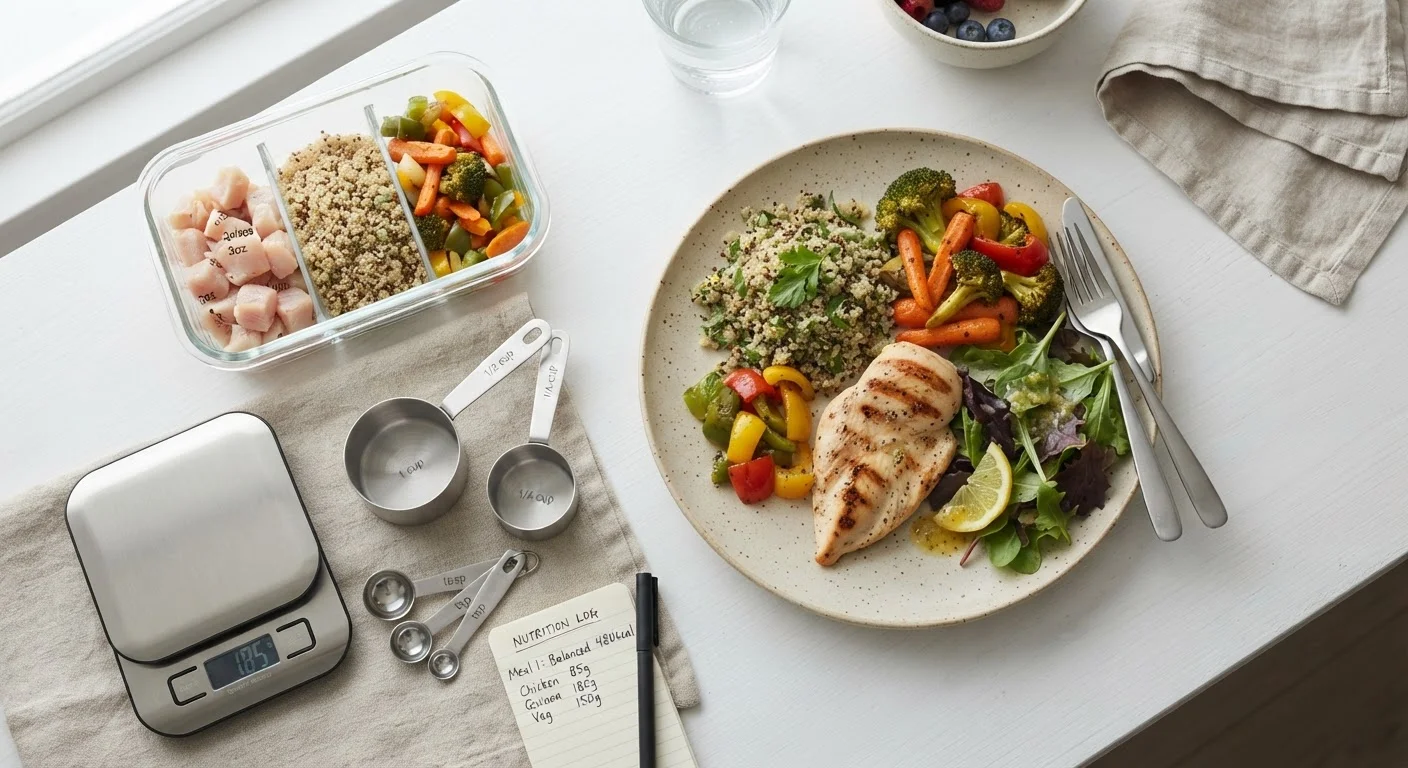
Photo credit: ResultsPoint.net | Find The Required Information
In this article
Portion distortion is real. Learn how serving sizes have shifted over decades and what practical strategies help with eating appropriate amounts.
Key Takeaways
- Portion size and serving size are not the same thing — one is what you eat, the other is a label standard.
- Average restaurant and packaged food portions have grown substantially over the past few decades.
- Visual cues and plate size reliably influence how much people eat, often without awareness.
- Practical strategies like using smaller plates and pre-plating food can help without strict calorie counting.
- Eating appropriate portions of nutrient-dense foods matters more than obsessing over any single nutrient.
The Gap Between What's on the Label and What's on Your Plate
Pick up nearly any packaged food and you'll find a Nutrition Facts label with a serving size printed at the top. That number might say one serving is 28 grams of chips — roughly 11 pieces. But most people pour a bowl that's two or three times that amount without a second thought. That gap between the label's reference amount and real-world eating is where portion distortion lives.
Understanding this distinction matters because nutrition information — calories, fat, sodium, fiber — is always calculated per serving. If you eat three servings while thinking you had one, every number on that label needs to be tripled in your head. It's an easy mistake, and food packaging design doesn't always make it obvious. Reading labels carefully becomes a genuinely useful skill once you know what to look for.
How Portions Have Quietly Grown Over Decades
Researchers who study eating behavior have documented a clear trend: the typical portion of many common foods is considerably larger today than it was in the 1970s and 1980s. This isn't just a restaurant phenomenon. Packaged goods, home recipes, and even the dishware in American kitchens have trended larger over time.
A now-classic line of research by nutritionist Barbara Rolls and colleagues at Penn State explored how environmental portion cues influence consumption. Their work consistently found that when people are given larger portions, they tend to eat more — and often don't report feeling any fuller. The extra food simply gets eaten because it's there.
This doesn't mean people lack willpower. It means humans are wired to respond to visual cues about quantity, and when those cues shift gradually across years and decades, perception shifts with them. What feels like a normal amount today may be quite different from what felt normal a generation ago.
2–5x
Growth in typical restaurant portion sizes since the 1970s
Research published in the American Journal of Public Health found that portions of many restaurant foods have grown dramatically compared to USDA standard serving sizes.
92%
Of food served is eaten when portions are large
Studies by the Cornell Food and Brand Lab found that people eat nearly all of what is put in front of them, regardless of portion size, underlining the power of environmental cues.
~30%
More food consumed from larger serving bowls
Controlled experiments found participants served themselves and consumed roughly 30% more when using larger serving bowls compared to smaller ones.
Why Your Brain Misjudges Amount
Visual perception is a significant driver of how much we eat. Plate size, bowl depth, glass shape, and even color contrast between food and dishware all influence how much a serving looks like — and research consistently shows these cues affect actual intake. A portion that looks modest on a large plate can look generous on a smaller one, even when the food quantity is identical.
Eating speed also plays a role. Satiety signals — the body's way of registering fullness — take time to reach the brain after food is consumed. Eating quickly makes it easy to consume more than intended before those signals catch up. This is one reason why eating more slowly is often cited as a practical strategy by registered dietitians, though individual results vary.
“The best predictor of how much someone eats is how much they're served. People eat what's in front of them — and they don't necessarily notice or compensate later.”
— Brian Wansink, Former food psychology researcher, Cornell University
Practical Strategies That Actually Help
Managing portions doesn't require a food scale or an app. Several simple, evidence-informed habits can make a meaningful difference in everyday eating:
- Use smaller plates and bowls. Switching from a 12-inch to a 9- or 10-inch dinner plate is one of the most straightforward environmental adjustments you can make.
- Pre-plate your food. Serving food onto a plate before sitting down — rather than eating from the bag or pot — makes it easier to see and register how much you're having.
- Check the serving size first. Before eating packaged food, glance at the label to anchor your perception of what one serving actually looks like.
- Eat at the table without distractions. Screen-based eating is associated with higher consumption in multiple studies, likely because attention diverted away from food reduces awareness of how much has been eaten.
These approaches work alongside, not instead of, paying attention to food quality. Eating appropriate portions of fiber-rich, nutrient-dense foods tends to promote satiety more effectively than the same volume of highly processed options. And being aware of how portions interact with overall eating patterns — including habits that can quietly undermine good intentions — is part of a realistic picture. See how well-meaning habits can work against nutrition goals for more context.
A Simple Visual Guide for Portion Reference
When you don't have measuring tools handy, hand-based estimates can help orient you. A cupped palm is roughly the size of half a cup; a closed fist approximates one cup; a thumb is close to one tablespoon. These aren't precise tools, but they provide a useful reference point for everyday eating decisions.
This article is for general informational and educational purposes only and is not a substitute for professional medical or dietary advice. Consult a qualified healthcare provider or registered dietitian for guidance specific to your health needs.
Frequently Asked Questions

Author
Health Editorial Team
Health Editorial Team is the collective byline for our editorial team and contributor network. Articles published under this byline or an editorial pen name are researched, written, and reviewed according to our editorial standards for clarity, consistency, and independence before publication.
View all articles →