
Understanding a Contractor's Quote: What Every Line Item Means
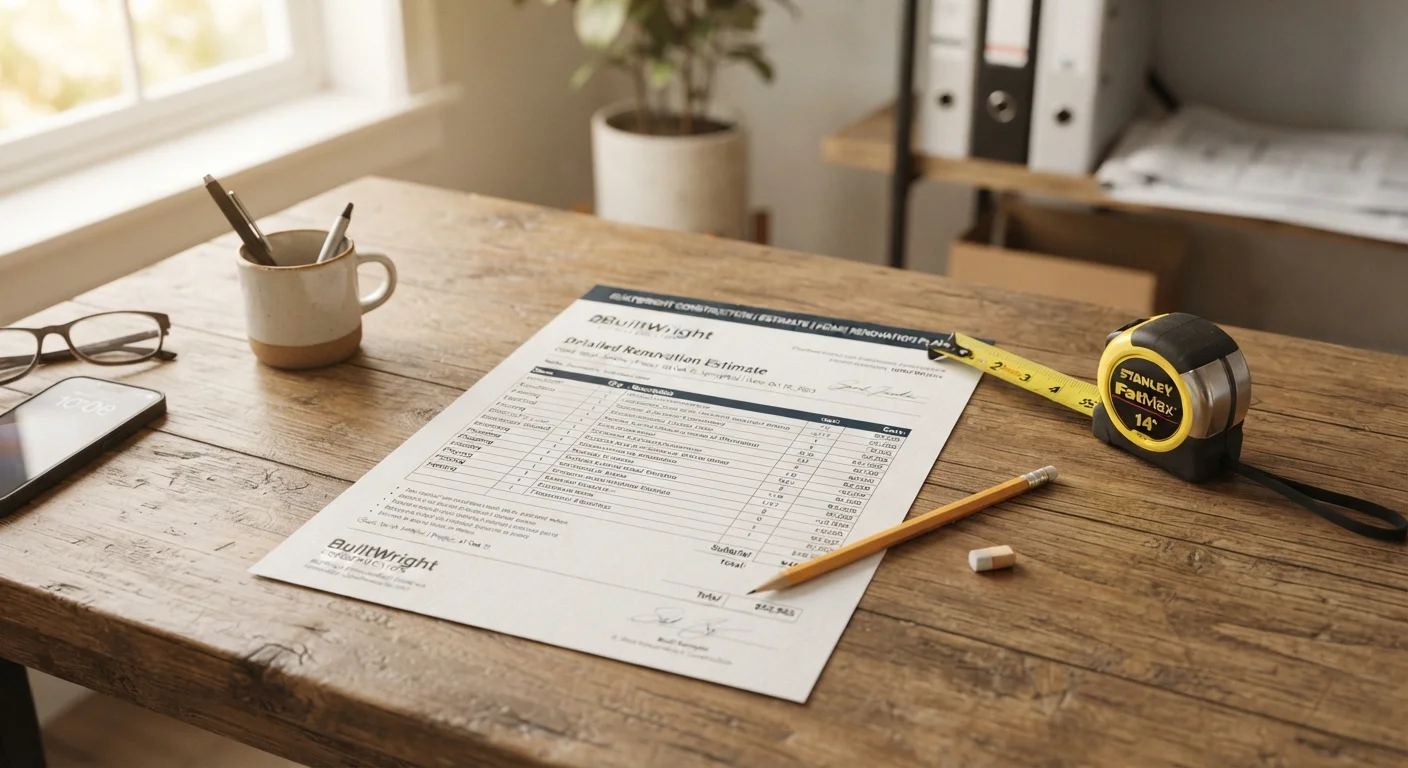
Photo credit: ResultsPoint.net | Find The Required Information
In this article
Labor, materials, markup, and contingency — learn what each section of a contractor estimate represents before you sign anything.
Why Reading a Contractor Quote Carefully Matters
A contractor's quote isn't just a price tag — it's a roadmap of how your project will be built, what it will cost, and who is responsible for what. Signing without understanding each section can lead to unexpected charges, disputes over scope, or work that doesn't match your expectations.
Before you approve any estimate, take time to read every line. Most quotes follow a predictable structure once you know what to look for. This guide breaks down the standard sections so you finish the review feeling informed, not overwhelmed.
For a broader look at why project budgets slip, see our guide to real renovation costs before committing to any contractor.
| Typical contractor markup on materials | 10–20% (Industry general practice; varies by region and project type) |
| Standard contingency buffer | 5–15% of total estimate (Common contractor and project management guidance) |
| Quote types | Fixed-price or time-and-materials |
| Permit responsibility | Typically the contractor's — verify in writing |
| Change order requirement | Should always be written and signed before work proceeds |
The Core Line Items Explained
Most contractor estimates break costs into a handful of standard categories. Here is what each one typically covers:
- Labor: The cost of the workers' time — including skilled tradespeople, helpers, and the contractor's own hours if they work on-site. Labor rates vary by trade, region, and project complexity.
- Materials: Every physical item installed or consumed during the job — lumber, tile, fixtures, fasteners, adhesives. Some contractors list materials in detail; others provide a lump sum. Ask for a detailed breakdown whenever possible.
- Subcontractor costs: When your general contractor hires specialists (electricians, plumbers, HVAC technicians), those costs usually appear as a separate line. A markup on subcontractor invoices is standard and should be disclosed.
- Equipment and rental fees: Scaffolding, dumpsters, specialty tools, or heavy machinery may be billed separately rather than folded into labor.
- Permits and inspection fees: Many projects require permits pulled from your local building department. Legitimate contractors include this cost rather than skipping the permit step. Always verify which permits your project legally requires.
- Overhead and markup: This covers the contractor's business costs — insurance, licensing, office expenses, vehicles — plus a profit margin. A markup of 10–20% on materials and subcontractors is common, though it varies widely.
- Contingency allowance: A buffer — often 5–15% of the total — set aside for surprises discovered during work, such as hidden water damage or outdated wiring that must be brought up to code.
Allowance
A placeholder dollar amount in a quote for items not yet specified, such as light fixtures or flooring. If your chosen item costs more than the allowance, you pay the difference.
Change order
A written amendment to the original contract that documents a change in scope, timeline, or cost. Never allow extra work to proceed without a signed change order.
Contingency
A reserved portion of the budget — usually 5–15% — set aside to cover unforeseen conditions discovered during construction, such as rot, mold, or outdated systems.
Overhead
The contractor's indirect business expenses: insurance, licensing fees, vehicle costs, office administration, and similar costs not tied to a single project.
Subcontractor
A licensed specialist (electrician, plumber, HVAC technician) hired by the general contractor to perform specific portions of work. Their costs typically appear as a separate line item.
Time-and-materials contract
A billing arrangement where you pay for actual labor hours plus the cost of materials used, rather than a pre-agreed lump sum. Final costs can exceed the initial estimate.
Not sure whether to hire out or tackle a project yourself? Our article on hiring a contractor vs. DIY walks through the real trade-offs.
Questions to Ask Before You Sign
Once you understand the line items, use them as a checklist for your conversation with the contractor:
- Is this a fixed-price or time-and-materials quote? A fixed-price contract locks in the total; time-and-materials bills you for actual hours and costs, which can exceed the estimate.
- What's included in the allowances? Allowances are placeholder amounts for items not yet chosen (fixtures, tile). If your selections cost more, you pay the difference.
- How are change orders handled? Any work added or changed after signing should require a written change order with a revised price before work proceeds.
- Are all subcontractors licensed and insured? Verify this independently when the project involves licensed trades.
- What triggers the contingency, and who approves its use? Understand whether the contingency belongs to you or the contractor, and how decisions get made if it's needed.
Reading a contractor quote requires the same careful attention you'd give any legal document. For similar guidance on other agreements, our homebuyer terminology guide explains financial and legal terms in plain language.
This article is for general informational purposes only and does not constitute legal, financial, or professional contracting advice. Permit requirements, licensing rules, and standard practices vary by location — always verify with your local building authority and consult a licensed professional for guidance specific to your project.

Author
Home Editorial Team
Home Editorial Team is the collective byline for our editorial team and contributor network. Articles published under this byline or an editorial pen name are researched, written, and reviewed according to our editorial standards for clarity, consistency, and independence before publication.
View all articles →