
Smoke Detectors, CO Alarms, and Fire Extinguishers: What the Standards Actually Say
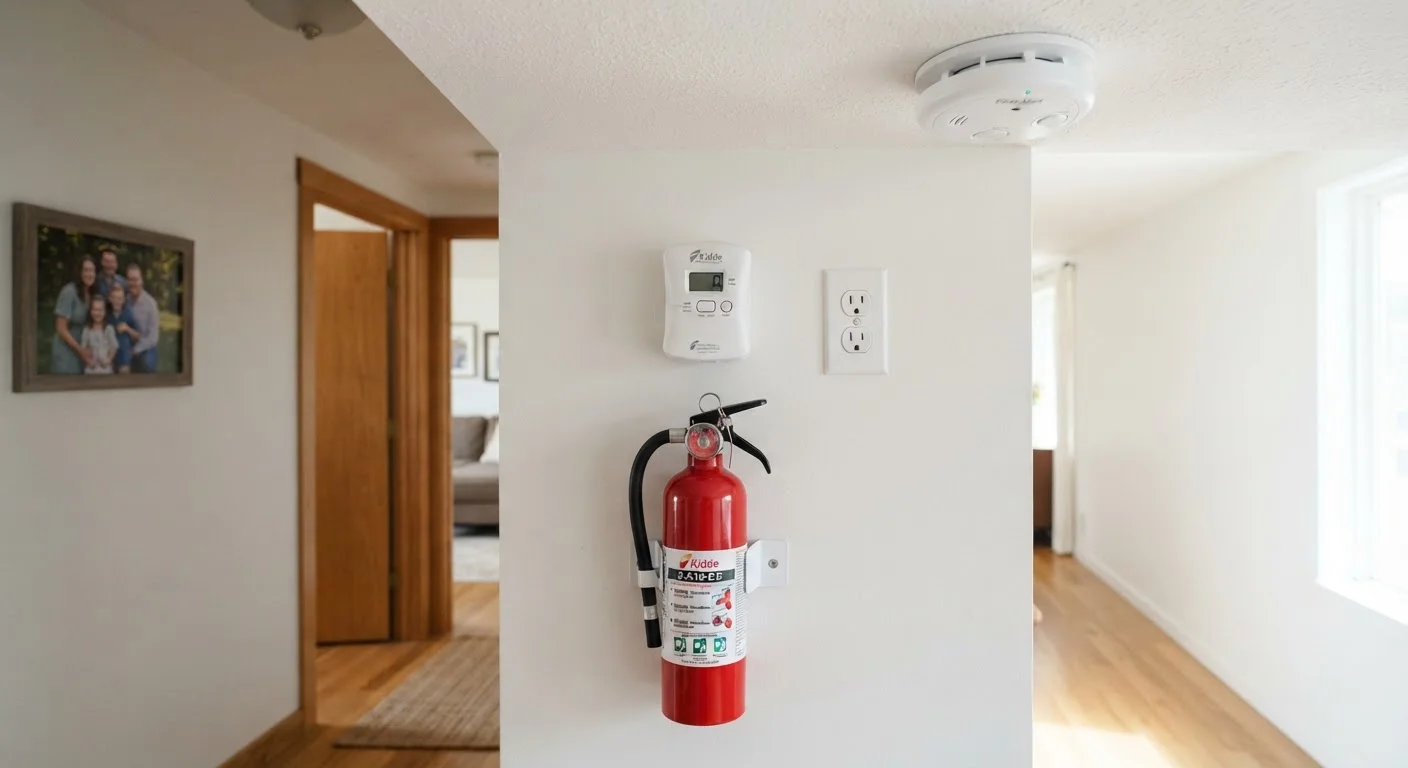
Photo credit: ResultsPoint.net | Find The Required Information
In this article
Placement rules, testing schedules, and replacement timelines — what safety codes and manufacturers generally recommend.
Why Placement Rules Matter More Than You Might Think
A smoke detector mounted in the wrong spot can fail to alert you in time. The same is true for a carbon monoxide (CO) alarm placed too high or too low. These aren't arbitrary rules — they reflect how smoke rises, how CO disperses, and how fast fires develop.
Understanding the general standards behind placement, testing, and replacement helps you move from simply having these devices to actually relying on them. This article draws on guidance from the National Fire Protection Association (NFPA) and device manufacturer recommendations to explain what the standards generally say.
For a broader look at the systems behind your home's walls and ceilings, see our guide to hidden home systems.
Smoke Detector Placement and Testing
The NFPA 72 standard — widely adopted across U.S. building codes — calls for smoke alarms in every bedroom, outside each sleeping area, and on every level of the home, including the basement. Multi-story homes should have at least one detector per floor.
Placement Details
- Ceiling mounting: Install detectors on the ceiling or high on a wall (between 4 and 12 inches from the ceiling). Smoke rises, so higher placement improves detection.
- Kitchen distance: Keep detectors at least 10 feet from cooking appliances to reduce nuisance alarms from cooking steam or grease.
- Attic and garage: Standard smoke alarms are not designed for extreme temperature environments; follow manufacturer guidance for these spaces.
Testing and Replacement
- Test every smoke alarm once a month using the test button.
- Replace batteries at least once a year — or whenever the low-battery chirp begins.
- Replace the entire unit every 10 years, regardless of whether it still seems to function. Sensors degrade over time and may no longer reliably detect smoke.
NFPA 72
The National Fire Alarm and Signaling Code, published by the National Fire Protection Association. It provides widely adopted standards for the installation and maintenance of smoke and fire detection equipment in the U.S.
NFPA 720
The NFPA standard specifically addressing carbon monoxide (CO) detection in residential and commercial buildings, covering placement, testing, and alarm requirements.
ABC-rated extinguisher
A fire extinguisher classification indicating it is effective against three classes of fire: Class A (ordinary combustibles like wood and paper), Class B (flammable liquids), and Class C (energized electrical equipment).
Electrochemical sensor
The sensor type used in most residential carbon monoxide alarms. It detects CO through a chemical reaction that produces a measurable electrical current. These sensors degrade over time, which is why CO alarms need replacement every 5–7 years.
Carbon Monoxide Alarm Standards
Carbon monoxide is colorless and odorless, which makes detector placement critical. CO is slightly lighter than air and disperses fairly evenly throughout a room, so CO alarms have more flexibility in height than smoke alarms — but placement still matters.
Where to Install
- Install at least one CO alarm on each level of the home and within 10 feet of each bedroom door, per NFPA 720 guidance.
- Avoid placing alarms directly next to fuel-burning appliances or in garages — these locations can trigger nuisance alerts.
- Follow the manufacturer's instructions for whether the unit should be placed near the floor or at mid-wall height.
Testing and Replacement
- Test monthly using the test button.
- Replace CO alarms every 5 to 7 years — the electrochemical sensors used in most units have a shorter lifespan than smoke alarm sensors. Check the manufacture date printed on the back of the unit.
Combination Smoke and CO Alarms
Combination units that detect both smoke and carbon monoxide are available and can simplify installation. However, the two sensor types have different lifespans — smoke sensors typically last 10 years while CO sensors last 5–7 years. Check whether your combination unit has a separate replacement timeline for the CO sensor, and follow manufacturer instructions carefully. Replacing the whole unit on the shorter schedule is a safe general approach.
Fire Extinguisher: Class, Placement, and Maintenance
A fire extinguisher is only useful if it's accessible, fully charged, and the right type for the fire at hand. Most households benefit from an ABC-rated extinguisher — this multipurpose classification covers ordinary combustibles (paper, wood), flammable liquids, and electrical fires.
Where to Keep Them
- Mount at least one extinguisher in the kitchen, where most home fires start.
- Keep additional extinguishers in the garage and on each floor if the home has multiple levels.
- Mount extinguishers on the wall near an exit, between 3.5 and 5 feet from the floor, so they're easy to grab and you can still retreat safely.
Maintenance Schedule
- Monthly: Check that the pressure gauge needle sits in the green zone. Inspect for visible damage or corrosion.
- Annually: Have the unit professionally inspected. Many fire departments or extinguisher service companies offer this.
- Replacement or recharge: After any use — even a brief discharge — the extinguisher must be recharged or replaced. Most extinguishers have a service life of 5 to 12 years; check the manufacturer's label for specifics.
This article provides general educational information based on widely referenced safety standards. Requirements vary by state, county, and municipality — always verify the specific codes that apply to your home with local authorities. For emergencies, call 911.

Author
Home Editorial Team
Home Editorial Team is the collective byline for our editorial team and contributor network. Articles published under this byline or an editorial pen name are researched, written, and reviewed according to our editorial standards for clarity, consistency, and independence before publication.
View all articles →