
The Hidden Systems Every Homeowner Should Understand
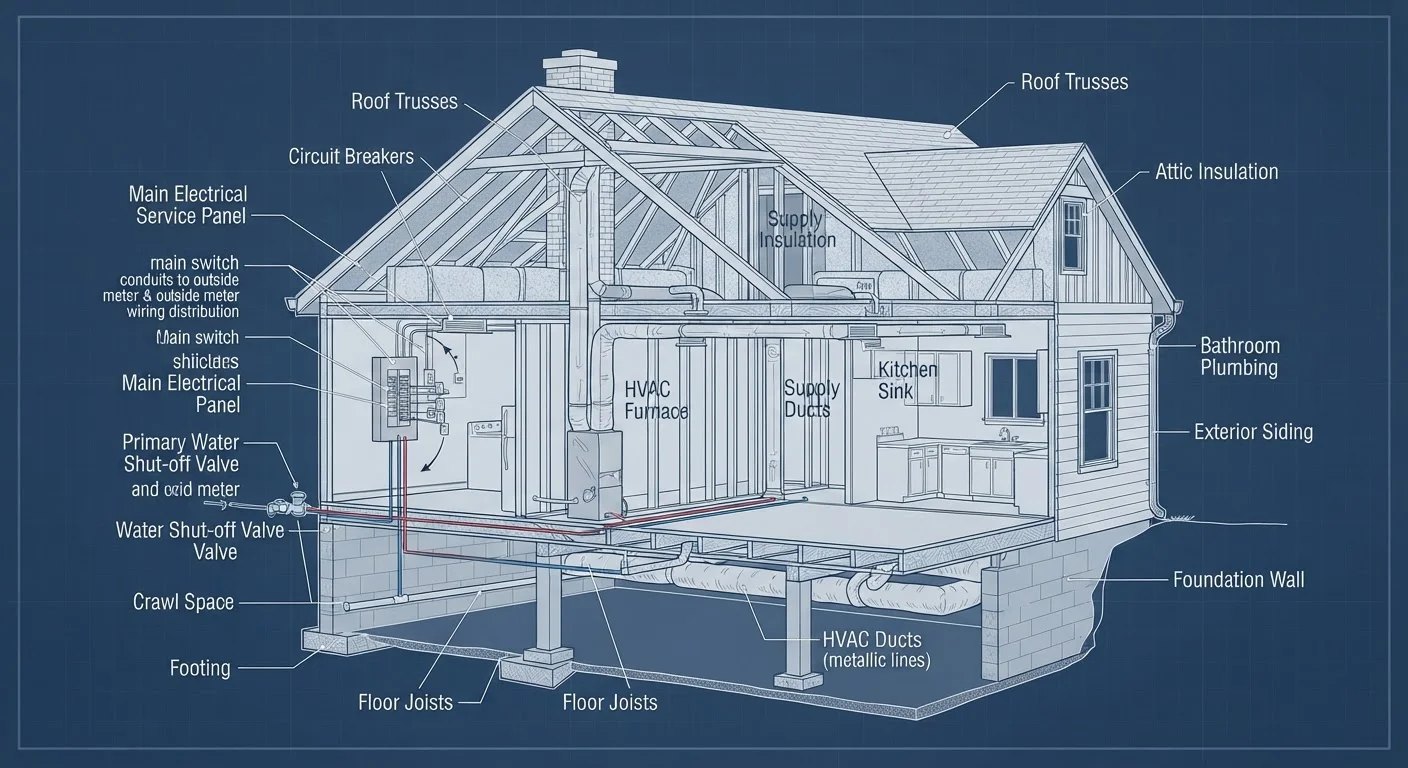
Photo credit: ResultsPoint.net | Find The Required Information
In this article
Electrical panels, shut-off valves, crawl spaces — knowing where these systems live and how they work pays off in emergencies.
Why Knowing Your Home's Systems Matters
Most homeowners interact with their home's surfaces — the floors, walls, and fixtures — without ever thinking about what runs behind them. But the systems hidden inside your walls, beneath your floors, and tucked into utility closets are the ones that keep everything working. When something fails, knowing where to look and what to do first makes the difference between a quick fix and a costly emergency.
This reference guide introduces the core hidden systems in a typical American home, explains what each one does, and tells you exactly what you should know about each one before trouble strikes. If you're just getting started as a homeowner, our first-time homeowner's maintenance guide is a helpful companion to this piece.
| Average age of US home electrical panels | 25–40 years (US Department of Energy, general guidance) |
| Time to close a main water shut-off | Under 60 seconds |
| Recommended HVAC filter change frequency | Every 1–3 months (ENERGY STAR program guidance) |
| Breaker panel locations (common) | Garage, basement, utility closet, hallway |
| Crawl space inspection frequency | At least once per year |
Your Electrical Panel
The electrical panel (sometimes called the breaker box or load center) is the hub that distributes electricity from the utility supply into individual circuits throughout your home. It's typically mounted on an interior wall in a garage, basement, utility room, or hallway.
What to Know
- Circuit breakers protect each circuit by tripping — cutting power — when a circuit is overloaded. A tripped breaker sits in a middle position between ON and OFF.
- To reset a tripped breaker: switch it fully to OFF, then back to ON. If it trips again immediately, stop and call a licensed electrician — repeated tripping signals a deeper problem.
- Label every breaker clearly. Many panels arrive with vague or missing labels; take 20 minutes to identify and mark each one.
- Never work inside the panel yourself. The main breaker cuts power to individual circuits but not to the service entrance wires, which remain live. Panel interior work requires a licensed electrician.
When to Call a Licensed Electrician
Resetting a tripped breaker is a safe, routine task. But any work inside the electrical panel — adding circuits, replacing breakers, or investigating persistent tripping — must be done by a licensed electrician. The service entrance wires carry lethal voltage that cannot be shut off from inside your home. Permits are typically required for panel upgrades; verify requirements with your local building department.
Plumbing Shut-Off Valves
Knowing where your water shut-offs are is one of the highest-value pieces of home knowledge you can have. A burst pipe or failed supply line can dump gallons of water into your home in minutes.
Three Valves Every Homeowner Should Locate
- Main shut-off: Stops all water to the house. Usually near where the water line enters the foundation — often in the basement, crawl space, or a utility area near the front exterior wall. In warmer climates, it may be outside near the street (a curb stop, operated with a special key).
- Fixture-level shut-offs: Small oval or straight valves under sinks and behind toilets that isolate a single fixture. Turn clockwise to close.
- Water heater shut-off: A dedicated valve on the cold-water supply line feeding the water heater.
Test each valve annually. Older gate valves can seize; if a valve won't turn, have a plumber replace it before an emergency forces your hand. Pair this knowledge with our guide on commonly overlooked maintenance tasks to stay ahead of hidden failures.
HVAC, Crawl Spaces, and the Systems You Rarely See
Your heating and cooling system, crawl space, and attic are the least-visited parts of most homes — and the most likely to harbor slow-developing problems.
Circuit breaker
A safety device inside your electrical panel that automatically cuts power to a circuit when it detects an overload or short. Unlike a fuse, it can be reset after tripping.
Main shut-off valve
The valve that stops all water flowing into your home from the municipal supply or well. Closing it is the first step in any plumbing emergency.
Air handler
The indoor unit of a split HVAC system that circulates conditioned air through ductwork. It houses the blower fan and evaporator coil.
Crawl space
A shallow, unfinished area beneath the main floor of a home — typically too low to stand in — that provides access to plumbing, wiring, and structural components.
Service entrance
The point where utility power lines connect to your home and enter the electrical panel. This section remains live even when the main breaker is switched off.
HVAC Basics
- Locate your furnace or air handler, the outdoor condenser unit (if central AC), and the thermostat wiring.
- Know where the air filter is and how often to change it — typically every 1–3 months depending on filter type and household conditions.
- Find the emergency shut-off switch for your furnace (it looks like a light switch, often near the unit or at the top of basement stairs).
Crawl Spaces and Attics
Crawl spaces house supply and drain lines, ductwork, and structural supports. Attics contain insulation, roof sheathing, and often HVAC equipment. Both areas should be inspected periodically for moisture intrusion, pest activity, and insulation condition. Most homeowners do this inspection themselves using a flashlight; anything involving structural concerns, mold, or asbestos-era insulation warrants a professional assessment.
For a full seasonal maintenance schedule that incorporates these inspections, see home maintenance through the seasons. And since unexpected system failures are part of homeownership, consider reading about building a home emergency fund so you're financially prepared when repairs can't wait.

Author
Home Editorial Team
Home Editorial Team is the collective byline for our editorial team and contributor network. Articles published under this byline or an editorial pen name are researched, written, and reviewed according to our editorial standards for clarity, consistency, and independence before publication.
View all articles →