
Fiber vs. Cable Internet: What Sets Them Apart for Home Users
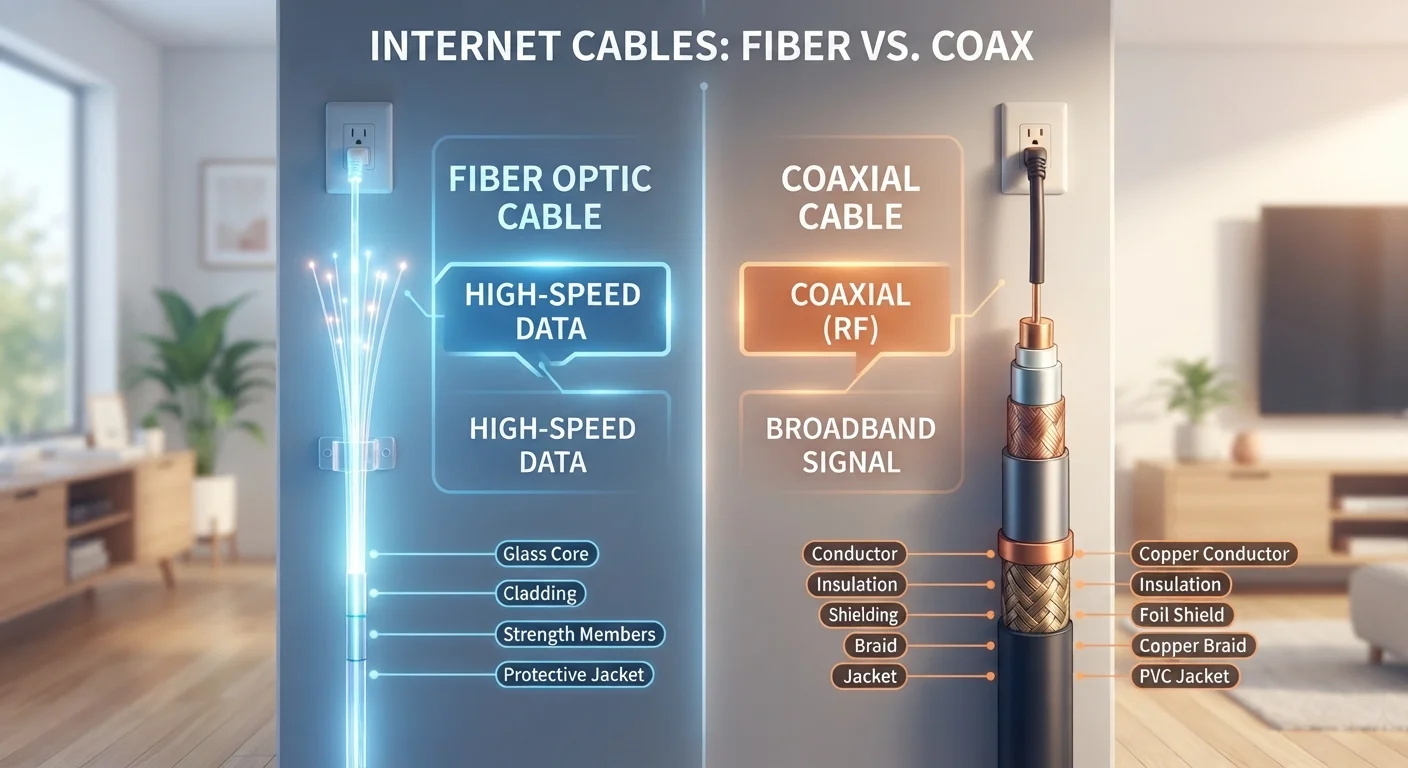
Photo credit: ResultsPoint.net | Find The Required Information
In this article
Fiber and cable internet both promise fast speeds, but they work very differently. Here's what those differences mean for your home connection.
Key Takeaways
- Fiber uses light signals through glass strands; cable uses electrical signals through coaxial wire.
- Fiber typically offers symmetrical upload and download speeds; cable upload speeds are usually much slower.
- Cable internet is shared with neighbors on the same line, which can slow things down during peak hours.
- Fiber availability is expanding but still limited — cable reaches far more U.S. homes today.
- Neither type automatically guarantees a fast or reliable connection without a suitable home setup.
How Each Technology Actually Works
The core difference between fiber and cable internet comes down to what carries your data and how fast that signal travels.
Fiber optic internet sends data as pulses of light through thin strands of glass or plastic. Light travels incredibly fast and doesn't degrade much over distance, which is why fiber can maintain high speeds even if the nearest hub is miles away. Think of it like a brand-new, dedicated highway built just for your data.
Cable internet uses the same coaxial cable infrastructure originally built for cable TV — copper wire wrapped in layers of insulation. Electrical signals carry your data, which works well but is more susceptible to interference and signal loss over longer distances.
For a broader look at how these fit into the full picture of home internet options, see our home internet explainer.
| Criterion | Fiber Internet | Cable Internet |
|---|---|---|
| Signal type | Light through glass/plastic | Electrical signal through copper |
| Download speeds | Very high, up to multi-gigabit | High, typically up to 1 Gbps |
| Upload speeds | Symmetrical — matches download | Much slower than download |
| Consistency during peak hours | Generally stable | Can slow down with neighbors |
| Availability in the U.S. | Limited but expanding | Widely available |
| Infrastructure age | Newer buildout | Established, legacy infrastructure |
Speed, Uploads, and Real-World Performance
Both fiber and cable can deliver download speeds that satisfy most households. The gap shows up most clearly in upload speeds and consistency.
Cable plans are typically asymmetrical — you get much faster downloads than uploads. A plan advertised as 500 Mbps might only offer 20–50 Mbps upload. That's fine for watching Netflix, but it creates a bottleneck if you're video calling, sending large files, or backing up photos to the cloud.
Fiber plans are commonly symmetrical — the same speed in both directions. Upload and download are matched, which is a meaningful advantage for remote workers and content creators.
Cable internet is also a shared medium. Homes on the same block share available bandwidth on the local line. During evening hours when everyone is streaming, speeds can dip noticeably. Fiber connections are often point-to-point — your signal doesn't mix with your neighbor's. Our article on shared vs. dedicated internet explains this distinction in more detail.
~43%
U.S. homes with access to fiber internet
According to FCC broadband data, fiber availability has grown substantially but still falls well short of cable's reach across U.S. households.
10–20x
Typical upload speed advantage of fiber over cable
Cable upload speeds are often a fraction of download speeds, while fiber plans frequently offer equal upload and download capacity.
It's worth noting that even a fast fiber or cable plan won't perform well if your router is outdated or your home wiring has issues. For more on that gap between advertised and real-world speeds, see why your internet feels slower than promised.
Availability and What to Do If Fiber Isn't an Option
The biggest practical limitation of fiber is coverage. While the fiber network is expanding steadily across the U.S., it's still unavailable in many suburban and most rural areas. Cable, by contrast, reaches the vast majority of American homes — it was built out over decades alongside the cable TV rollout.
How to Check What's Available at Your Address
Availability varies block by block — a neighbor might have fiber access while your address doesn't yet. The FCC's National Broadband Map (broadbandmap.fcc.gov) lets you enter your address and see what technologies are reported as available. It's a useful starting point, though the data may not always reflect the most recent buildouts in your area.
If neither fiber nor cable is available where you live, there are other options worth understanding. Fixed wireless internet uses radio towers instead of cables and is growing in rural and suburban markets — see our fixed wireless overview for details. Satellite internet is another possibility in remote areas, though it comes with its own trade-offs — our satellite internet explainer walks through who it realistically suits.
If you're currently choosing between cable and DSL (another older technology), our comparison of DSL vs. cable internet is a useful next read.

Author
Tech Editorial Team
Tech Editorial Team is the collective byline for our editorial team and contributor network. Articles published under this byline or an editorial pen name are researched, written, and reviewed according to our editorial standards for clarity, consistency, and independence before publication.
View all articles →