
Phishing, Smishing, and Vishing: The Same Scam, Three Different Doors
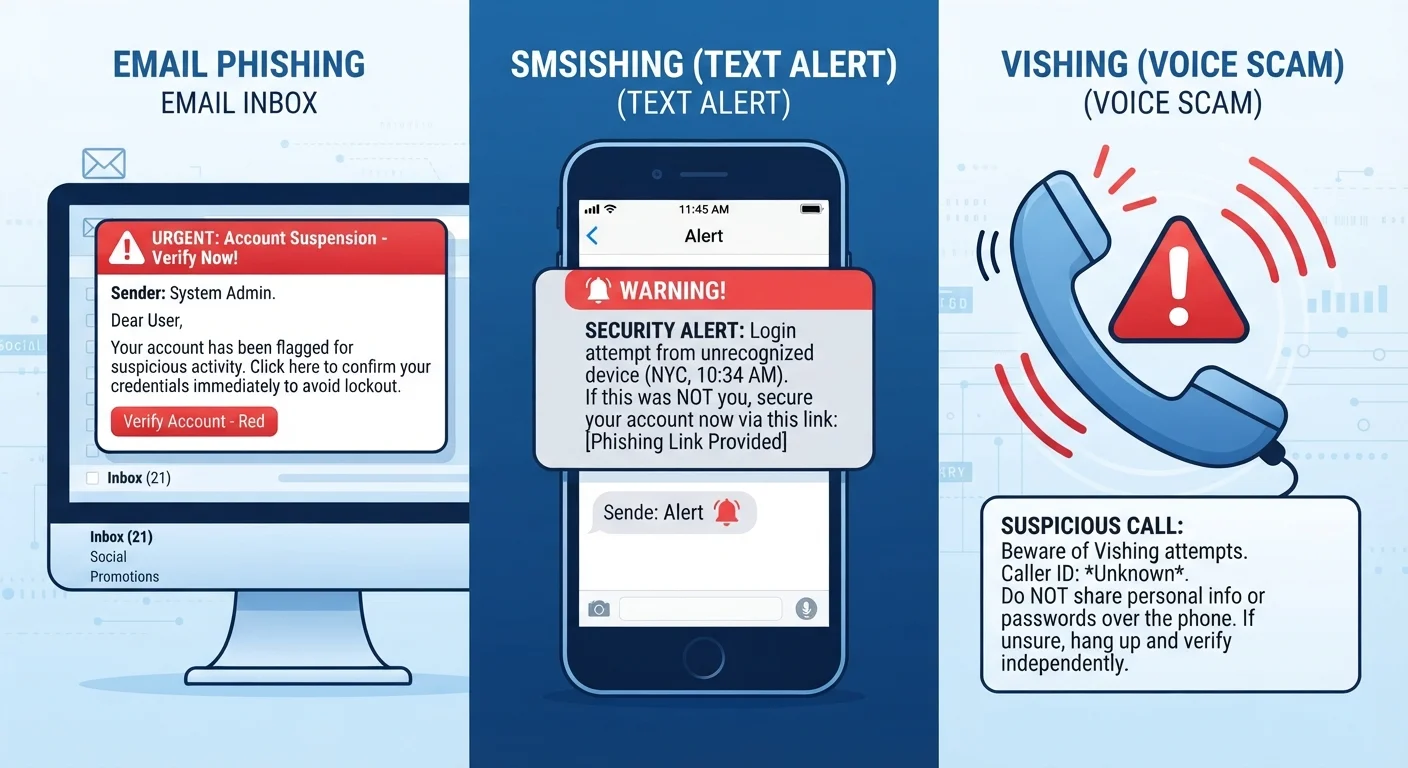
Photo credit: ResultsPoint.net | Find The Required Information
In this article
Scammers reach you by email, text, and phone. Understand how each method works and the warning signs that give them away before you click or respond.
Key Takeaways
- Phishing, smishing, and vishing are the same scam delivered through email, text, or phone calls.
- Urgency and fear are the scammer's main tools — slow down before you act.
- Legitimate organizations will never pressure you to share passwords, Social Security numbers, or payment info on the spot.
- When in doubt, hang up or close the message and contact the organization directly using a number you find yourself.
- Reporting scam attempts to the FTC helps protect others from the same attacks.
The Same Trick, Just Different Packaging
Every phishing, smishing, and vishing attack starts from the same playbook: the scammer pretends to be someone you already trust, then manufactures a reason for you to act fast without thinking. The goal is always to get something valuable — a password, a credit card number, access to an account, or a direct payment.
What changes is the channel. Email scams (phishing) have been around the longest and are still extremely common. Text-based scams (smishing) have surged as people rely more on their phones. Voice call scams (vishing) exploit the fact that a real human voice feels more authoritative and harder to ignore.
Understanding that all three follow the same emotional script — urgency, authority, and fear — is the single most useful thing you can take away. Once you recognize the pattern, the specific channel matters less. See our guide to social engineering for a deeper look at why these psychological tactics work so effectively.
$10B+
Lost to fraud reported to the FTC in one recent year
The FTC's Consumer Sentinel Network reported consumers lost more than $10 billion to fraud, with imposter scams — including phishing, smishing, and vishing — as the top category.
1 in 3
Americans who report receiving a scam call weekly
Survey data from consumer research organizations consistently shows a large share of U.S. adults receive suspicious or scam calls on a regular basis.
98%
SMS open rate vs. 20% for email
Industry research on messaging engagement rates explains why smishing has grown — text messages are opened far more reliably than emails, making them attractive to scammers.
Phishing: The Email in Disguise
A phishing email is designed to look exactly like a message from a company you know — your bank, the IRS, a shipping carrier, or a streaming service. The sender name might say "PayPal Security Team," but the actual email address is a jumble of random characters. The logo looks right. The formatting looks right. The link looks almost right.
That "almost" is where things fall apart. Phishing links typically send you to a fake website that mimics the real one, where any information you type goes straight to the scammer. Some emails skip the fake site entirely and just ask you to reply with your credentials or call a number.
Common phishing triggers include: your account has been locked, a suspicious charge was made, you need to verify your identity to avoid suspension, or you have a package waiting for pickup. All of these are designed to make you click before you think.
Check the Actual Email Address, Not Just the Name
Phishing emails often display a trustworthy name like "Chase Bank" while the actual sending address is something completely unrelated. Before clicking anything, hover over the sender's name (or tap it on mobile) to reveal the real address. A legitimate company will always send from its own verified domain.
Smishing: When the Scam Arrives as a Text
Smishing works the same way as phishing but arrives as an SMS or messaging app notification. Because people tend to trust texts more than emails — and respond to them faster — smishing can be especially effective.
A smishing text might claim your bank account has been flagged, a package couldn't be delivered, or you owe a small unpaid toll fee. The message includes a link that looks plausible but leads to a fake page harvesting your information. Some smishing attempts skip the link and simply ask you to text back with account details.
One important detail: phone numbers in smishing texts are often spoofed or belong to temporary prepaid lines. Don't assume a local area code means the message is legitimate. If a text creates any pressure to act immediately, treat it as a red flag and contact the supposed sender through their official website or app — not through anything in the message itself.
Vishing: The Human Voice as a Weapon
Vishing is phishing conducted over a phone or voice call. The caller might claim to be from your bank's fraud department, the Social Security Administration, Medicare, or a tech support team. They often already know basic details about you — your name, city, or the last four digits of a card — which makes them sound credible.
The pressure tactics are the same: act now or face consequences. A scammer might say your Social Security number has been suspended, there are unauthorized charges on your account, or your computer has a virus that needs immediate remote access to fix. All of these are designed to bypass your skepticism by triggering panic.
A critical fact to remember: caller ID can be faked. A call displaying your bank's real phone number could still be a scammer using spoofing technology. If you receive an unsolicited call asking for sensitive information, hang up and call back using the number printed on your card or the company's official website. This one habit neutralizes most vishing attempts. For more on staying safe from scammers broadly, see how to spot a scam before it costs you.
“The most effective defense against social engineering attacks is cultivating a habit of healthy skepticism — pausing to verify before you act, especially when a message creates a sense of urgency or fear.”
— Cybersecurity and Infrastructure Security Agency (CISA), U.S. federal agency responsible for national cybersecurity guidance
What to Do When You Suspect an Attack
The most powerful response to any of these scams is simply to slow down. Scammers depend on you reacting immediately. Taking even 60 seconds to pause and question whether a message is legitimate dramatically reduces your risk.
- Don't click links in unexpected emails or texts. Type the company's address directly into your browser instead.
- Don't call back numbers provided in a suspicious message. Look up the real number independently.
- Never share passwords, PINs, or full Social Security numbers in response to an unsolicited contact — no legitimate organization will ask for these over email, text, or an incoming call.
- Report what you see. Forward phishing emails to spam@uce.gov. Text scam messages to 7726 (SPAM). File a report at reportfraud.ftc.gov.
If you're a frequent traveler, it's worth knowing that these scams don't stop when you cross a border — see how to protect your digital life while traveling for practical precautions on the road. And if you want to audit your everyday habits, common security habits that quietly undermine your safety is a useful companion read.
Two-Factor Authentication Adds a Critical Layer
Even if a phishing, smishing, or vishing attack successfully captures your password, two-factor authentication (2FA) — where you also need a one-time code sent to your phone or generated by an app — can prevent the scammer from accessing your account. Enabling 2FA on your most important accounts (email, banking, social media) is one of the most effective protective steps you can take.
Frequently Asked Questions
Author
Tech Editorial Team
Tech Editorial Team is the collective byline for our editorial team and contributor network. Articles published under this byline or an editorial pen name are researched, written, and reviewed according to our editorial standards for clarity, consistency, and independence before publication.
View all articles →