
Seasonal Maintenance Checklist for Year-Round Reliability
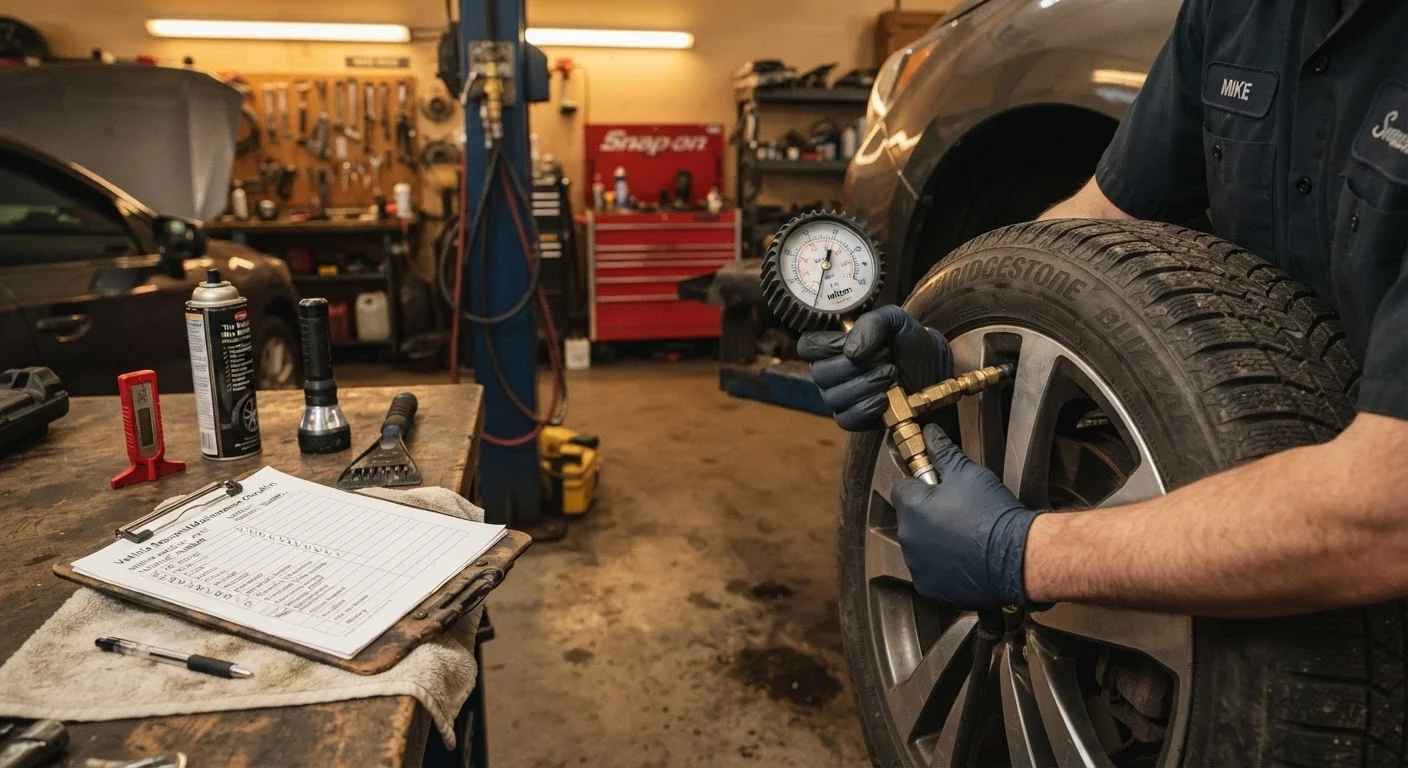
Photo credit: ResultsPoint.net | Find The Required Information
In this article
A practical, season-by-season checklist covering everything from tire pressure and battery tests to wiper blades and cabin air filters.
Key Takeaways
- Seasonal checks catch small problems before they become expensive repairs or roadside failures.
- Tire pressure, battery health, and fluid levels are the highest-impact items to verify each season.
- Your owner's manual is the most reliable source for your vehicle's specific service intervals.
- Most seasonal checks require no special tools and can be completed in under an hour.
Why Seasonal Checks Matter More Than You Think
Most car problems don't appear without warning — they build slowly as temperatures swing, miles add up, and components wear. A seasonal check is the simplest way to catch those early signs before they turn into a tow truck call or a four-figure repair bill.
This checklist is organized by season so you can work through it at the transitions that matter most for your climate. If you live somewhere with mild winters, some cold-weather items won't apply — use your judgment. For a deeper look at how temperature extremes specifically affect key systems, see our seasonal driving prep guide.
Before you start, pull out your owner's manual. It lists the manufacturer-recommended intervals for your specific vehicle — those numbers override any general guideline, including the ones here.
Tire pressure gauge
Accurately check PSI in all four tires and the spare — digital or stick gauges both work fine.
Battery load tester
Measures whether your battery can hold a charge under real-world load conditions.
Coolant test strips
Quickly verify the freeze-point protection level of your antifreeze mixture.
Tread depth gauge
Measures remaining tire tread precisely — more reliable than the penny test for safety decisions.
Vehicle owner's manual
The definitive reference for your car's fluid specs, service intervals, and component locations.
Spring & Summer Checklist
After winter, your car has been through the worst of it. Spring is the time to assess the damage and prepare for summer heat, which stresses tires, cooling systems, and belts in different but equally serious ways.
Spring: Post-Winter Recovery
Summer: Heat & Long-Haul Prep
Fall: Pre-Winter Preparation
Winter: Active-Season Monitoring
Don't Rely on Dashboard Warnings Alone
Warning lights are designed to alert you after a problem has already developed — not before. A tire that's 8 PSI low may not trigger the TPMS light, and a weakening battery rarely gives obvious signs until it fails to start. Regular manual checks catch what sensors miss.
Fall & Winter Checklist
Cold weather is hard on batteries, tires, and fluids. Get ahead of it before the first freeze. Vehicles that are well-maintained heading into winter are far less likely to leave you stranded on an icy morning.
This checklist pairs well with the broader guidance in our complete car maintenance roadmap, which covers every major system from the engine to the electrical.
Cold Weather Kills Weak Batteries Fast
A battery that tests marginal in October has a high chance of failing completely by January. Battery capacity drops significantly at temperatures below 32°F, and the engine demands more cranking power in the cold at the same time. If a load test shows your battery is weak, replacing it before winter is one of the highest-value maintenance moves you can make. Don't wait for a no-start on a freezing morning.
If your vehicle has high mileage, pay extra attention to the battery, belts, and coolant items — older components are more vulnerable to cold-weather stress. Our guide on keeping high-mileage vehicles running covers additional steps worth layering in.
This checklist is for general informational purposes only and is not a substitute for professional mechanical inspection. When in doubt, have a qualified mechanic evaluate your vehicle.

Author
Autos Editorial Team
Autos Editorial Team is the collective byline for our editorial team and contributor network. Articles published under this byline or an editorial pen name are researched, written, and reviewed according to our editorial standards for clarity, consistency, and independence before publication.
View all articles →