
Actual Cash Value vs. Agreed Value in Auto Insurance
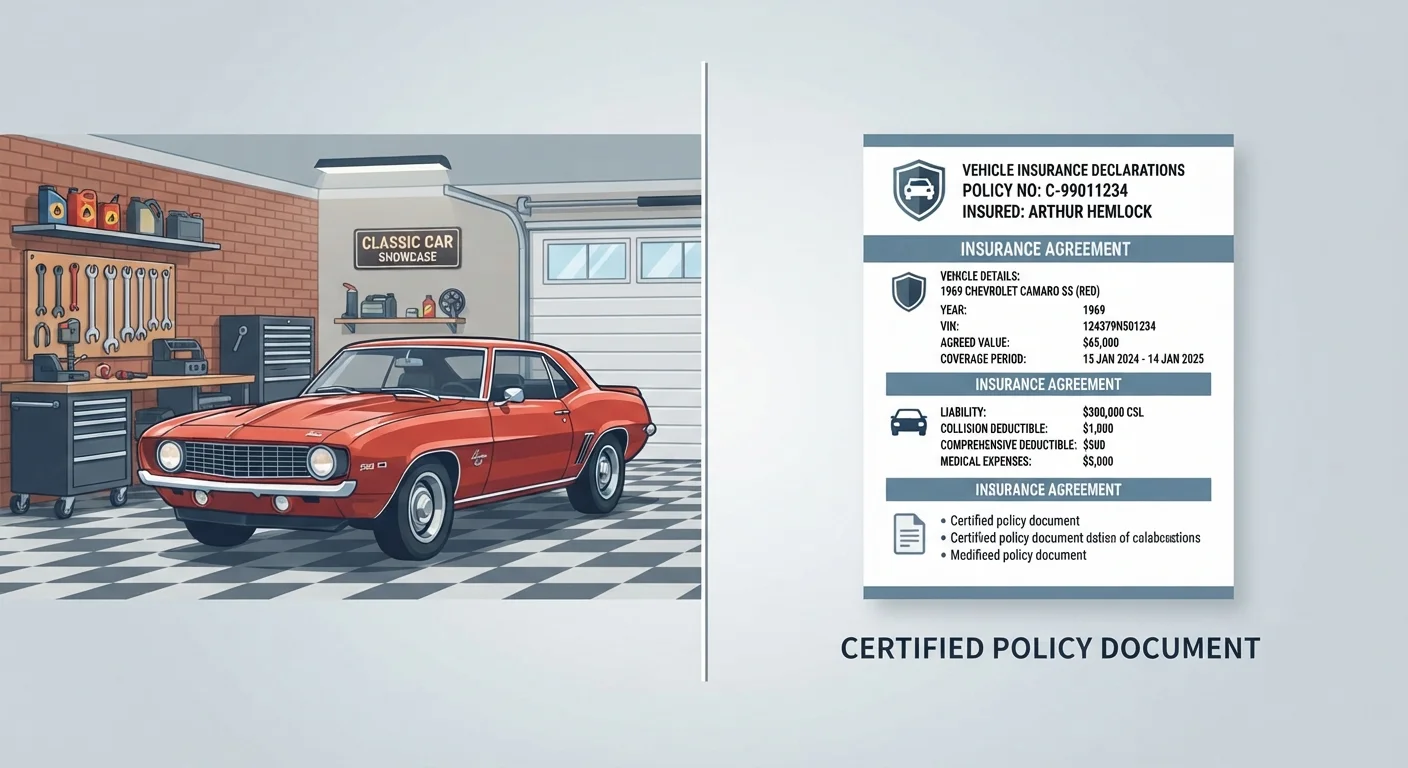
Photo credit: ResultsPoint.net | Find The Required Information
In this article
How your insurer values your car at the time of a claim can significantly affect your payout. Here's what these two valuation methods mean in practice.
Key Takeaways
- Actual Cash Value pays what your car is worth at the time of the claim, after depreciation is deducted.
- Agreed Value locks in a specific payout amount upfront, with no depreciation applied at claim time.
- ACV policies typically carry lower premiums; Agreed Value policies cost more but eliminate payout surprises.
- Agreed Value coverage is most common for classic, antique, and collector vehicles.
- Understanding your policy's valuation method is essential before a total loss or major claim occurs.
What These Two Valuation Methods Actually Mean
When you file a claim for a totaled or stolen vehicle, your insurer doesn't just hand you a check for whatever you think the car is worth. The payout is calculated based on the valuation method written into your policy — and that detail matters more than most drivers realize.
Actual Cash Value (ACV) is the default for most standard auto insurance policies. At claim time, the insurer determines what your car was worth on the open market immediately before the loss — factoring in age, mileage, condition, and depreciation. If your three-year-old sedan would have sold for $18,000 the day before the accident, that's roughly what ACV pays (minus your deductible). What you originally paid for it is not part of the calculation. To understand how quickly vehicles lose value, see our piece on depreciation and the real cost of car ownership.
Agreed Value works differently. Before the policy takes effect, you and the insurer examine the vehicle together — often with supporting documentation like appraisals, receipts, or photos — and agree on a fixed dollar amount. If the vehicle is totaled or stolen, you receive that exact figure, no depreciation applied. This approach is standard in specialty and collector car insurance.
| Criterion | Actual Cash Value (ACV) | Agreed Value |
|---|---|---|
| How payout is calculated | Market value minus depreciation at claim time | Fixed amount set at policy start |
| Depreciation applied | Yes | No |
| Premium cost | Generally lower | Generally higher |
| Payout predictability | Unknown until claim is filed | Known upfront |
| Vehicle types typically covered | Standard, everyday vehicles | Classic, collector, specialty vehicles |
| Documentation required | Minimal at policy start | Appraisal and records needed |
| Availability | Widely available | Specialty insurers primarily |
Where Each Method Falls Short
ACV's weakness is the gap it can create between your payout and your actual financial loss. If you financed your vehicle and still owe more than the depreciated value, ACV won't cover the difference — that's a situation where gap insurance becomes relevant. ACV also means the settlement amount isn't knowable until the claim is filed, which can feel like a moving target.
Agreed Value has its own limitations. Policies are harder to find for ordinary vehicles, typically cost more in premiums, and require upfront documentation work. Insurers generally require periodic reappraisals to keep the agreed amount current, especially for vehicles whose value may rise or fall over time. If you're already weighing your coverage options, our overview of liability, collision, and comprehensive coverage can help frame where valuation fits within your broader policy structure.
Stated Value Is Not the Same as Agreed Value
Some policies advertise "stated value" coverage, but the two terms are not interchangeable. A stated value policy may still allow the insurer to pay whichever is lower — the stated amount or the ACV — at the time of a claim. Always read the actual policy language rather than relying on the label. If guaranteed payout is your goal, confirm the policy explicitly uses agreed value terms.
It's also worth noting that stated value is a third option sometimes confused with agreed value. Stated value policies may still allow the insurer to pay the lesser of the stated amount or ACV — read the policy language carefully.
~20%
Typical first-year vehicle depreciation
Industry estimates generally place new vehicle depreciation at roughly 15–20% in the first year, according to automotive valuation sources such as Edmunds and Kelley Blue Book.
~50%
Value lost in first five years
Many vehicles lose close to half their original value within five years of purchase, which directly affects ACV payouts on older vehicles.
How to Decide Which Valuation Method Fits Your Situation
For most drivers with newer or late-model used vehicles, ACV coverage through a standard comprehensive or collision policy is appropriate and cost-effective. The depreciated value of a common vehicle generally tracks closely with what you'd realistically recover if you had to replace it through the used car market.
If you own a classic, antique, heavily restored, or specialty vehicle, ACV can significantly undervalue what you've invested. A 1969 muscle car in restored condition or a low-production import with documented provenance won't show up accurately in standard valuation databases. In those cases, agreed value coverage — offered through specialty insurers — is worth the higher premium to guarantee you're made whole.
Whatever your situation, the valuation method in your policy is a detail worth understanding before you ever need to use it. Review your declarations page, know how your insurer defines your vehicle's value, and ask questions before a claim arises. For a broader look at what shapes your overall insurance costs, see why your car insurance premium is what it is.
This article is for general informational purposes only and does not constitute insurance or financial advice. Coverage terms vary by insurer and state. Consult a licensed insurance professional for guidance specific to your situation.

Author
Autos Editorial Team
Autos Editorial Team is the collective byline for our editorial team and contributor network. Articles published under this byline or an editorial pen name are researched, written, and reviewed according to our editorial standards for clarity, consistency, and independence before publication.
View all articles →