
Liability, Collision, and Comprehensive Coverage: What Each One Actually Covers
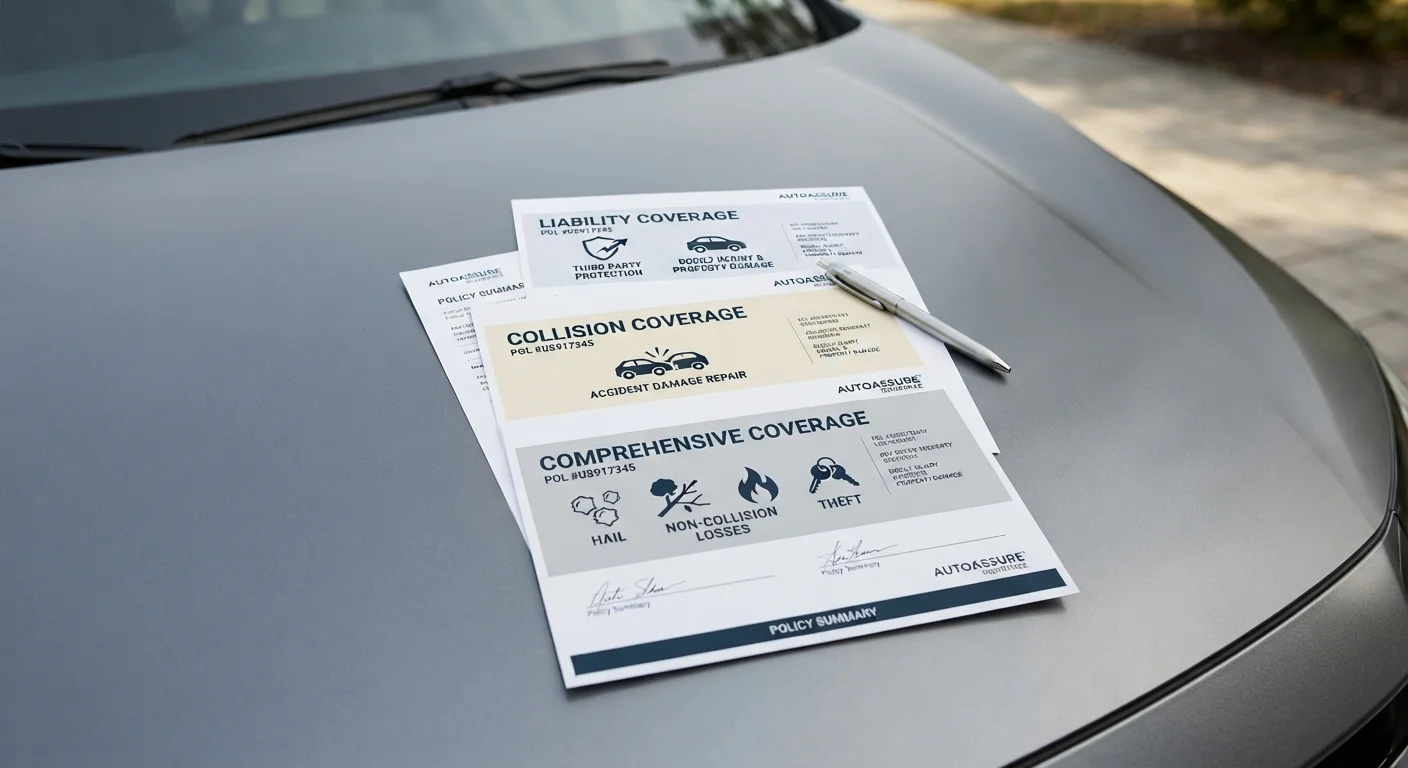
Photo credit: ResultsPoint.net | Find The Required Information
In this article
Three types of auto insurance, three very different protections. Learn what each covers, when it applies, and what gaps to watch for.
The Three Core Coverages at a Glance
Most auto insurance policies are built from three foundational coverages: liability, collision, and comprehensive. Each one protects against a different category of loss. Knowing the difference isn't just useful trivia — it determines whether you're covered when something actually goes wrong.
Liability is the only coverage required by law in nearly every U.S. state. Collision and comprehensive are optional unless a lender or leasing company requires them. Together, the three form what's often called "full coverage," though that phrase has no official legal definition — it's shorthand, not a guarantee. For a fuller picture of how premiums are set across these coverage types, see why your car insurance premium is what it is.
Liability Coverage: Protecting Others from Your Mistakes
What it covers: Liability pays for bodily injury and property damage you cause to other people in an accident where you're at fault. It covers the other driver's medical bills, lost wages, and repair costs — not yours.
Liability is split into two parts:
- Bodily injury liability — covers injury costs for other people hurt in a crash you caused
- Property damage liability — covers repairs to the other driver's vehicle or any other property you damage (fences, mailboxes, storefronts)
What it doesn't cover: Your own injuries or vehicle repairs. If you're at fault and only carry liability, you pay for your own damages out of pocket.
State minimums for liability are often low — sometimes as little as $25,000 per person for bodily injury. A serious accident can exceed those limits quickly, leaving you personally responsible for the difference. Many drivers choose higher limits for this reason.
Collision Coverage: When Your Car Gets Hit or Hits Something
What it covers: Collision pays to repair or replace your vehicle after it's damaged in a crash — whether you hit another car, a guardrail, a tree, or a pole. It applies regardless of who's at fault.
If the other driver caused the accident and is insured, their liability coverage would typically pay for your damage. But if they're uninsured, underinsured, or fault is disputed, collision coverage steps in so you're not waiting on someone else's insurer.
What it doesn't cover: Damage that doesn't result from a collision — hail, flooding, theft, or a fallen tree limb. That's where comprehensive comes in.
Deductibles Affect Your Real Cost at Claim Time
When you file a collision or comprehensive claim, you pay your deductible first — the insurer covers the rest up to your vehicle's value. Choosing a higher deductible can reduce your monthly premium, but it raises the amount you'll owe when something actually happens. Make sure the deductible you select is an amount you could realistically pay on short notice.
Collision coverage comes with a deductible — the amount you pay before insurance covers the rest. Common deductibles range from $250 to $1,500. A higher deductible lowers your premium but increases your out-of-pocket cost at claim time. How your insurer values your car matters here too — see actual cash value vs. agreed value in auto insurance for details on payout calculations.
Comprehensive Coverage: Everything Else That Can Happen
What it covers: Comprehensive — sometimes called "other than collision" — covers damage to your vehicle from causes unrelated to a crash. This includes:
- Theft or vandalism
- Weather events: hail, flooding, wind damage
- Fire
- Falling objects (tree limbs, debris)
- Animal collisions (hitting a deer, for example)
What it doesn't cover: Mechanical breakdowns, normal wear and tear, or collision damage. Like collision, it also carries a deductible.
Comprehensive is especially worth considering if you live where severe weather is common, park outdoors, or own a vehicle that would be expensive to replace. Drivers relying only on liability coverage have no protection if their parked car is flooded or stolen.
For a broader look at how these coverages fit into the full picture of vehicle ownership costs, navigating insurance, registration, and ongoing costs is a useful reference. And if you're unsure which coverage decisions are myths versus money-savers, auto insurance myths that cost drivers real money covers the most common misconceptions.
Liability coverage
Pays for bodily injury and property damage you cause to others in an at-fault accident. Does not cover your own vehicle or injuries.
Collision coverage
Covers repair or replacement of your own vehicle after a crash with another vehicle or object, regardless of fault.
Comprehensive coverage
Covers damage to your vehicle from non-collision causes such as theft, hail, flooding, fire, or animal strikes.
Deductible
The fixed amount you pay out of pocket before your insurer covers the remaining cost of a claim. Higher deductibles generally mean lower premiums.
Bodily injury liability
The portion of liability coverage that pays for medical expenses, lost wages, and related costs of people injured in an accident you caused.
Property damage liability
The portion of liability coverage that pays to repair or replace another person's vehicle or property damaged in an accident you caused.

Author
Autos Editorial Team
Autos Editorial Team is the collective byline for our editorial team and contributor network. Articles published under this byline or an editorial pen name are researched, written, and reviewed according to our editorial standards for clarity, consistency, and independence before publication.
View all articles →