
Carrying Only Minimum Auto Insurance Coverage: What the Trade-Off Looks Like
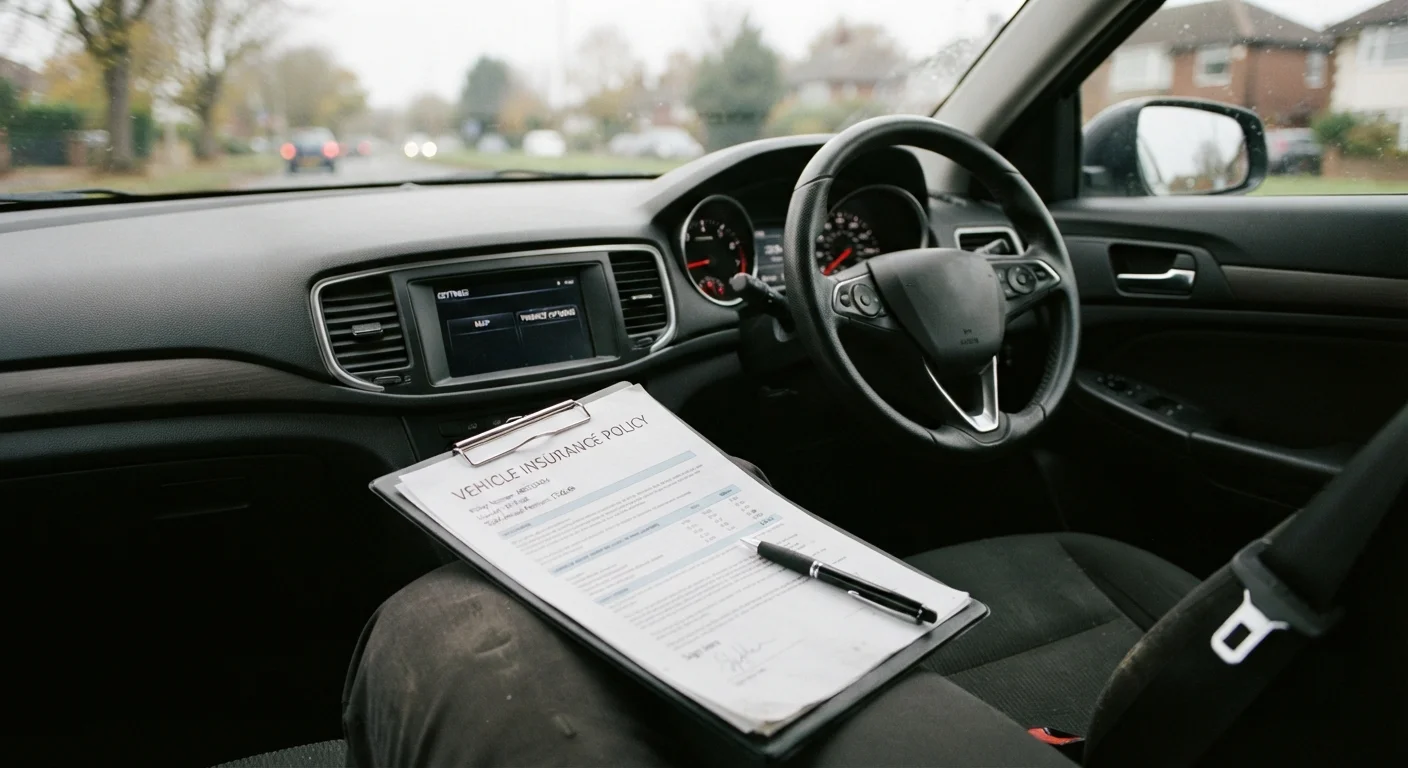
Photo credit: ResultsPoint.net | Find The Required Information
In this article
State minimums keep premiums low but can leave you exposed in a serious accident. A clear look at the advantages and real risks involved.
Key Takeaways
- State minimum liability coverage satisfies legal requirements but leaves significant financial gaps.
- Minimum coverage never pays for damage to your own vehicle or your own medical bills.
- Drivers with older paid-off vehicles or limited assets may have reasonable grounds to consider minimum coverage.
- A single serious accident can expose you to out-of-pocket costs that far exceed any premium savings.
Lower monthly premium cost
Minimum coverage typically costs significantly less than a full-coverage policy. For drivers on tight budgets, that difference can be meaningful month to month.
Meets legal requirements to drive
Carrying the state minimum keeps you street-legal and avoids fines, license suspension, or vehicle impoundment that follow an uninsured driving citation.
Makes sense for low-value, paid-off vehicles
If your vehicle is old enough that its market value is low, paying for collision and comprehensive coverage may cost more annually than the car is worth — making minimum coverage more economical.
Frees up cash for other financial priorities
The premium savings, redirected into an emergency fund, could help cover minor out-of-pocket expenses that full coverage might otherwise handle — though this requires financial discipline.
No coverage for your own vehicle damage
Minimum liability coverage pays nothing toward repairing or replacing your car after an at-fault accident. You absorb the full repair cost yourself.
Liability limits can be exhausted quickly
State minimums — often $25,000 or $50,000 per accident — can be wiped out by a single hospitalization. Anything beyond your limits becomes your personal financial responsibility.
No protection against uninsured or underinsured drivers
Unless you add uninsured motorist coverage separately, you have no policy protection if you're hit by a driver who carries no insurance or too little of it.
Personal assets may be at risk in a lawsuit
If you cause serious injury and the damages exceed your coverage limits, a court may allow the injured party to pursue your wages, savings, or other assets to cover the gap.
No coverage for theft, weather, or non-collision events
Comprehensive coverage, not included in state minimums, is what pays if your car is stolen, flooded, or damaged by a falling tree. Without it, those losses are entirely yours.
What Minimum Coverage Actually Means
Every U.S. state requires drivers to carry some form of auto insurance, but the minimums vary considerably. Most states set their requirements around liability coverage — which pays for injuries and property damage you cause to others in an at-fault accident. Liability limits are typically expressed as three numbers, such as 25/50/25, meaning $25,000 per injured person, $50,000 per accident for bodily injury, and $25,000 for property damage.
Minimum coverage does not include collision (which pays to repair your own car after a crash) or comprehensive (which covers theft, weather damage, and similar events). It also doesn't cover your own medical bills unless your state requires personal injury protection (PIP) or medical payments coverage as part of its minimum. For a full breakdown of how these coverage types work, see what each coverage type actually covers.
The Advantages of Going Minimum
For some drivers, minimum coverage is a deliberate, reasonable choice — not just a way to cut corners.
Lower monthly premium cost
Minimum coverage typically costs significantly less than a full-coverage policy. For drivers on tight budgets, that difference can be meaningful month to month.
Meets legal requirements to drive
Carrying the state minimum keeps you street-legal and avoids fines, license suspension, or vehicle impoundment that follow an uninsured driving citation.
Makes sense for low-value, paid-off vehicles
If your vehicle is old enough that its market value is low, paying for collision and comprehensive coverage may cost more annually than the car is worth — making minimum coverage more economical.
Frees up cash for other financial priorities
The premium savings, redirected into an emergency fund, could help cover minor out-of-pocket expenses that full coverage might otherwise handle — though this requires financial discipline.
1 in 8
U.S. drivers estimated to be uninsured
According to the Insurance Research Council, roughly one in eight drivers on U.S. roads carries no insurance at all — a risk that minimum-coverage drivers face with no built-in protection.
$25,000
Typical state minimum property damage limit
Many states set their property damage liability floor at $25,000 — an amount that can be exceeded by the repair or replacement cost of a newer vehicle in a single crash.
It's worth noting that drivers with very modest assets may have less exposure in a lawsuit than those with significant savings or property. If you don't own much, there's less for a claimant to pursue beyond your policy limits — though this calculus changes if you accumulate assets over time. Minimum coverage should be revisited as your financial situation evolves. For a broader look at common financial missteps in vehicle ownership, see where car costs tend to go wrong.
The Real Risks You Accept
The trade-off is significant — and often underestimated until it's too late.
No coverage for your own vehicle damage
Minimum liability coverage pays nothing toward repairing or replacing your car after an at-fault accident. You absorb the full repair cost yourself.
Liability limits can be exhausted quickly
State minimums — often $25,000 or $50,000 per accident — can be wiped out by a single hospitalization. Anything beyond your limits becomes your personal financial responsibility.
No protection against uninsured or underinsured drivers
Unless you add uninsured motorist coverage separately, you have no policy protection if you're hit by a driver who carries no insurance or too little of it.
Personal assets may be at risk in a lawsuit
If you cause serious injury and the damages exceed your coverage limits, a court may allow the injured party to pursue your wages, savings, or other assets to cover the gap.
No coverage for theft, weather, or non-collision events
Comprehensive coverage, not included in state minimums, is what pays if your car is stolen, flooded, or damaged by a falling tree. Without it, those losses are entirely yours.
Lenders and Lessors Set Their Own Rules
If you're financing or leasing a vehicle, the lender or leasing company almost always requires full coverage — regardless of what your state mandates. Carrying only minimum coverage on a financed car typically violates your loan agreement and can result in the lender force-placing more expensive insurance on your behalf. Check your loan or lease terms before adjusting your coverage. For a broader overview of ownership costs and obligations, see our comprehensive car ownership guide.
State minimums were set years ago and haven't kept pace with medical inflation or vehicle repair costs. A single hospitalization after a serious crash can easily run into six figures. If the injured party's bills exceed your liability limits, they may sue you for the difference. Understanding how your insurer values your vehicle in a claim is also relevant here — learn how actual cash value vs. agreed value affects your payout.
This article provides general financial information about auto insurance coverage options. It is not personalized financial, legal, or insurance advice. Consult a licensed insurance professional to evaluate the right coverage level for your specific situation.

Author
Autos Editorial Team
Autos Editorial Team is the collective byline for our editorial team and contributor network. Articles published under this byline or an editorial pen name are researched, written, and reviewed according to our editorial standards for clarity, consistency, and independence before publication.
View all articles →