
U.S. Traffic Signs Decoded: A Driver's Field Reference
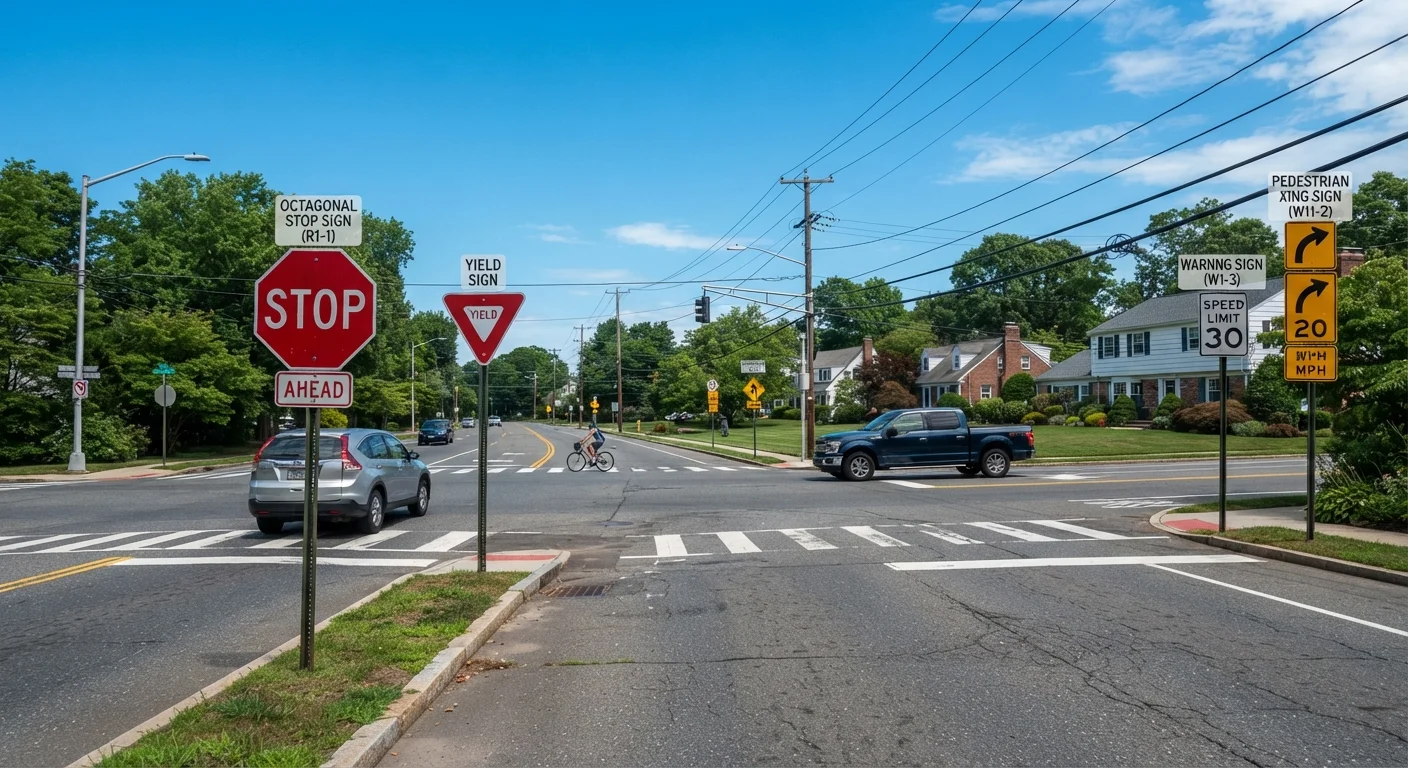
Photo credit: ResultsPoint.net | Find The Required Information
In this article
A clear reference for regulatory, warning, and guide signs on American roads — including lesser-known signs many drivers encounter without recognizing.
How the U.S. Sign System Is Organized
American traffic signs follow a national standard called the Manual on Uniform Traffic Control Devices (MUTCD), published by the Federal Highway Administration. The system uses shape and color as the first layer of communication — so even a partially obscured sign can still convey a message.
There are three core categories every driver encounters:
- Regulatory signs — tell you what you must or must not do (white background, black or red text)
- Warning signs — alert you to hazards or changes ahead (yellow diamond, or orange in work zones)
- Guide signs — provide navigation, distance, and route information (green, blue, or brown backgrounds)
Shape carries its own meaning. An octagon always means stop. An inverted triangle always means yield. A pennant shape on the left side of a road marks a no-passing zone. Understanding shape-as-message helps when visibility is limited.
Regulatory Signs: Rules You're Required to Follow
Regulatory signs are legal instructions. Ignoring them isn't a judgment call — it's a traffic violation. Here are some that drivers frequently misread or overlook:
Speed Limit vs. Advisory Speed
A white rectangular speed limit sign sets the legal maximum. A yellow sign with a speed number — often posted below a curve warning — is an advisory speed, not a legal limit, but it reflects the speed engineers consider safe for that condition.
Yield vs. Stop
A yield sign (inverted red triangle) requires you to slow and give the right-of-way; you don't have to stop if the path is clear. A stop sign requires a complete stop every time, regardless of traffic.
Lane-Use Control Signs
Signs showing a curved arrow and an X over a lane indicate mandatory turning lanes or reversible lanes. These are common downtown and near highway on-ramps. Entering the wrong lane can result in a head-on conflict, so read them well in advance.
For broader context on rules that keep roads predictable, see our guide to defensive driving principles.
Work Zone Signs Carry Higher Penalties
When orange work zone signs post a reduced speed limit, fines for violations are typically doubled in most states. These limits apply whether or not workers are visibly present. Always reduce speed when entering any active work zone and increase your following distance.
Warning Signs and Guide Signs Worth Knowing
Warning signs give you reaction time — they're only useful if you actually adjust your behavior. A few that catch drivers off guard:
Lesser-Known Warning Signs
- Divided highway ends — two-lane oncoming traffic ahead; don't stay in the left lane
- Low clearance — a rectangular yellow sign with a height measurement; critical for trucks, tall SUVs with roof cargo, or rented moving vehicles
- Soft shoulder — pavement edge drops off; pulling over here can cause a tire drop that leads to a rollover
- Truck rollover warning — posted at ramps and sharp curves with a suggested speed; applies most to top-heavy loads
Guide Signs
Green signs show highway route numbers, exit numbers, and distances to cities. Blue signs indicate services — fuel, food, lodging, hospitals — available at an upcoming exit. Brown signs mark recreational areas, parks, and points of historic interest.
Exit numbers correspond to milepost positions, so Exit 47 is near mile marker 47. This makes it easy to estimate distance between exits.
MUTCD
Manual on Uniform Traffic Control Devices. The federal document that standardizes the design, placement, and meaning of all traffic signs, signals, and pavement markings on U.S. public roads.
Regulatory sign
A sign that conveys a legal requirement or prohibition. Failure to comply can result in a traffic citation.
Advisory speed
A recommended speed for a specific condition — such as a sharp curve — shown on a yellow sign. It is not a legal speed limit but reflects a safe operating speed for that location.
Work zone (orange) signs
Temporary warning and regulatory signs posted in active construction or maintenance areas. Speed limits posted in orange work zones typically carry increased fines.
Pennant sign
A triangular yellow sign posted on the left side of the road marking the beginning of a no-passing zone. It always faces oncoming traffic in the passing direction.
Soft shoulder
An unpaved or weakly compacted road edge that cannot reliably support a vehicle's full weight. Pulling off onto a soft shoulder can cause a tire to drop sharply, risking a loss of control.
Good sign literacy pairs naturally with other preparedness habits. Before a long drive, review our pre-drive safety walkthrough to make sure your vehicle and your awareness are both road-ready.

Author
Autos Editorial Team
Autos Editorial Team is the collective byline for our editorial team and contributor network. Articles published under this byline or an editorial pen name are researched, written, and reviewed according to our editorial standards for clarity, consistency, and independence before publication.
View all articles →