
Macronutrients Decoded: Carbs, Protein, and Fat in Plain English
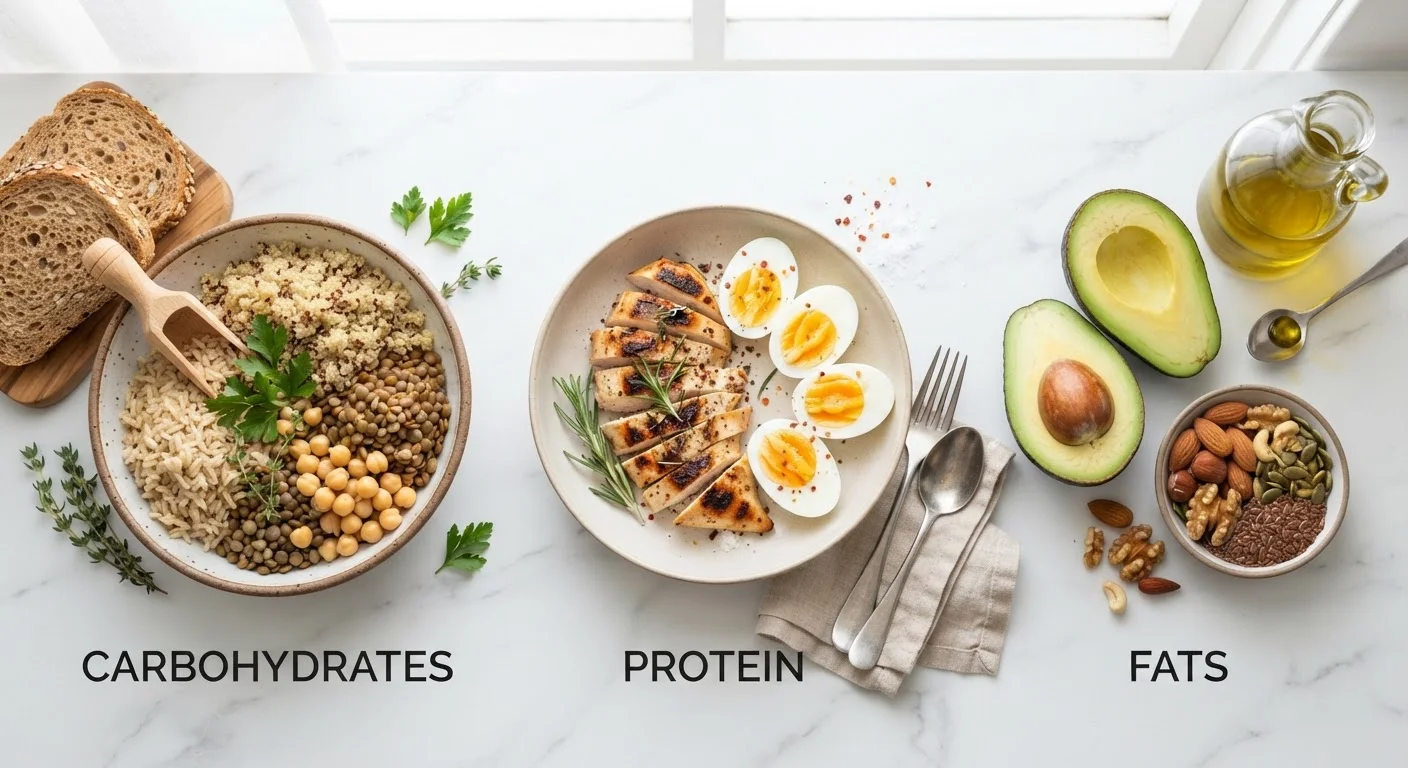
Photo credit: ResultsPoint.net | Find The Required Information
In this article
Confused by macros? This plain-language guide explains what carbohydrates, protein, and fat actually do in your body — no nutrition degree required.
Key Takeaways
- Macronutrients — carbs, protein, and fat — are the three main categories of nutrients your body uses for energy and structure.
- Carbohydrates are your body's quickest energy source; fiber-rich, minimally processed carbs support steady energy and digestion.
- Protein provides the building blocks your body needs to maintain muscle, produce enzymes, and repair tissue.
- Dietary fat supports hormone production, brain function, and absorption of fat-soluble vitamins A, D, E, and K.
- No single macronutrient is inherently harmful — the quality and overall pattern of your diet matters most.
- A registered dietitian can help you understand what balance looks like for your personal health situation.
What Are Macronutrients, Exactly?
Every food you eat is built from nutrients, and macronutrients — often shortened to macros — are the big three your body relies on for energy and raw materials. They are carbohydrates, protein, and fat. Unlike vitamins and minerals (which your body needs in tiny amounts), macronutrients are consumed in grams and provide the calories that power everything from breathing to sprinting.
Macronutrient
One of the three main categories of nutrients — carbohydrates, protein, and fat — that your body needs in relatively large amounts to produce energy and support basic functions.
Calorie
A unit that measures the amount of energy a food provides. Carbohydrates and protein each supply 4 calories per gram; fat supplies 9 calories per gram.
Fiber
A type of carbohydrate found in plant foods that your body can't fully digest. It supports digestive health and feeds beneficial gut bacteria.
Essential amino acids
Nine amino acids (the building blocks of protein) that your body cannot produce on its own and must obtain through food.
Glucose
A simple sugar that carbohydrates are broken down into during digestion. It's the primary fuel your cells — especially brain cells — use for immediate energy.
Unsaturated fat
A type of dietary fat found in foods like olive oil, nuts, and fish, generally associated with favorable health outcomes in nutritional research.
Understanding what each macro does — rather than whether it's "good" or "bad" — is the foundation of sound nutrition literacy. Once you know the basics, the nutrition label on any packaged food starts to make a lot more sense too.
Carbohydrates: Your Body's Preferred Fuel
Carbohydrates are your body's most readily available energy source. When you eat carbs, your digestive system breaks them down into glucose (a simple sugar), which your cells burn for fuel — particularly your brain and muscles. Any excess glucose can be stored in the liver and muscles as glycogen for later use.
Not all carbs behave the same way in your body. The key distinction is between simple carbohydrates (found in table sugar and many processed foods) and complex carbohydrates (found in whole grains, legumes, and vegetables). Complex carbs digest more slowly, which supports steadier blood sugar levels. Fiber — a type of carbohydrate your body can't fully digest — feeds beneficial gut bacteria and supports digestive health.
Choosing Carbs That Work Harder
When selecting carbohydrate-rich foods, look for options where fiber is naturally present — whole grains, legumes, vegetables, and fruit. These tend to slow digestion and provide a more sustained energy release compared to refined options. Checking the fiber content on a nutrition label is a quick, practical way to compare products at a glance.
Common sources of quality carbohydrates include oats, brown rice, sweet potatoes, beans, lentils, and whole-grain bread. Fruit also provides carbohydrates alongside vitamins, minerals, and fiber. To understand how these foods fit into a broader eating pattern, see what a genuinely balanced diet looks like.
Protein: Builder, Repairer, Regulator
Protein is the structural backbone of your body. It's made up of smaller units called amino acids, and your body uses these to build and repair muscle tissue, produce enzymes that drive chemical reactions, make hormones, and support immune function. Of the 20 amino acids the body works with, nine are considered essential — meaning your body can't produce them and must get them from food.
Animal sources like meat, poultry, fish, eggs, and dairy contain all nine essential amino acids and are called complete proteins. Most plant sources — such as beans, lentils, tofu, and nuts — are lower in one or more essential amino acids, but eating a variety of plant proteins throughout the day reliably covers your needs.
Avoid Applying Generic Protein Targets to Yourself
Widely circulated protein recommendations are population averages, not personal prescriptions. Older adults, pregnant individuals, people managing certain chronic conditions, and those engaged in intense athletic training all have distinct protein needs that a general figure won't accurately capture. Talk with a registered dietitian or your healthcare provider before making significant changes to how much protein you eat.
Protein also contributes to feelings of fullness after a meal, which is why higher-protein eating patterns are commonly discussed in the context of appetite regulation. That said, individual protein needs vary meaningfully by age, muscle mass, activity level, and health status — a registered dietitian can help you figure out what's appropriate for your situation.
Fat: Essential, Not the Enemy
Dietary fat spent decades being unfairly demonized. The reality is that fat is biologically essential. Your body uses fat to produce hormones, build cell membranes, protect organs, and absorb fat-soluble vitamins — specifically vitamins A, D, E, and K, which cannot do their jobs without fat present in a meal.
Fat is also the most energy-dense macronutrient, providing 9 calories per gram compared to 4 calories per gram for carbs and protein. That caloric density means portion context matters, but it doesn't make fat inherently problematic.
The type of fat in your diet does matter for long-term health. Unsaturated fats — found in olive oil, avocados, nuts, seeds, and fatty fish — are generally associated with favorable health outcomes in large bodies of research. For a clear breakdown of how saturated, unsaturated, and trans fats differ, see our straightforward comparison of dietary fat types.
How the Three Macros Work Together
Your body doesn't process carbs, protein, and fat in isolation — they work as a system. A meal that combines all three tends to digest more slowly, keep you satisfied longer, and deliver a broader range of nutrients than a meal built around a single macronutrient.
There's no universal macro ratio that works for everyone. Various dietary patterns — Mediterranean, plant-based, higher-protein — distribute macros differently, and each has research supporting its benefits in particular contexts. What the evidence consistently shows is that overall food quality and dietary variety matter more than hitting a precise percentage split.
Macronutrients are also just one layer of the nutrition picture. Your body also needs the micronutrients covered in our no-jargon vitamins and minerals reference — and those micronutrients often come packaged inside the same whole foods that supply your macros.
If you're curious about how to translate this knowledge into everyday meals, understanding what balanced eating actually means in practice is a natural next step.
This article is for general informational and educational purposes only and is not a substitute for professional medical or nutritional advice. Please consult a qualified healthcare provider or registered dietitian for guidance tailored to your individual health needs.
Frequently Asked Questions

Author
Health Editorial Team
Health Editorial Team is the collective byline for our editorial team and contributor network. Articles published under this byline or an editorial pen name are researched, written, and reviewed according to our editorial standards for clarity, consistency, and independence before publication.
View all articles →