
What Homeowners Insurance Actually Covers — and What It Doesn't
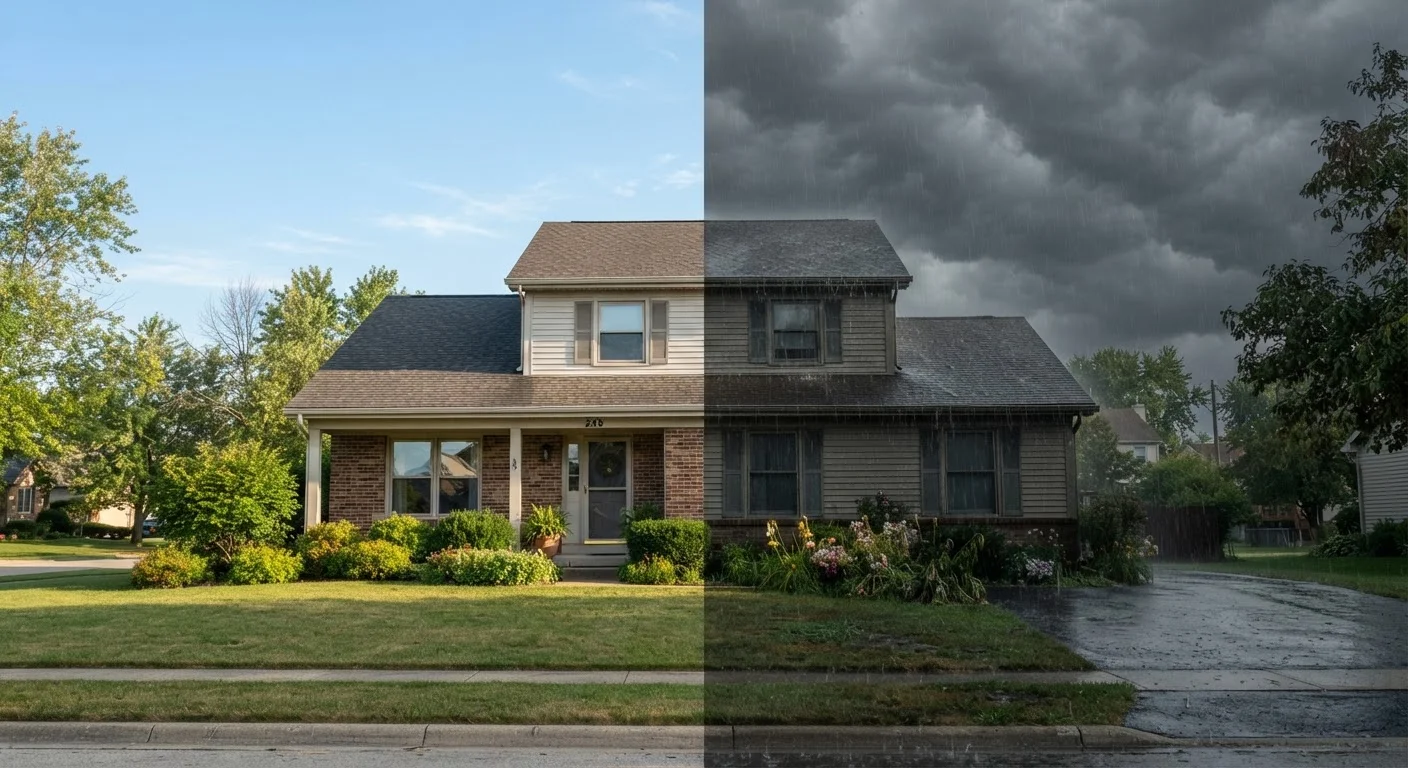
Photo credit: ResultsPoint.net | Find The Required Information
In this article
Flood damage, foundation cracks, mold — find out which losses your policy typically covers and where the gaps usually are.
Key Takeaways
- Standard homeowners insurance covers fire, theft, and certain weather damage, but not floods or earthquakes.
- Flood damage requires a separate policy, typically through the National Flood Insurance Program (NFIP).
- Gradual deterioration, mold from neglect, and foundation settling are almost universally excluded.
- Liability coverage protects you if someone is injured on your property, up to policy limits.
- Personal belongings coverage has sub-limits for categories like jewelry, electronics, and fine art.
- Reviewing your policy annually helps ensure coverage keeps pace with your home's current value.
The Basics: What a Standard Policy Typically Includes
A standard homeowners insurance policy — often called an HO-3 in the industry — generally covers four broad areas: the structure of your home, other structures on your property (like a detached garage or fence), your personal belongings, and liability protection if someone is hurt on your property or you accidentally damage someone else's property.
On the dwelling side, most policies cover sudden and accidental damage caused by specific named perils, or they use an open-perils approach that covers any cause of loss not explicitly excluded. Fire, lightning, windstorms, hail, vandalism, and theft are among the most commonly covered events.
For personal liability, a standard policy will typically pay for legal defense and damages if a guest slips and falls in your home, or if your dog bites a neighbor. Coverage limits vary — $100,000 is common, though many advisers suggest evaluating whether that's sufficient for your situation. Consult a licensed insurance professional to assess your own needs.
This article is for general informational purposes only and does not constitute insurance or legal advice. Coverage terms vary by policy, insurer, and state. Always review your specific policy documents and consult a licensed insurance professional.
Common Myths About What Homeowners Insurance Covers
Many homeowners discover gaps in their coverage only after a loss — when it's too late to close them. The myth-versus-fact pairs below address the misunderstandings that most frequently lead to denied claims or underinsurance.
Myth
My homeowners insurance covers flood damage from heavy rain or a nearby river overflowing.
Fact
Standard homeowners policies do not cover flooding from external water sources. Flood insurance is a separate product.
This is one of the most consequential misunderstandings in property insurance. Whether the flooding comes from a storm surge, a river overflowing its banks, or heavy rainfall overwhelming local drainage, the standard HO-3 policy excludes it. Federal flood insurance is available through the National Flood Insurance Program (NFIP), administered by FEMA, and private flood insurance is also available in many markets. Even homeowners not in a designated high-risk flood zone may want to consider flood coverage — FEMA data has consistently shown that a significant share of flood claims come from properties outside high-risk zones.
Myth
Earthquake damage is covered under my standard policy since it's a natural disaster.
Fact
Earthquakes are explicitly excluded from standard homeowners policies and require a separate endorsement or standalone policy.
Like flood, earthquake is a named exclusion in virtually all standard homeowners policies. Homeowners in seismically active states — California, Oregon, Washington, and parts of the Midwest and East Coast — who want coverage must purchase a separate earthquake insurance policy or add an earthquake endorsement. The California Earthquake Authority (CEA) is one example of a state-backed insurer offering standalone earthquake policies. Costs and availability vary significantly by location and home construction type.
Myth
All of my personal belongings are fully covered up to my policy's total coverage limit.
Fact
Personal property coverage includes sub-limits for specific high-value categories, meaning your total coverage limit doesn't apply equally to everything you own.
Standard policies impose special dollar limits on certain categories of items regardless of your overall personal property coverage amount. Jewelry, watches, furs, firearms, cash, silverware, and electronics used for business purposes are common examples — limits for these can be as low as $1,000–$2,500 per category. If you own items in these categories that exceed those sub-limits, a scheduled personal property endorsement (sometimes called a floater) can extend coverage to their appraised value. Document high-value items with photos and appraisals and keep that record off-site or in cloud storage.
Myth
Foundation cracks and settling are covered because my home's structure is insured.
Fact
Gradual settling, soil movement, and earth movement — including the foundation damage they cause — are standard exclusions.
Dwelling coverage protects the structure of your home from sudden, accidental damage — not from long-term deterioration or ground movement. Settling, shrinking, bulging, or cracking of foundations, pavements, patios, or walls caused by soil conditions, clay expansion, or gradual shifting is explicitly excluded. The same applies to damage caused by tree roots or burrowing animals over time. If a covered event — say, a burst water pipe — directly causes structural damage, that's a different situation, but the underlying maintenance or geological issue itself is not covered.
Myth
If my home is damaged, my policy will pay to rebuild it exactly as it was regardless of current costs.
Fact
Coverage depends heavily on whether your policy uses replacement cost or actual cash value, and whether your coverage limit is high enough.
Replacement cost value (RCV) coverage pays to repair or rebuild using materials of similar kind and quality at current prices, up to your policy limit. Actual cash value (ACV) coverage deducts depreciation — so a roof that is 15 years old may yield a much smaller payout than its replacement cost. Even with RCV, if your dwelling coverage limit was set years ago and hasn't been updated, you could face a gap between what the policy pays and what reconstruction actually costs. Some insurers offer an extended replacement cost or guaranteed replacement cost endorsement that provides a buffer above the stated limit.
~40%
Flood claims from outside high-risk zones
FEMA has reported that a substantial share of National Flood Insurance Program claims come from properties located outside designated Special Flood Hazard Areas.
1 in 50
Homeowners file a property claim each year
According to the Insurance Information Institute, roughly 1 in 50 insured homes has a claim in a given year, with wind and hail damage being the most frequent causes.
The Exclusions That Catch Homeowners Off Guard
Beyond the well-known flood and earthquake exclusions, several other categories of loss routinely surprise policyholders:
- Sewer and drain backup: Water backing up through a drain or sump pump is typically excluded from a standard policy. A separate endorsement — sometimes called a water backup rider — can add this protection for a modest annual premium.
- Mold from neglect: If mold results from a covered event, like a burst pipe, insurers will often pay. But mold that develops gradually because a roof leak went unaddressed for months is generally treated as a maintenance failure, not a covered loss.
- Ordinance or law upgrades: If your home is damaged and local building codes require upgrades during reconstruction — say, updated electrical panels or hurricane strapping — standard policies may not cover the added cost. An ordinance-or-law endorsement fills this gap.
- Home-based business equipment: Running a business from home? Equipment used for business purposes often has limited or no coverage under a personal homeowners policy. A separate business owner's policy may be appropriate.
Understanding exclusions is just as important as understanding what's included. For a parallel look at how gaps appear in other types of insurance, see our explainer on renters insurance myths and the types of auto insurance coverage.
Flood and Earthquake Are Never Automatic
No standard homeowners policy covers flood or earthquake damage — these require entirely separate policies or endorsements. Don't assume that because your home is insured, it's protected from these events. If you live in an area with any meaningful flood or seismic risk, ask your insurer or a licensed agent specifically about your options before a loss occurs.
Making Sure Your Coverage Keeps Up With Your Home
One often-overlooked risk isn't a coverage gap in the policy itself — it's being underinsured because your policy limits haven't kept pace with rising construction costs or home improvements. If your dwelling coverage is set at the purchase price from several years ago, it may not be enough to fully rebuild after a total loss.
Ask your insurer about replacement cost coverage versus actual cash value coverage. Replacement cost pays to rebuild or replace at today's prices; actual cash value deducts depreciation, often leaving a significant shortfall.
Reviewing your policy at renewal each year — especially after a renovation or major purchase — is a straightforward habit that helps prevent surprises. A home inspection can also surface maintenance issues before they become claims; see our guide on what a home inspection covers and misses for more context.
Underinsurance Is a Widespread Risk
With construction costs rising significantly in recent years, many homeowners find their dwelling coverage limit no longer reflects what it would actually cost to rebuild their home. If you haven't reviewed your policy limits within the last year — or after completing renovations — contact your insurer to request a coverage review. Rebuilding costs can exceed purchase price, especially for older homes requiring code-compliant upgrades.

Author
Real Estate Basics Editorial Team
Real Estate Basics Editorial Team is the collective byline for our editorial team and contributor network. Articles published under this byline or an editorial pen name are researched, written, and reviewed according to our editorial standards for clarity, consistency, and independence before publication.
View all articles →