
Toiletry Packing Strategies That Survive Tight Carry-On Restrictions
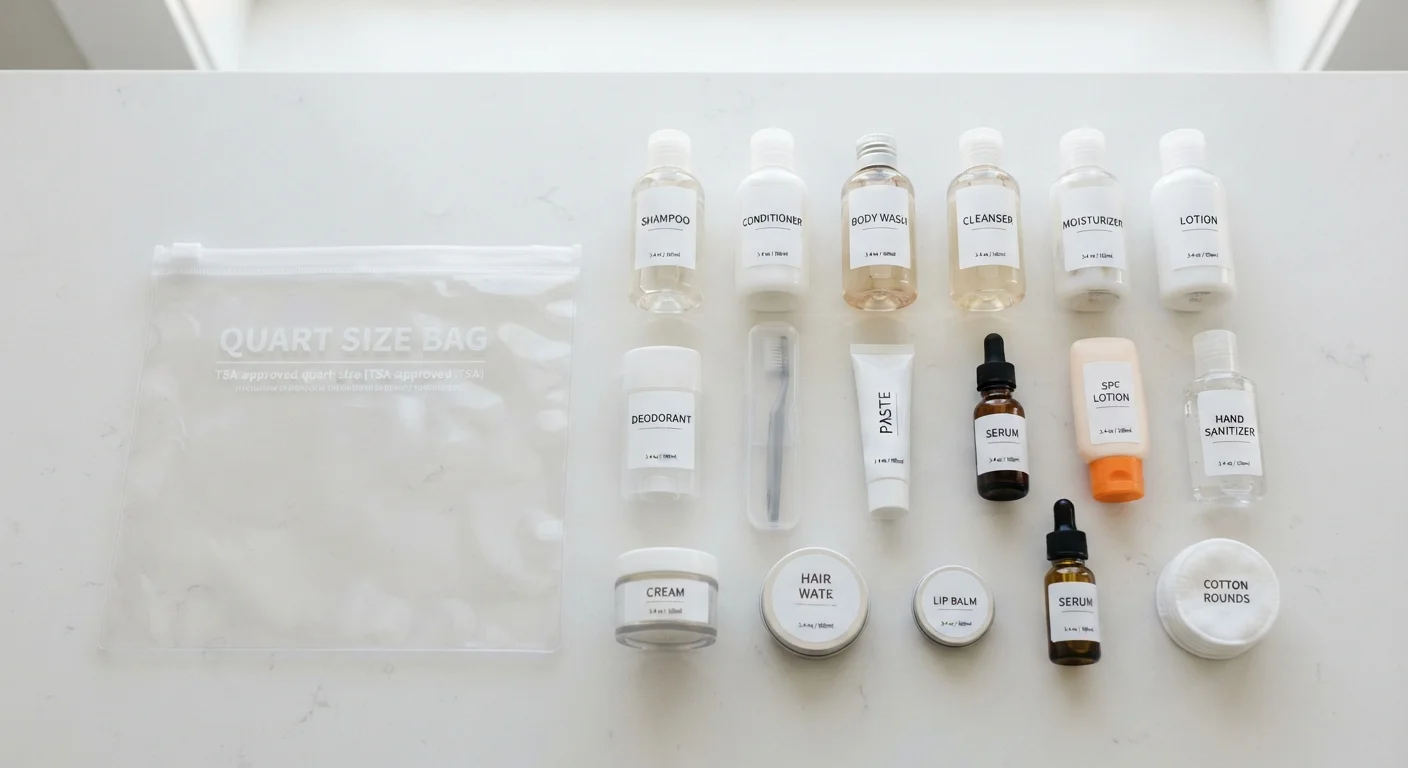
Photo credit: ResultsPoint.net | Find The Required Information
In this article
Getting your full toiletry routine into a quart-size bag takes planning. These approaches help you cover the essentials without checking a bag.
Key Takeaways
- TSA's 3-1-1 rule limits liquids to containers of 3.4 oz or less, all fitting in one quart-size bag.
- Solid and powder formats bypass liquid restrictions entirely, freeing up significant quart-bag space.
- Buying or sourcing certain toiletries at your destination reduces what you need to carry.
- Decanting into reusable small containers lets you bring exactly the volume you need — nothing more.
- Consolidating multi-use products cuts both item count and space requirements significantly.
Why Carry-On Toiletry Packing Demands a Real Strategy
The TSA's 3-1-1 rule — liquids in containers of 3.4 fluid ounces (100 ml) or less, all fitting inside a single quart-size clear bag — is familiar to most U.S. travelers. What's less familiar is how ruthlessly limiting that quart bag becomes when you add up shampoo, conditioner, face wash, moisturizer, sunscreen, and toothpaste. Even with travel-size bottles, the math works against you fast.
The good news: getting a complete toiletry routine into carry-on limits is a solved problem. It just requires rethinking format, not just quantity. The strategies below move beyond "buy travel sizes" toward decisions that consistently work — whether you're on a three-day business trip or a two-week international circuit. For a broader foundation, see our introduction to packing light.
Verify rules with official sources before you fly
TSA rules apply to U.S. domestic and international departure screening, but other countries' security agencies may have slightly different liquid limits or powder policies. Always verify current requirements with the relevant transportation security authority and your airline before travel, as rules can change. Prescription medications in liquid form may be exempt from standard liquid rules — check the official TSA website or contact your airline for guidance.
Strategies That Actually Work
Understand exactly what the quart bag must hold
Before optimizing anything, inventory every liquid, gel, cream, aerosol, and paste in your current routine. Toothpaste, shampoo, conditioner, face wash, moisturizer, sunscreen, lip balm (if gel-based), contact lens solution, and any liquid medications all count. Once you list them, you can make informed decisions about which to convert to solid form, which to decant in minimal quantities, and which to buy at your destination.
This audit step is where most packing breakdowns start — travelers add items without removing others, and the quart bag overflows before they've even packed clothes. Treat the inventory as a zero-based exercise: every item earns its place or gets cut.
Every liquid, gel, and cream in your routine must earn its place in the quart bag.
Switch liquids to solid or powder formats where possible
Solid shampoo bars, conditioner bars, solid face cleansers, and solid sunscreen sticks have matured considerably as product categories. They perform comparably to their liquid counterparts for most hair and skin types, and — critically — they fall outside TSA's liquid restrictions entirely. A shampoo bar that replaces a full-size bottle frees up a substantial portion of your quart bag for items with no solid alternative.
Powder formats work similarly. Dry shampoo in powder form, powdered face wash, and even some powdered sunscreen products carry no liquid restrictions, though some security screeners may swab powders in quantities over 12 oz. Keeping individual powder containers under that threshold avoids delays.
Solid and powder formats carry no liquid restrictions, freeing your quart bag for items that have no substitute.
Decant into reusable containers sized for the actual trip
Travel-size products from store shelves are often 3 oz — the legal maximum — even when your trip only requires a fraction of that volume. A weekend trip doesn't need 3 oz of face wash. Decanting from your full-size products into small reusable silicone or hard-sided containers lets you bring only what you'll use, which both reduces weight and preserves quart-bag space for other items.
Label containers clearly, especially for clear or similarly colored products. A small strip of masking tape and a marker takes seconds and prevents the kind of mid-trip confusion that sends travelers reaching for the wrong product at 6 a.m.
Decanting lets you carry exactly what the trip requires — not what a pre-filled travel bottle dictates.
Identify what you can buy or source at the destination
Shampoo, conditioner, body wash, toothpaste, and basic skincare items are available at pharmacies, supermarkets, and convenience stores in virtually every destination — including internationally. If your trip exceeds three or four days, buying a full-size product on arrival and leaving it behind when you depart often makes more practical sense than wrestling it into a quart bag.
This strategy works especially well for bulky or heavy liquid items like conditioner or sunscreen, which can dominate a quart bag. The tradeoff is a small cost and minor inconvenience on arrival — worth considering against the freedom of a lighter bag. Accommodations with dedicated toiletries (many hotels provide shampoo and body wash) can reduce your list further.
Buying shampoo or sunscreen at your destination can free your quart bag for items genuinely unavailable there.
Consolidate with multi-use products
Products that perform more than one function reduce both item count and volume. A tinted moisturizer with SPF, for instance, replaces a standalone moisturizer, sunscreen, and light foundation — three potential quart-bag items collapsed into one. A two-in-one shampoo-conditioner (effective for many hair types, particularly on short trips) cuts two items to one. Lip balm with SPF handles two needs in a single small container.
Multi-use consolidation works best when the combined product genuinely meets your needs — not as a workaround that leaves your skin under-protected or your hair poorly conditioned. Test multi-use substitutions at home before relying on them on a trip.
One product doing two jobs is always worth more than two products doing one job each.
Keep your toiletry kit separate from your travel day essentials
Your quart bag goes into the security bin and back out again at every checkpoint. Keeping it organized and immediately accessible — rather than buried at the bottom of your carry-on — reduces screening stress and keeps you moving efficiently. A dedicated exterior pocket or a specific interior spot you use consistently makes this automatic.
Note that some items travelers keep in their personal bag during transit — lip balm, hand lotion, eye drops — are subject to the same liquid rules if they're gels or liquids. Either keep them small enough to stay in the quart bag or choose solid alternatives for those too. For a full picture of what experienced travelers keep accessible during a travel day, see the anatomy of a travel day kit.
A consistently organized quart bag saves time at security and prevents items from getting lost mid-trip.
Test your kit before the actual trip
Pack your quart bag completely at home and run a mental walkthrough of your full morning and evening routine. If anything is missing, you'll catch it before the airport. This is also the right moment to confirm all containers actually fit — a bag that won't zip flat may be flagged at security.
Building a System You Can Repeat
The most effective toiletry packs aren't assembled from scratch before every trip — they're maintained as a ready-to-go kit. Keep your refillable containers filled, your solids stocked, and your quart bag organized so that packing becomes a check rather than a rebuild. This approach pairs well with the broader carry-on discipline covered in our guide to packing for a week in a carry-on.
As you refine your kit, revisit what actually gets used. Most travelers find they carried at least two or three items on every trip that they never opened. Eliminating those — or replacing them with destination purchases — is where the real efficiency gains live. The goal isn't a minimal kit for minimalism's sake; it's a complete kit that fits without compromise.

Author
Travel Editorial Team
Travel Editorial Team is the collective byline for our editorial team and contributor network. Articles published under this byline or an editorial pen name are researched, written, and reviewed according to our editorial standards for clarity, consistency, and independence before publication.
View all articles →