
Everything You Need to Know About TSA Liquid Rules
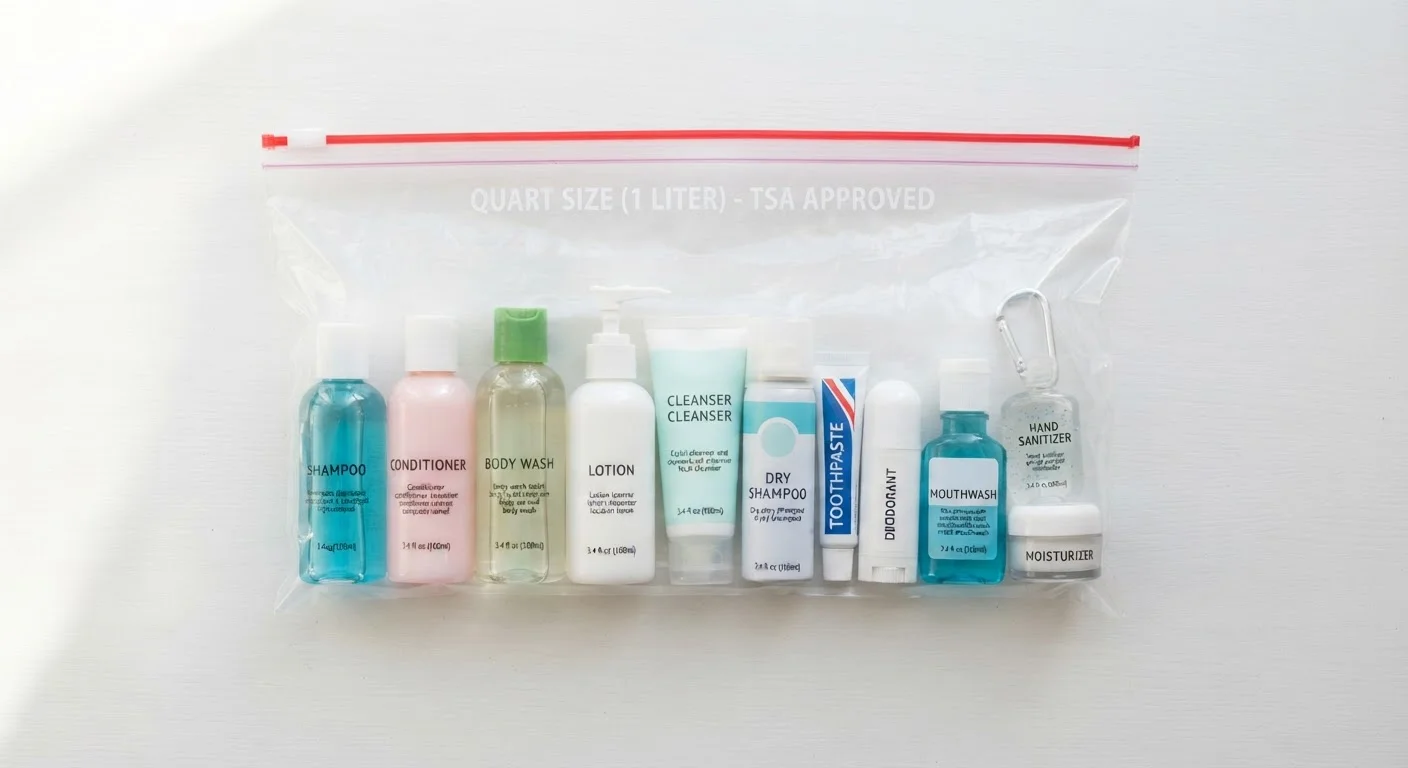
Photo credit: ResultsPoint.net | Find The Required Information
In this article
The 3-1-1 rule trips up even frequent flyers. Here's a clear breakdown of what's allowed, what's not, and how the rules apply to toiletries.
What the 3-1-1 Rule Actually Means
The TSA's 3-1-1 rule is the foundation of carry-on liquid restrictions in the United States, and it's simpler than it sounds once you break it down:
- 3.4 oz (100 ml) or less per container
- 1 quart-size clear, resealable zip-top bag
- 1 bag per passenger
That's it. Every liquid, gel, cream, paste, or aerosol you pack in your carry-on must fit within those three constraints. The container size is what matters — not how much liquid is actually inside. A half-empty 6 oz bottle is still a violation because the container itself exceeds the limit.
At the checkpoint, you remove the bag from your carry-on and place it in a screening bin separately. This is a firm requirement, not a suggestion. Failing to pull it out is one of the most common reasons bags get flagged for a secondary search.
What Counts as a Liquid (and What Doesn't)
The TSA defines "liquids" broadly. Beyond the obvious — water, shampoo, juice — the category includes items many travelers don't think of:
- Gels (hair gel, aloe vera, gel deodorant)
- Creams and lotions (moisturizer, sunscreen, hand cream)
- Pastes (toothpaste, squeeze-tube foods)
- Aerosols (dry shampoo, hairspray, spray sunscreen)
- Foams (shaving cream, mousse)
Items that are not subject to the rule include solid deodorant sticks, bar soap, powders (with some nuance — see below), and solid foods. Lip balm in stick form is generally fine; lip gloss in a tube is a liquid.
Powder-based products in quantities greater than 12 oz (about 350 ml) by volume may face additional screening, though they are not banned. Keeping powders below that volume avoids delays.
3-1-1 Rule
The TSA policy requiring that carry-on liquids be in containers of 3.4 oz (100 ml) or less, placed in a single quart-size clear bag, with one bag per traveler.
Aerosol
A product dispensed under pressure in a spray form — such as hairspray or spray sunscreen. Aerosols are treated as liquids under TSA rules.
Quart-size bag
A clear, resealable zip-top plastic bag approximately 7 x 8 inches. This is the standard container required by TSA for carry-on liquids.
Tamper-evident bag
A sealed security bag used by duty-free retailers to package purchased liquids, intended to show if the contents have been accessed after purchase.
Exceptions Worth Knowing
Several categories are exempt from the 3-1-1 rule, either entirely or with special handling procedures:
Medically Necessary Liquids
Prescription medications, liquid vitamins, and over-the-counter medicines in reasonable quantities are permitted beyond 3.4 oz. You must declare them separately at the checkpoint. They do not need to go in your quart bag, but officers may inspect them. Always carry prescriptions in their original labeled containers where possible.
Infant and Toddler Supplies
Formula, breast milk, and juice for infants and toddlers are allowed in reasonable quantities above the standard limit. A parent traveling without a child may still bring breast milk. Inform the officer before screening begins.
Duty-Free Liquids
Duty-free liquids purchased beyond the security checkpoint — sealed in a tamper-evident bag with a receipt — may be permitted. Rules vary by connecting airport and country, so verify before assuming your duty-free purchase will clear a subsequent security screen.
For travelers working to streamline their entire carry-on setup, the carry-on vs. checked luggage guide walks through when it actually makes sense to check a bag instead — which can take the pressure off liquid limits entirely.
TSA Rules Apply to U.S. Airports Only
The 3-1-1 rule is a TSA standard enforced at U.S. airport security checkpoints. International airports follow similar but not identical rules set by their own aviation authorities. If you're connecting through a foreign airport or departing from one, verify local security requirements before you travel — rules on container sizes and exemptions can differ. The U.S. State Department and your airline's website are good starting points.
Practical Packing Strategies
Fitting a full toiletry routine into one quart-size bag is a solvable problem with the right approach:
- Repackage into travel-size containers. Buy a set of reusable bottles (under 3.4 oz each) and fill them from your full-size products at home.
- Audit what you actually use. Most travelers bring far more product than they need. A three-day trip rarely requires a full-size bottle of anything.
- Swap liquids for solids. Shampoo bars, solid conditioners, and toothpaste tablets have become widely available and eliminate several slots in your quart bag entirely.
- Plan for what you can buy at the destination. Toothpaste, shampoo, and body wash are available almost everywhere. If you're staying somewhere with toiletries provided, you may not need to pack them at all.
If you want a deeper approach to optimizing your entire toiletry kit for tight carry-on restrictions, the toiletry packing strategies guide covers specific methods in detail. Travelers going further — using only a single bag for everything — will find the one-bag travel method worth reading before their next trip.

Author
Travel Editorial Team
Travel Editorial Team is the collective byline for our editorial team and contributor network. Articles published under this byline or an editorial pen name are researched, written, and reviewed according to our editorial standards for clarity, consistency, and independence before publication.
View all articles →