
Carry-On vs. Checked Luggage: What Actually Makes Sense for Your Trip
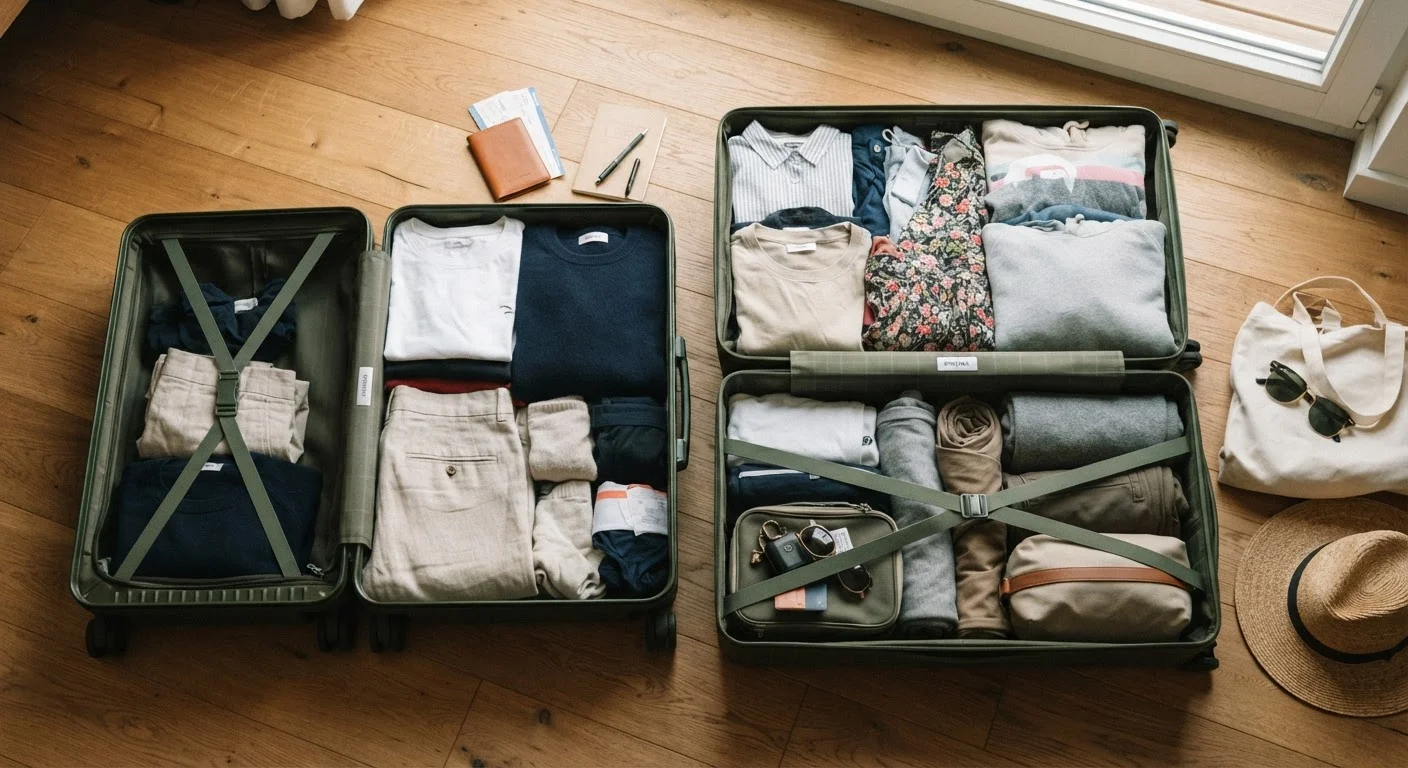
Photo credit: ResultsPoint.net | Find The Required Information
In this article
Not every trip calls for the same luggage approach. Understand the real trade-offs between carry-on and checked bags before you pack.
Key Takeaways
- Carry-on bags save time and often money, but impose strict size and liquid limits you must plan around.
- Checked luggage suits longer trips and cold climates where bulkier gear is unavoidable.
- Airline bag policies vary significantly — always verify size and weight limits before packing.
- Lost or delayed checked bags are a real risk; keep valuables and essentials in your personal item.
- Your trip type — not personal preference alone — should drive the luggage decision.
The Core Trade-Off
Most packing decisions come down to a simple tension: convenience now versus flexibility later. Carry-on luggage rewards you at the airport — faster boarding, no fees on many itineraries, and a bag that arrives with you every time. Checked luggage rewards you in the destination — more space, fewer restrictions, and less mental overhead about what fits.
Neither approach is universally superior. The right call depends on your trip length, your destination's climate, whether you're connecting through multiple airports, and how much tolerance you have for packing discipline. Understanding the actual constraints of each option helps you make that call deliberately rather than by default.
For a broader look at how luggage choices fit into your overall gear strategy, see our guide to travel gear by trip type.
| Criterion | Carry-On | Checked Luggage |
|---|---|---|
| Typical size limit | ~22 x 14 x 9 inches (varies by airline) | Up to 62 linear inches on most U.S. carriers |
| Liquid restrictions | 3.4 oz containers, 1 quart-size bag | No TSA liquid restrictions |
| Checked bag fees | None (carry-on) | Typically $30–$60+ per bag, per flight |
| Risk of loss or delay | Very low — bag stays with you | Small but real — bags can be misrouted |
| Airport time required | Less — skip baggage claim | More — wait at carousel on arrival |
| Ideal trip length | 1–5 days (longer with laundry access) | 5+ days or cold/specialty travel |
| Packing discipline required | High — strict limits demand planning | Lower — more room for flexibility |
What Carry-On Travel Actually Requires
Flying carry-on isn't just about bag size — it's a system. The TSA liquid rule (containers of 3.4 oz or less, fitting in a single quart-size bag) applies to every carry-on regardless of trip length. That restriction alone eliminates full-size toiletries and forces advance planning around what you bring versus what you buy at your destination.
Size limits are also less uniform than most travelers expect. Domestic U.S. carriers generally allow a carry-on up to 22 x 14 x 9 inches, but regional jets and international budget carriers often enforce smaller overhead bin restrictions. Always verify limits with your specific airline before you pack.
When it works, carry-on travel is genuinely liberating. You exit the plane and walk directly to ground transport. There's no waiting at the carousel, no risk of a delayed bag disrupting your first day, and no checked bag fee on many itineraries. For 1- to 4-day trips, most travelers can manage comfortably within these limits with thoughtful packing. Our toiletry packing strategies can help you make the most of that quart-size bag.
~2.3M
Checked bags mishandled annually in the U.S.
According to the U.S. Department of Transportation's Air Travel Consumer Report, millions of checked bags are delayed, damaged, or lost each year across domestic carriers.
$30–$60+
Typical one-way checked bag fee on major U.S. airlines
Checked bag fees vary by carrier, fare class, and loyalty status — always verify current fees on your airline's website before travel.
When Checked Luggage Makes More Sense
There are trip types where carry-on travel stops being practical and starts being punishing. Cold-weather destinations are the clearest example — a heavy jacket, thermal layers, and winter boots consume most of a carry-on before you've packed a single outfit. Our guide to packing for cold weather walks through strategies for managing bulk, but checked luggage is often the more honest choice here.
Long international trips — generally two weeks or more — also shift the calculus. Packing for extended travel means more clothing variation, potentially formal and casual options, and the kind of luggage volume that's difficult to justify cramming into an overhead bin. Travelers with specialty equipment (camping gear, photography kits, sports equipment) will find checked bags unavoidable.
The main risks with checked luggage are worth naming plainly: bags are occasionally delayed or misrouted, and handling isn't gentle. Keep valuables, medications, and anything irreplaceable in your carry-on or personal item regardless of how you're traveling. If you're concerned about coverage, understanding what travel insurance covers for luggage is worth reviewing before your trip.
Hardshell vs. Softshell for Checked Bags
If you're regularly checking luggage, the type of suitcase matters more than it does for carry-on travel. Hardshell cases offer better protection for fragile items but less flexibility in overstuffed overhead bins. Softshell bags compress slightly, which can be useful when packing inconsistently. For a full breakdown, see our comparison of hardshell and softshell luggage.
Making the Decision for Your Specific Trip
Run through these practical questions before you commit to an approach. First: how many days are you traveling, and does laundry access exist at your destination? Even a long trip can be carry-on friendly if you can wash clothes mid-trip. Second: what's your climate? Warmth compresses; cold does not. Third: are you connecting on regional or budget carriers? Gate-checking your carry-on at the last minute is a frustrating middle ground that negates many of the speed advantages.
If you're newer to packing intentionally, the first-time traveler's introduction to packing light offers a solid foundation for making these calls confidently. And for travelers exploring the most streamlined approach possible, the one-bag travel method takes carry-on philosophy a step further.
Whatever you choose, build your packing list around the bag — not the other way around. Deciding on your luggage first forces the discipline that makes either approach work well. See also what experienced travelers keep accessible during transit for advice on organizing your in-flight essentials regardless of how much you check.

Author
Travel Editorial Team
Travel Editorial Team is the collective byline for our editorial team and contributor network. Articles published under this byline or an editorial pen name are researched, written, and reviewed according to our editorial standards for clarity, consistency, and independence before publication.
View all articles →