
Driving on Ice and Snow for the First Time
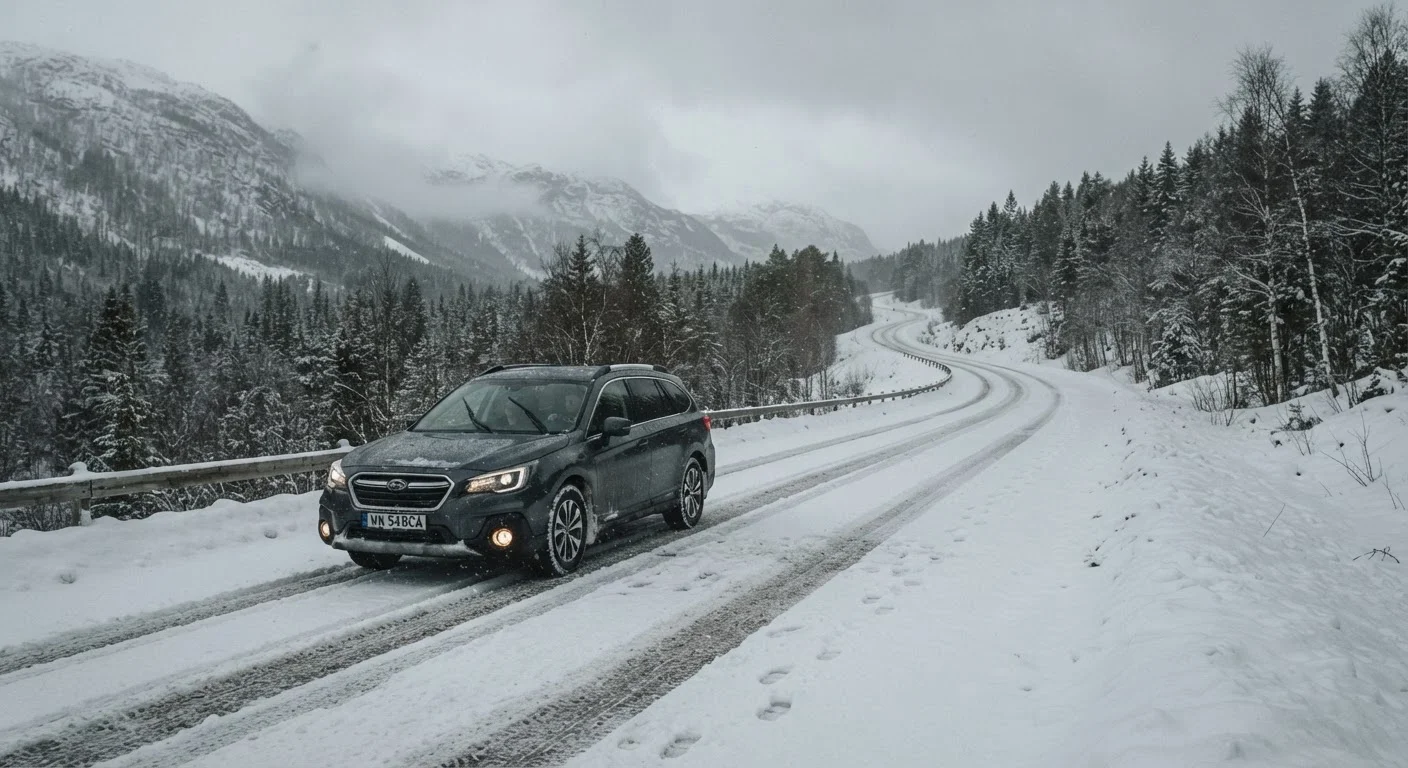
Photo credit: ResultsPoint.net | Find The Required Information
In this article
If you've never driven in winter conditions before, this guide covers what to expect, how to brake and steer safely, and when not to drive at all.
Key Takeaways
- Ice and packed snow can reduce tire traction to a fraction of what dry pavement provides.
- Slowing down and increasing following distance are the two most impactful adjustments you can make.
- Smooth, gradual inputs — braking, steering, accelerating — are the foundation of safe winter driving.
- Black ice is nearly invisible and is most common on bridges, overpasses, and shaded stretches of road.
- Sometimes staying off the road entirely is the safest decision you can make.
Why Ice and Snow Change Everything
On dry pavement, your tires grip the road with enough friction to let you brake hard, corner aggressively, and accelerate quickly. Put those same tires on ice or packed snow, and that grip drops dramatically. Physics doesn't negotiate — when traction is low, your car needs much more time and distance to respond to any input you make.
The most dangerous misconception first-time winter drivers carry is that their normal driving habits will mostly transfer over. They don't. The gap between how a car handles on dry asphalt versus icy road is not minor — it is fundamental. Braking distances stretch. Steering becomes imprecise. A small steering correction that would be unremarkable in summer can trigger a skid in winter.
Black ice deserves special mention. It's a thin, nearly transparent sheet of ice that forms when temperatures hover near freezing and moisture refreezes on the road surface. It looks like a slightly wet road but behaves like a skating rink. Bridges, overpasses, and shaded road sections are common formation spots. If the road ahead looks faintly glossy but you don't see puddles, slow down and assume ice.
Black ice
A nearly invisible thin layer of ice on the road surface that looks like wet pavement but provides almost no traction. It forms most often on bridges, overpasses, and shaded road sections.
ABS (Anti-lock Braking System)
A safety system that prevents your wheels from locking up when you brake hard, allowing you to maintain some steering control. You'll feel a rapid pulsing through the brake pedal when it activates — this is normal.
Traction
The grip between your tires and the road surface. More traction means the car responds predictably to braking and steering; less traction means those inputs become slower and less reliable.
Oversteer and understeer
Oversteer is when the rear of the car slides outward in a turn; understeer is when the front tires lose grip and the car drifts wide. Both are forms of skid that require calm, gradual inputs to correct.
Following distance
The space between your vehicle and the one ahead. In winter conditions, you should follow at a much greater distance than normal because stopping takes far longer on ice or snow.
Winter tires
Tires specifically designed for cold temperatures, snow, and ice. They use a softer rubber compound and specialized tread patterns that stay pliable in freezing temperatures, providing better grip than all-season tires.
Before You Even Start the Car
Preparation before you pull out of the driveway can make or break your safety margin in winter. Start with your tires. Check that pressure is correct — cold air causes tire pressure to drop, and underinflated tires reduce the already-limited traction you have on snow. Look at tread depth too. Worn tires on ice are a serious hazard.
Clear every window, not just a small peephole. Clear snow from the roof as well — it can slide down onto your windshield while braking, or blow off onto vehicles behind you. Make sure your wiper blades are in good shape and your washer fluid is rated for freezing temperatures. See our seasonal vehicle preparation guide for a full checklist of what to inspect before winter driving season.
Pack a basic emergency kit: a small shovel, an ice scraper, sand or kitty litter for traction, jumper cables, a blanket, and a flashlight. Cold weather is harder on car batteries, and getting stuck in a winter storm without basic supplies is a serious safety risk. See our pre-drive safety walkthrough for a broader look at vehicle readiness.
Give Yourself Extra Time
Budget significantly more time for any winter trip than you normally would. Rushing on icy roads pushes drivers to take risks — speeding, following too closely, skipping the full warm-up. Leaving early removes that pressure and gives you room to drive at a genuinely safe pace.
How to Brake, Steer, and Accelerate on Slippery Roads
The governing principle of winter driving is smooth and gradual. Every input — braking, steering, accelerating — should be gentler and slower than what feels natural. Abrupt movements overwhelm your tires' limited grip and cause skids.
Braking: Start slowing down much earlier than you think you need to. If your vehicle has anti-lock brakes (ABS), apply steady, firm pressure and let the system do its job — you'll feel a pulsing sensation, which is normal. Do not pump the brakes on an ABS-equipped vehicle. If your car lacks ABS, apply gentle, rhythmic pressure to avoid wheel lockup.
Steering: Look as far ahead as possible and make steering changes early and gradually. If you start to skid, ease off the gas and steer gently toward where you want the car to go. Avoid overcorrecting — a sharp counter-steer in a skid often makes things worse.
Accelerating: Apply the gas slowly and evenly from a stop. Spinning your wheels on ice wastes momentum and digs you deeper. If your wheels spin, ease off the accelerator until you feel traction return.
Following distance: Triple the following distance you'd normally keep. On ice, the car in front of you can stop far slower than you're used to — and so can you. More space is your biggest buffer against rear-end collisions.
For contrast, note how winter driving differs from rain: wet roads reduce traction too, but usually far less than ice. Our article on driving in heavy rain covers the key adjustments for wet-weather conditions.
AWD Is Not a Safety Guarantee
All-wheel drive helps you get moving on slippery surfaces, but it does nothing to improve braking or cornering on ice. Drivers of AWD vehicles are just as vulnerable to skids and long stopping distances as anyone in a two-wheel-drive car. Do not let drivetrain confidence push you to drive faster than conditions allow.
When You Should Not Drive at All
Knowing when to stay home is a driving skill, not a defeat. If a winter storm warning is in effect, roads are untreated, or visibility is near zero, the safest choice is usually to wait it out. No routine errand is worth a collision or getting stranded.
Check road condition reports from your state or local transportation department before leaving. Many areas have real-time road condition maps and alerts. If roads are listed as closed or travel is discouraged, take that seriously.
If you do get stuck, stay with your vehicle, run the engine sparingly for warmth and check the exhaust pipe is clear of snow to prevent carbon monoxide buildup. Turn on hazard lights so other drivers and emergency responders can see you.
Building the broader habits that carry into winter driving — maintaining situational awareness, managing space, reading road conditions early — is something experienced drivers develop over time. Our guide to safe driving habits that experienced drivers rely on is a useful companion to this article as you build confidence behind the wheel.
Frequently Asked Questions

Author
Autos Editorial Team
Autos Editorial Team is the collective byline for our editorial team and contributor network. Articles published under this byline or an editorial pen name are researched, written, and reviewed according to our editorial standards for clarity, consistency, and independence before publication.
View all articles →