
What Drivers Get Wrong About Hydroplaning
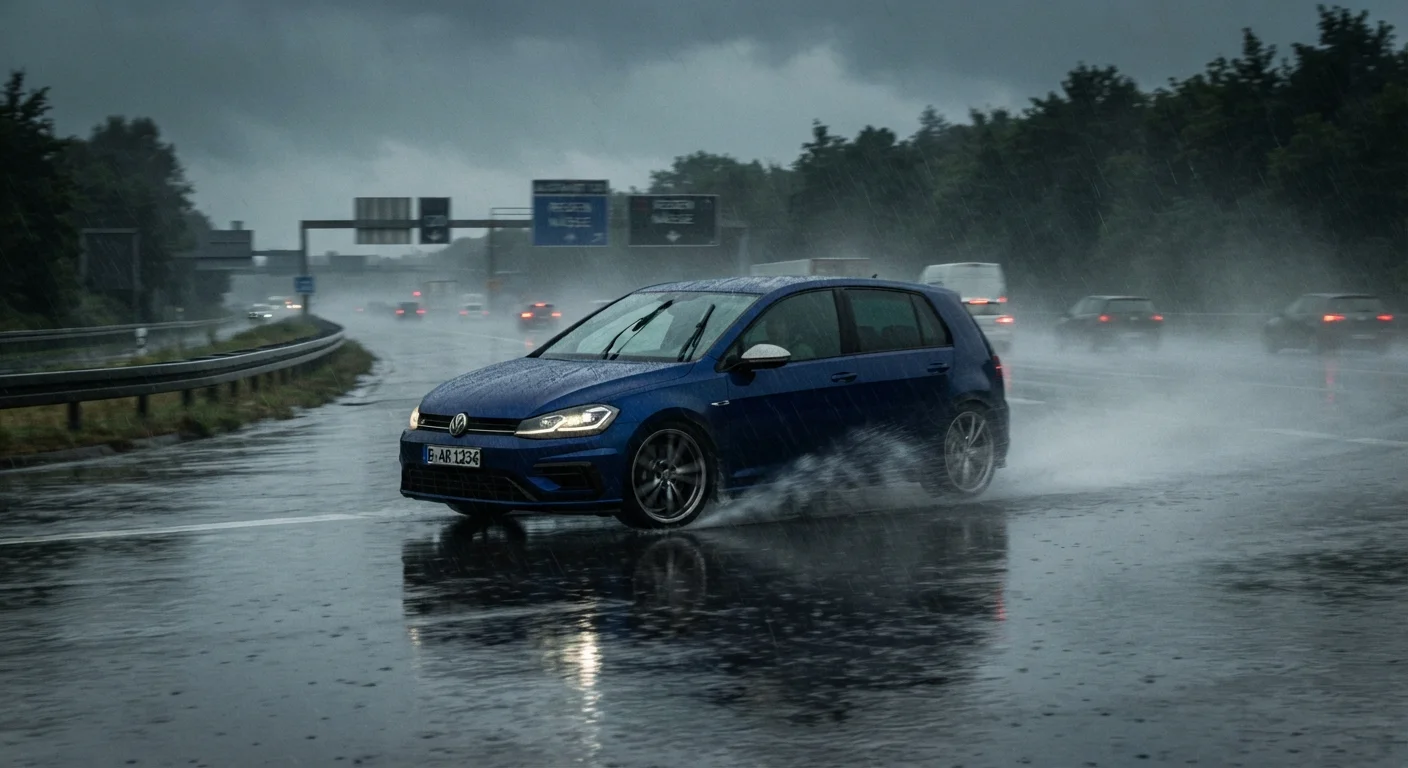
Photo credit: ResultsPoint.net | Find The Required Information
In this article
Hydroplaning happens faster than most people expect. Understand the physics behind it and how to respond safely if your car loses traction on water.
Key Takeaways
- Hydroplaning can begin at speeds as low as 35 mph, not just at highway speeds.
- Slamming the brakes during hydroplaning makes the skid worse, not better.
- Tire tread depth and tire pressure directly affect how quickly your car hydroplanes.
- All-wheel drive does not protect you from hydroplaning — it affects acceleration, not flotation.
- Gradual steering and gentle deceleration are the correct responses when traction is lost on water.
Why Hydroplaning Catches Drivers Off Guard
Hydroplaning occurs when a layer of water builds up between your tires and the road surface faster than the tire can displace it. At that point, your tires are no longer gripping pavement — they're riding on water. Steering and braking inputs become largely ineffective until the tires regain contact with the road.
What makes hydroplaning dangerous isn't just the physics — it's the assumptions drivers carry into wet conditions. Most people believe they'll feel it coming, that it only happens at high speeds, or that their vehicle's technology will save them. Those beliefs don't hold up. Understanding what actually causes hydroplaning — and how to respond — is one of the more practical safety habits a driver can build. See our guide to driving in heavy rain for a broader look at how wet conditions change the road.
Myth
Hydroplaning only happens at high speeds, like on the highway.
Fact
Hydroplaning can begin at speeds as low as 35 mph, depending on tire condition, road surface, and water depth.
Speed is a factor, but it's not the only one. Worn tires, underinflated tires, and standing water all lower the threshold at which your car can lose traction. A driver doing 40 mph on a rain-soaked surface with worn tires is at real risk — not just someone speeding down a wet freeway.
Myth
If I have all-wheel drive, I'm much safer from hydroplaning.
Fact
All-wheel drive has no meaningful effect on hydroplaning. It improves acceleration traction, not the ability to maintain contact with a water-covered surface.
AWD systems distribute engine power to all four wheels, which helps when accelerating on slippery surfaces. But hydroplaning is about tires floating on water — a physics problem that AWD doesn't solve. Once your tires lose contact with the road, drive system configuration is irrelevant. Tire quality and speed matter far more.
Myth
Braking hard is the right move to regain control during a hydroplane.
Fact
Hard braking during hydroplaning can worsen the skid and cause loss of steering control. The correct response is to ease off the accelerator and steer gently.
When tires are already riding on a film of water, locking them up through hard braking removes whatever residual steering ability you might have. On vehicles with ABS, firm steady pressure is more acceptable — but only after tires begin regaining traction. The priority is allowing tires to reconnect with the road surface before applying significant braking force.
Myth
You'll always feel hydroplaning coming before it happens.
Fact
Hydroplaning can occur suddenly and without clear warning. The transition from normal grip to floating on water can happen in a fraction of a second.
Some drivers notice a slight lightness in the steering just before full hydroplaning begins, but this isn't reliable enough to count on. Road surface variations, sudden puddles, and tire condition all affect how quickly the event develops. Treating wet roads with consistent caution — rather than waiting for a warning sign — is the more dependable approach.
Myth
New tires eliminate hydroplaning risk entirely.
Fact
New tires significantly reduce risk, but speed, water depth, and road surface still matter. No tire is completely immune to hydroplaning under extreme conditions.
Fresh tires with deep tread grooves channel water away from the contact patch much more effectively than worn ones, and that's a real safety advantage. But at high enough speeds or in deep enough standing water, even new tires can lose traction. Good tire condition is necessary — it's just not a guarantee on its own.
What to Do If You Hydroplane
If your car starts to hydroplane, the instinct to brake hard or turn sharply is exactly the wrong move. Here's a straightforward approach based on established safe-driving guidance:
- Ease off the accelerator gradually. Don't lift your foot abruptly — a smooth reduction in throttle helps the tires slow down and find grip without jerking the vehicle.
- Hold the steering wheel steady. Steer gently in the direction you want to go. Overcorrecting is a common cause of spin-outs during hydroplane events.
- Avoid hard braking. If you have antilock brakes (ABS), firm steady pressure is acceptable once tires begin regaining traction. Without ABS, light, controlled braking is safer than a hard stomp.
- Wait for traction to return. You'll feel the steering become responsive again. That's your signal that the tires are back in contact with the road.
Building these reflexes takes deliberate awareness. Pairing hydroplane response with broader defensive driving habits gives you a more complete foundation for handling unexpected situations. And don't overlook the basics — proper following distance gives you more time to react before a hazard like standing water becomes a crisis.
Overcorrecting Is a Serious Risk
One of the most common mistakes during a hydroplane event is jerking the steering wheel in a panic. This can send the vehicle into a spin once tires regain grip. Keep steering inputs calm and deliberate — small corrections are almost always enough. If you're unsure how your vehicle handles in emergencies, a defensive driving course can offer practical, low-stakes practice.
Prevention Is Simpler Than Recovery
The single most effective hydroplaning prevention tool is tire maintenance. Tires with worn tread can't channel water away from the contact patch fast enough — and that's when the vehicle loses grip. Check tread depth regularly using the penny test or a tread depth gauge, and replace tires before they reach 2/32 of an inch of remaining tread.
Tire pressure matters too. Underinflated tires have a distorted contact patch that channels water less efficiently. Keep tires inflated to the manufacturer's recommended pressure, found on the door jamb sticker — not the number on the tire sidewall itself.
Speed is the other big lever. The risk of hydroplaning increases with speed and with the depth of water on the road. Slowing down in heavy rain — even modestly — meaningfully reduces the chance your tires will be overwhelmed. Experienced drivers often reduce speed well before conditions become extreme, rather than reacting after the fact.
35 mph
Speed at which hydroplaning can begin
Research and traffic safety sources consistently note that hydroplaning onset can occur at or around 35 mph under the right combination of worn tires, tire pressure, and standing water depth.
2/32"
Minimum safe tire tread depth
The U.S. Department of Transportation sets 2/32 of an inch as the legal minimum tread depth, though many safety experts recommend replacing tires at 4/32" for wet-weather performance.

Author
Autos Editorial Team
Autos Editorial Team is the collective byline for our editorial team and contributor network. Articles published under this byline or an editorial pen name are researched, written, and reviewed according to our editorial standards for clarity, consistency, and independence before publication.
View all articles →