
Why Your Following Distance Is Never as Safe as You Think
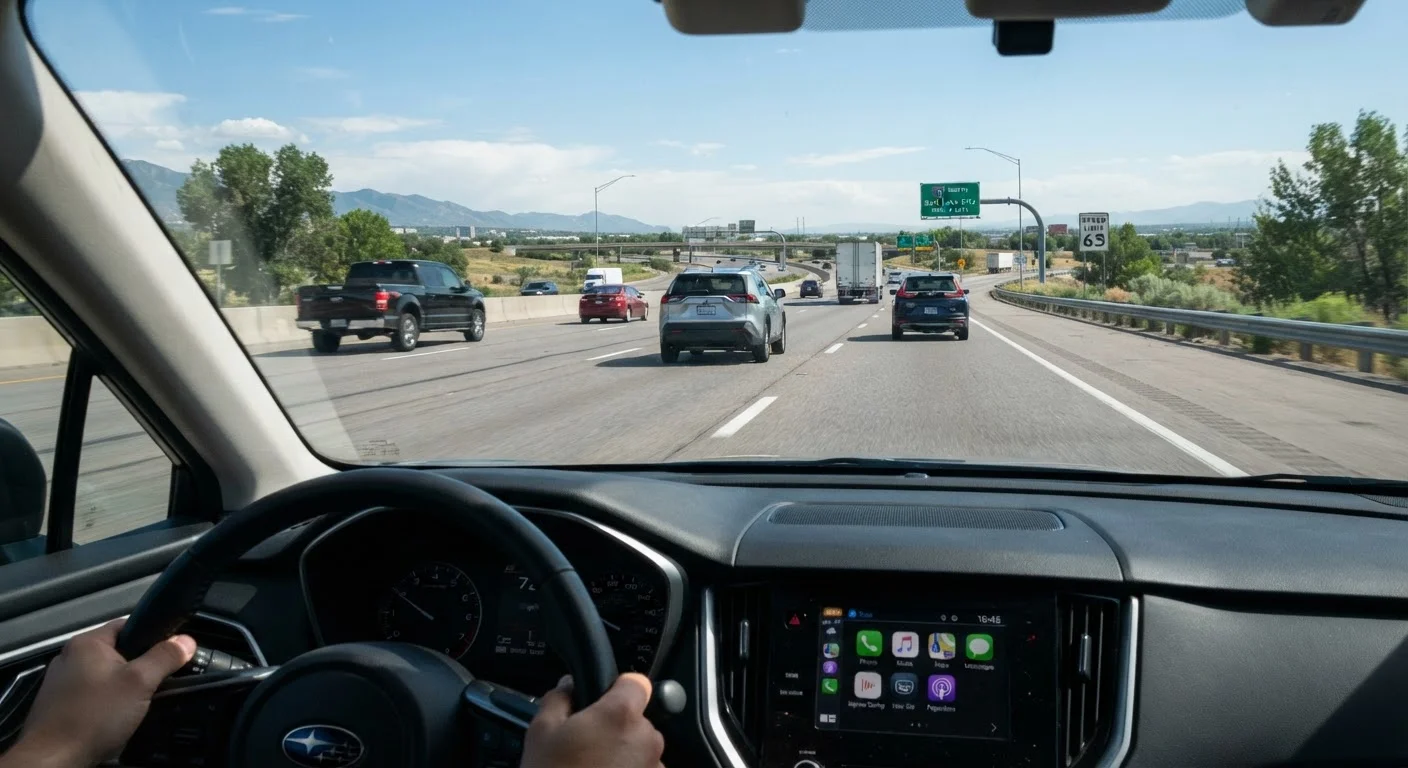
Photo credit: ResultsPoint.net | Find The Required Information
In this article
Most drivers underestimate how much space they need to stop safely. Here's what the science of stopping distance actually looks like.
Key Takeaways
- The two-second rule is a minimum, not a safety guarantee — three to four seconds is more realistic.
- Reaction time alone consumes about 1.5 seconds before braking even begins.
- Wet roads, worn tires, and fatigue can double or triple your stopping distance.
- Tailgating dramatically reduces the time available for any corrective action.
- Perceived safety from modern braking tech can create dangerous overconfidence.
The Gap You Leave Is Probably Too Small
Ask most drivers how much space they leave in front of their car and they'll say something like "enough to stop." Ask them what that actually means in feet, and you'll usually get a shrug. That gap is doing far more work than most people realize — and the physics of stopping are less forgiving than everyday experience suggests.
Stopping a moving vehicle involves two distinct phases: reaction time (the moment from when you see a hazard to when your foot hits the brake) and braking distance (the distance the car actually travels while decelerating to a stop). At 60 mph, reaction time alone — typically around 1.5 seconds for an alert driver — consumes roughly 132 feet before the brakes even engage. Add the braking distance on dry pavement and your total stopping distance can exceed 240 feet. That's nearly the length of a standard city block.
The widely taught two-second rule gives you a rough minimum, but it was designed for ideal conditions: alert driver, dry road, well-maintained tires, moderate speed. Change any one of those variables and your margin shrinks fast. See our core defensive driving principles for a broader look at building space cushions into your everyday driving habits.
Common Myths About Following Distance — Corrected
A handful of persistent misconceptions convince drivers their following distance is safer than it is. The myth-and-fact pairs below address the most common ones head-on.
Myth
The two-second rule gives me plenty of room to stop safely.
Fact
Two seconds is a bare minimum for ideal conditions — experienced driving instructors and traffic safety researchers generally recommend three to four seconds.
The two-second rule entered driver education as a simple approximation, not a safety ceiling. At 60 mph, two seconds equates to about 176 feet — enough under perfect conditions, but with almost no margin for slower-than-average reaction time, a slippery road surface, or worn brake pads. Traffic safety organizations commonly recommend three seconds as a practical baseline and more in adverse conditions.
Myth
Modern ABS and stability control mean I can stop faster, so I need less space.
Fact
ABS helps you maintain steering control during hard braking but does not necessarily shorten stopping distance on all surfaces — and overconfidence in the technology can be dangerous.
Anti-lock braking systems (ABS) prevent wheel lockup, which helps you steer around an obstacle during an emergency stop. On dry pavement they may modestly reduce stopping distance; on gravel or loose surfaces they can actually increase it. More importantly, technology doesn't change reaction time — the 1.5 or more seconds that pass before braking starts remain constant regardless of what your car is equipped with. Trusting the technology without adjusting your following distance is a well-documented source of overconfidence.
Myth
I've been driving for years and my reactions are fast enough to handle a closer gap.
Fact
Reaction time varies significantly with distraction, fatigue, and age, and experienced drivers often overestimate their own reflexes.
Studies on driver perception-reaction time consistently find that 1.5 seconds is a commonly used benchmark for an alert, focused driver — but that figure rises meaningfully with distraction (including hands-free phone use), drowsiness, and age. Self-reported reaction time estimates from drivers tend to be optimistic. The problem is that you can't reliably sense a 0.3-second degradation in your own response time until after an incident has already occurred.
Myth
As long as I'm watching the car directly ahead, I have enough warning.
Fact
Watching only the car in front gives you the shortest possible warning. Looking two to three vehicles ahead provides crucial additional reaction time.
When you focus only on the vehicle immediately ahead, you're reacting to their brake lights — meaning the chain of events has already begun. By scanning further down the road, you can anticipate a slowdown before it reaches the car in front of you, effectively adding valuable fractions of a second to your total reaction window. This is one of the foundational habits in defensive driving — maintain a wide visual field, not a narrow one.
Myth
Highway speeds don't require much more space than city driving.
Fact
Stopping distance increases with the square of speed, so 60 mph requires roughly four times the braking distance of 30 mph.
This is a physics reality that trips up many drivers. Because kinetic energy scales with velocity squared, doubling your speed roughly quadruples the distance needed to stop. At 30 mph on dry pavement, braking distance might be around 45 feet. At 60 mph, it's closer to 180 feet — not 90. This means the following gap that feels comfortable in a city neighborhood is severely inadequate on the freeway at the same time gap.
When Conditions Make Everything Worse
The numbers above assume a controlled environment. Real roads rarely cooperate. Rain reduces tire friction significantly — wet pavement can increase stopping distance by 50% or more compared to dry conditions, and standing water introduces the additional risk of hydroplaning before braking even begins. Understanding how hydroplaning works helps explain why speed management and following distance are even more critical in wet weather.
Nighttime driving adds another layer of risk. Your headlights typically illuminate 160–250 feet ahead, but at highway speeds your stopping distance can exceed that range — a phenomenon called overdriving your headlights. How darkness changes your risk profile covers this in detail.
Tailgating Eliminates Your Safety Margin Entirely
At highway speeds, following within one second of the vehicle ahead leaves you virtually no time to react to a sudden stop or debris in the road. Even a brief distraction — checking a mirror, adjusting a vent — can consume that entire margin. If you feel pressured to tailgate by traffic flow, ease into the right lane and re-establish a proper cushion. The few seconds you "save" are not worth the risk.
Driver fatigue also matters here. Reaction time lengthens noticeably when you're tired, meaning the gap you'd need to stop safely in normal conditions is now too small. A tired driver who normally reacts in 1.5 seconds may take 2.5 seconds or longer — adding roughly 88 more feet of distance at 60 mph before braking even begins.
Building the Habit That Actually Protects You
Adjusting following distance is one of the simplest, lowest-effort safety improvements available to any driver. The practical guidance:
- Use the three-to-four second rule as your everyday baseline, not two seconds. Pick a fixed roadside marker and count after the vehicle ahead passes it.
- Add a second for every adverse condition: rain, darkness, heavy traffic, unfamiliar roads, or fatigue.
- Double your gap on the highway behind large trucks and buses, which have much longer stopping distances of their own.
- Resist the pressure to close the gap when another driver pulls in front of you. Simply ease back to re-establish your cushion — it costs you a matter of seconds per trip.
These habits are core to what separates consistently safe drivers from everyone else. Safe driving habits that experienced drivers rely on explores the broader set of low-key practices worth building into your routine.
~240 ft
Total stopping distance at 60 mph on dry pavement
This figure combines typical perception-reaction distance with braking distance under good conditions — and increases substantially on wet or degraded surfaces.
50%+
Increase in stopping distance on wet roads
Wet pavement significantly reduces tire-to-road friction; traffic safety guidance consistently recommends increasing following distance in rain.
~1.5 sec
Average driver perception-reaction time
This commonly used benchmark applies to alert, undistracted drivers — fatigue, distraction, or impairment can push this figure considerably higher.
This article is for general informational purposes. Always follow applicable traffic laws and exercise your own judgment based on current road and weather conditions.

Author
Autos Editorial Team
Autos Editorial Team is the collective byline for our editorial team and contributor network. Articles published under this byline or an editorial pen name are researched, written, and reviewed according to our editorial standards for clarity, consistency, and independence before publication.
View all articles →