
Hardshell vs. Softshell Luggage: Understanding the Real Differences
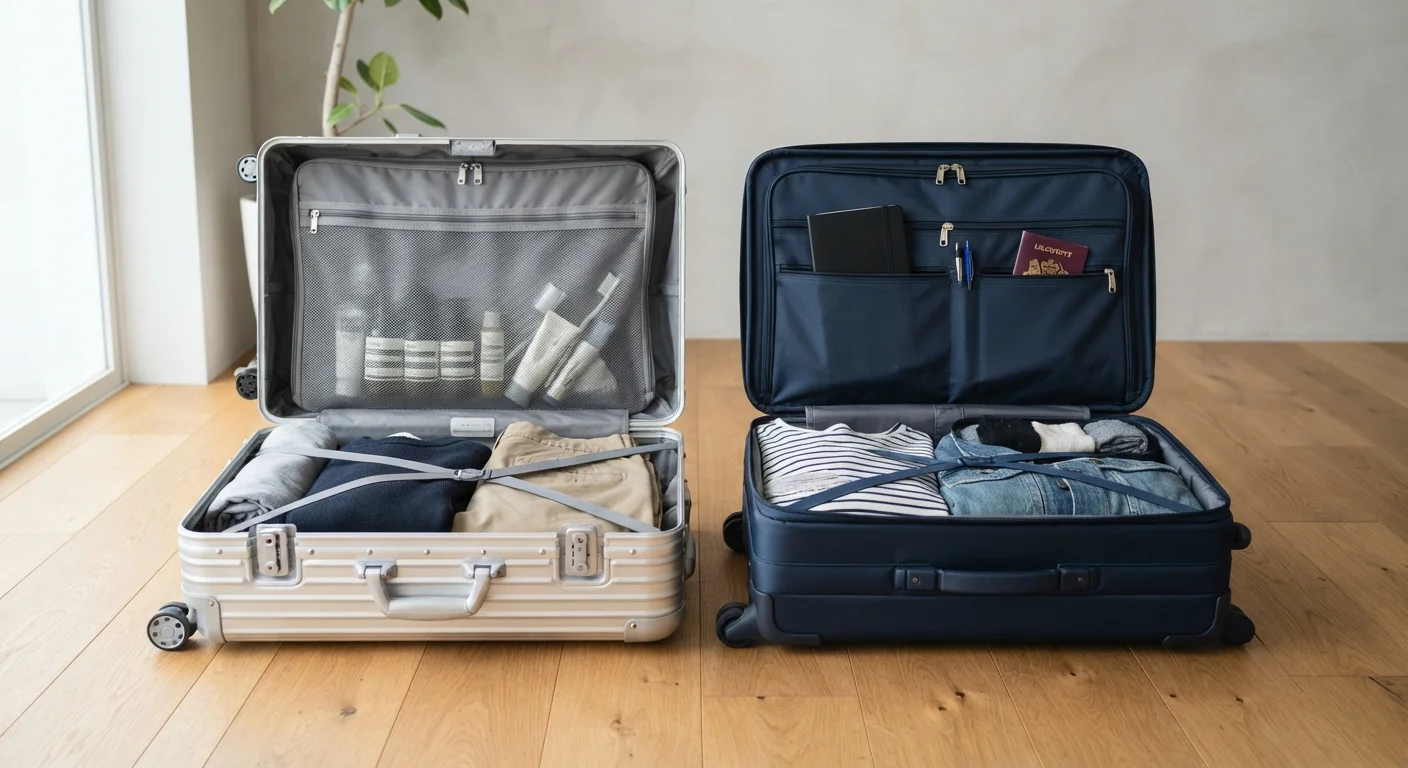
Photo credit: ResultsPoint.net | Find The Required Information
In this article
Hard and soft suitcases protect your belongings differently and suit different travel styles. Here's how to think through the choice.
Key Takeaways
- Hardshell cases resist crushing and water better, making them well-suited for checked baggage.
- Softshell bags typically weigh less and offer more packing flexibility through expansion zippers and outside pockets.
- Neither shell type is universally superior — the right choice depends on your trip type and travel habits.
- Material quality matters more than shell type; a cheap hardshell can crack while a quality softshell resists tearing.
- For mixed itineraries, many travelers keep one of each shell type and choose based on the specific journey.
What Actually Separates the Two Shell Types
The core difference is structural. Hardshell luggage uses a rigid exterior — typically polycarbonate, ABS plastic, or an aluminum shell — that holds its shape under pressure. Softshell luggage is constructed from fabric materials like ballistic nylon, polyester, or canvas, which flex under force and return to shape.
That structural distinction ripples into nearly every practical consideration: weight, packability, durability, moisture resistance, and how airlines handle your bag. Understanding that one root difference makes the rest of the comparison easier to follow. See our practical overview of travel gear to understand how luggage type fits into a broader packing strategy.
| Criterion | Hardshell Luggage | Softshell Luggage |
|---|---|---|
| Exterior material | Polycarbonate, ABS, or aluminum | Nylon, polyester, or canvas |
| Crush resistance | High — holds shape under pressure | Low — compresses under weight |
| Moisture resistance | Strong — deflects water reliably | Varies — depends on fabric treatment |
| Typical weight | Heavier for same capacity | Generally lighter |
| Packing flexibility | Fixed volume, no expansion | Often expandable via zipper |
| Exterior pockets | Rarely available | Common on most models |
| Damage when impacted | Can crack permanently | May tear but often repairable |
| Best use case | Checked bags with fragile contents | Carry-on or adaptable packing |
Protection, Durability, and What Each Shell Actually Withstands
Hardshells resist crushing — a real advantage when your checked bag is buried under heavier luggage in an aircraft hold. They also deflect liquids more reliably. The trade-off: rigid cases can crack under severe impact, and that damage is usually permanent. Cheaper hardshells made from ABS plastic are more prone to cracking than higher-grade polycarbonate options.
Softshells absorb impact by flexing rather than cracking. High-denier nylon and reinforced stitching can withstand substantial abuse, and minor tears are often repairable. However, softshells compress under weight and offer no structural protection against crushing — something to consider if you're checking a bag containing anything fragile.
~30%
Of checked bags sustain damage annually
Industry estimates suggest roughly 30% of checked bags experience some form of damage during airline handling each year, according to travel industry analyses.
1–2 lbs
Typical weight difference per bag
Softshell suitcases often weigh one to two pounds less than hardshell equivalents at the same nominal capacity, a meaningful margin on weight-restricted flights.
The durability winner often comes down to material grade rather than shell category. A well-constructed softshell outperforms a budget hardshell every time.
Weight, Flexibility, and Packing Differences
Softshell bags generally weigh less than hardshells of comparable capacity — sometimes by a pound or more. On airlines with strict weight limits, that difference matters. Softshells also offer exterior pockets, which hardshells largely can't provide due to their rigid form. Quick-access pockets are useful for passports, boarding passes, and items you need at security.
Many softshell bags include expansion zippers that add several inches of depth — handy if you're returning with souvenirs or shopping. Hardshells offer no equivalent; what you see is the fixed capacity. If overpacking is a recurring challenge, our guide on why suitcases always feel too heavy explains the root causes and how to address them regardless of bag type.
For packing cold-weather layers, softshell flexibility can help — though check out packing smart for cold-weather travel for strategies that work with either shell.
Which Shell Type Fits Your Travel Style
Your travel patterns matter more than abstract comparisons. If you primarily carry-on and move quickly through airports, a lighter softshell is often easier to manage. If you check bags on longer trips — especially international ones — a hardshell's structural integrity is worth the slight weight penalty.
Choosing between carry-on and checked luggage is a related decision that shapes which shell type makes more sense. And if your trip length varies significantly, gear differences between weekend trips and international journeys can help you calibrate further.
Spinner Wheels and Handles Are Separate Considerations
Shell type determines exterior construction, but features like spinner wheels, telescoping handles, and interior organization systems vary independently across both categories. When evaluating luggage, assess the wheel quality and handle mechanism separately from the shell material — these components often wear out before the shell does and can strongly affect day-to-day usability.
Many frequent travelers eventually own both a hardshell and a softshell bag — using each where it performs best rather than forcing a single bag to handle every scenario.

Author
Travel Editorial Team
Travel Editorial Team is the collective byline for our editorial team and contributor network. Articles published under this byline or an editorial pen name are researched, written, and reviewed according to our editorial standards for clarity, consistency, and independence before publication.
View all articles →