
Packing Cubes: Are They Worth the Extra Weight?
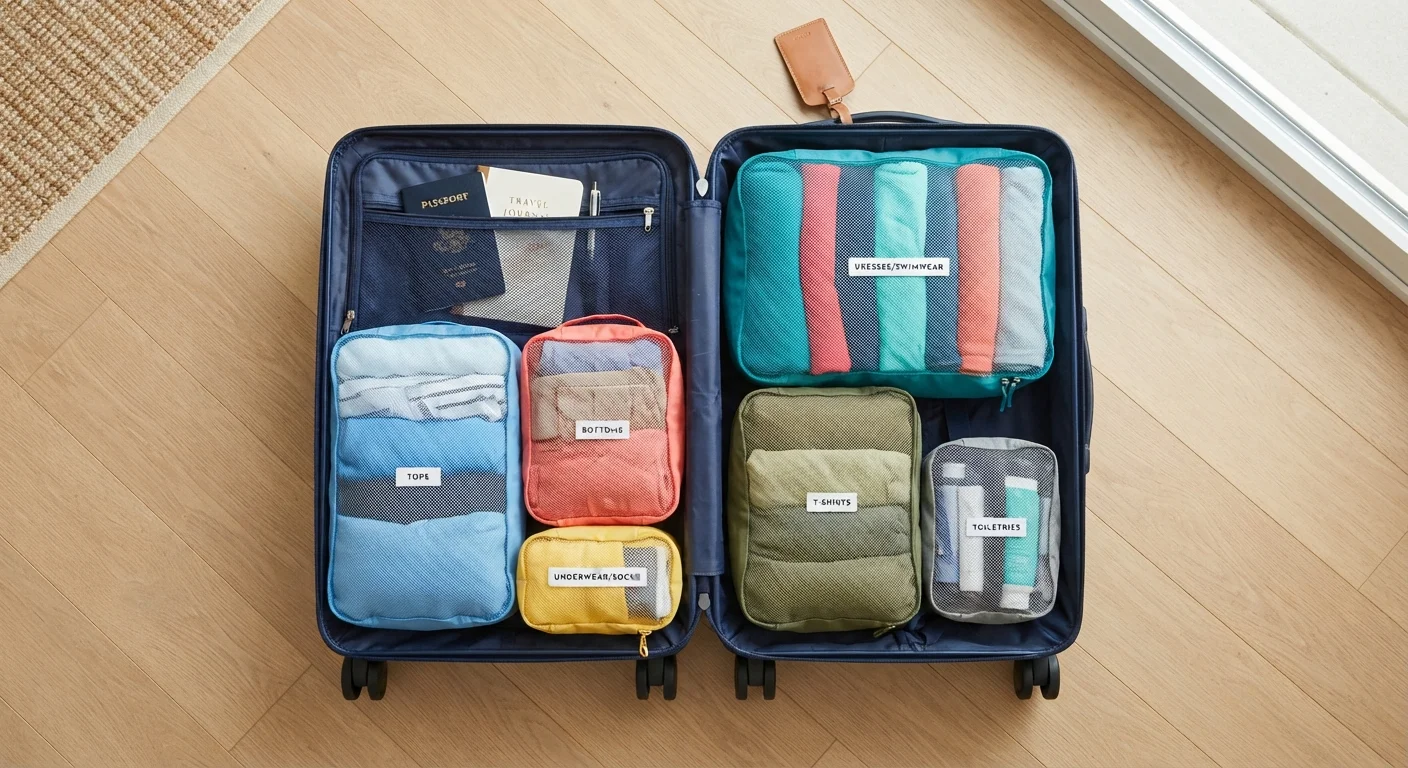
Photo credit: ResultsPoint.net | Find The Required Information
In this article
Packing cubes promise organization and compression, but they're not for every traveler. A balanced look at what they help—and what they don't.
Key Takeaways
- Packing cubes improve organization and make unpacking faster, especially on multi-stop trips.
- They add measurable weight — typically 1 to 4 ounces per cube — which matters on weight-restricted carry-ons.
- Compression cubes can reduce bulk for soft items like sweaters but do not shrink hard or structured clothing.
- Casual travelers taking short, single-destination trips may find packing cubes unnecessary overhead.
- The value of packing cubes scales with trip length, bag size, and how many people are sharing luggage.
Keeps clothing organized throughout the entire trip
Separate cubes for different clothing categories mean you can find what you need without unpacking everything. This benefit grows proportionally with trip length.
Speeds up packing and unpacking at each destination
Pulling out one cube takes seconds versus sorting through a loose bag. Frequent hotel changes become significantly less tedious.
Compression versions reduce bulk for soft items
Compression cubes remove excess air from items like t-shirts and lightweight sweaters, potentially recovering 20–30% of volume on those specific garments.
Simplifies shared luggage for couples or families
Assigning one cube per person in a shared checked bag eliminates rummaging and ownership confusion during the trip.
Separates clean and worn clothing cleanly
Designating one cube for worn clothes keeps the rest of your bag odor-free and organized without needing a separate dirty laundry bag.
Each cube adds measurable weight to your bag
A set of six fabric cubes can add half a pound or more in total. For carry-on travelers near airline weight limits, this is a real trade-off.
Can encourage overpacking rather than prevent it
The visual neatness of cubes can obscure how much you're actually bringing, making it easier to rationalize packing more than you need.
Less effective with bulky cold-weather clothing
Thick jackets, heavy sweaters, and insulated layers don't compress well in standard cubes, limiting their utility for winter travel.
Reduces flexible packing space in smaller bags
In a compact carry-on or personal item, the rigid structure of cubes can make it harder to fit oddly shaped items around them.
Upfront cost for a marginal benefit on short trips
A quality set of cubes represents a real expense. For travelers who take occasional short trips, the investment may not pay off in practical convenience.
What Packing Cubes Actually Do
Packing cubes are zippered fabric compartments that fit inside a suitcase or backpack, grouping clothing and accessories into labeled sections. They come in several sizes — small cubes for socks and underwear, medium for tops, large for pants or bulkier items — and some versions include a compression layer that squeezes air out before you zip them shut.
Their core function is containment. Instead of one large cavity where everything shifts during transit, you end up with distinct zones that stay put. This matters most when you're repacking frequently, sharing a bag, or need to find something specific without unpacking everything. For a deeper look at how folding and rolling interact with cube use, see our guide on rolling vs. folding.
The Real Advantages
Keeps clothing organized throughout the entire trip
Separate cubes for different clothing categories mean you can find what you need without unpacking everything. This benefit grows proportionally with trip length.
Speeds up packing and unpacking at each destination
Pulling out one cube takes seconds versus sorting through a loose bag. Frequent hotel changes become significantly less tedious.
Compression versions reduce bulk for soft items
Compression cubes remove excess air from items like t-shirts and lightweight sweaters, potentially recovering 20–30% of volume on those specific garments.
Simplifies shared luggage for couples or families
Assigning one cube per person in a shared checked bag eliminates rummaging and ownership confusion during the trip.
Separates clean and worn clothing cleanly
Designating one cube for worn clothes keeps the rest of your bag odor-free and organized without needing a separate dirty laundry bag.
The organization benefit compounds over longer trips. If you're moving hotels every two or three days, pulling out one cube of clean clothes and one of worn clothes takes seconds. Without cubes, the same task often means fully unpacking and repacking — a friction point that wears travelers down quickly.
Packing cubes also make shared luggage more manageable. Couples or families combining clothes into a single checked bag can assign one cube per person, eliminating the guesswork.
The Legitimate Drawbacks
Each cube adds measurable weight to your bag
A set of six fabric cubes can add half a pound or more in total. For carry-on travelers near airline weight limits, this is a real trade-off.
Can encourage overpacking rather than prevent it
The visual neatness of cubes can obscure how much you're actually bringing, making it easier to rationalize packing more than you need.
Less effective with bulky cold-weather clothing
Thick jackets, heavy sweaters, and insulated layers don't compress well in standard cubes, limiting their utility for winter travel.
Reduces flexible packing space in smaller bags
In a compact carry-on or personal item, the rigid structure of cubes can make it harder to fit oddly shaped items around them.
Upfront cost for a marginal benefit on short trips
A quality set of cubes represents a real expense. For travelers who take occasional short trips, the investment may not pay off in practical convenience.
The weight concern is real for carry-on travelers. Most airlines allow 15 to 22 pounds for overhead bags. If six cubes add half a pound collectively, that's space that could hold another shirt or a pair of shoes. Understanding why bags get heavy before adding organizational tools helps you make smarter choices.
There's also a false-security risk. Some travelers use cubes to pack more, not better — neatly organizing an overstuffed bag rather than editing it down. Cubes don't solve overpacking; they just hide it tidily.
1–4 oz
Weight added per individual packing cube
Weight varies by cube size and material; lightweight mesh cubes sit at the lower end, while reinforced compression cubes run heavier.
~20–30%
Volume reduction possible with compression cubes
Compression gains apply primarily to soft, compressible garments like t-shirts and lightweight layers — not structured clothing or outerwear.
When Packing Cubes Make Sense — and When They Don't
Packing cubes earn their place on trips that are five days or longer, involve multiple stops, or require a mix of clothing categories (business, casual, athletic). They're also well-suited to checked luggage, where the weight penalty is spread across a higher allowance.
They're less justified for a two-night weekend trip with a personal item or small carry-on. In that context, the cubes themselves might take up a meaningful portion of usable space. If you're already working to keep weight down — a common challenge covered in our introduction to packing light — adding cubes requires honest accounting.
Cold-weather travel is a particular edge case. Bulky layers resist compression, and cubes may not close cleanly around thick sweaters or down jackets. For that scenario, cold-weather packing strategies often recommend compression sacks rather than standard cubes.
Compression Cubes vs. Standard Cubes
Standard packing cubes organize without reducing volume — they contain clothing but don't shrink it. Compression cubes have a second zipper that squeezes out air, reducing bulk on soft items. If your main goal is saving space rather than organizing, compression cubes are the more relevant option. If your goal is simply finding things faster, standard cubes are lighter and sufficient.
How to Use Packing Cubes Effectively
If you decide cubes are right for your trip, a few practical habits increase their value. Assign each cube a consistent purpose — tops in one, bottoms in another, worn clothes in a third — so retrieval becomes automatic. Use the largest cube for the bulkiest items to minimize wasted interior space.
Avoid overfilling cubes to the point where you're forcing the zipper. An overstuffed cube is harder to remove and reinsert, defeating the quick-access advantage. Aim for each cube to sit flat in the bag with slight flexibility. Pairing cubes with a thoughtful luggage choice also helps — see our carry-on vs. checked luggage breakdown to make sure your bag is working with your packing system, not against it.

Author
Travel Editorial Team
Travel Editorial Team is the collective byline for our editorial team and contributor network. Articles published under this byline or an editorial pen name are researched, written, and reviewed according to our editorial standards for clarity, consistency, and independence before publication.
View all articles →